
News
Oyo PHC Board trains healthcare workers to improve child health

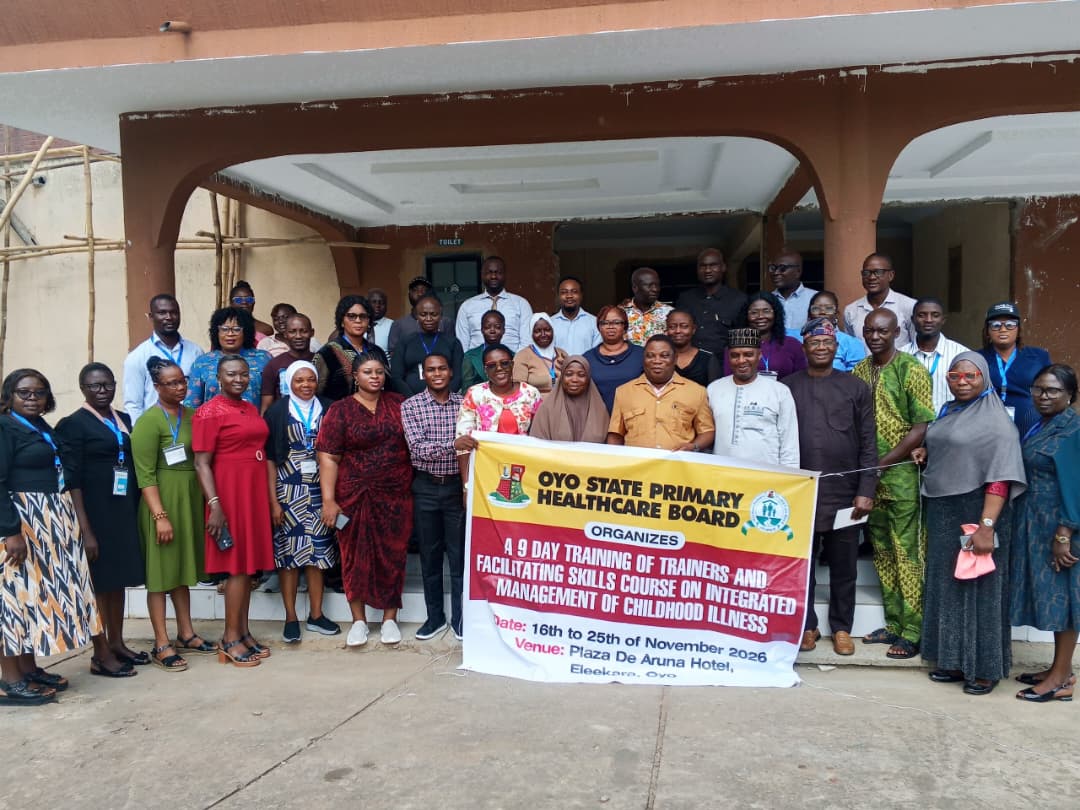
The Oyo State Primary Health Care Board (OYSPHCB) has commenced a nine-day Training of Trainers (ToT) and Facilitating Skills Course on Integrated Management of Childhood Illness (IMCI) to strengthen healthcare workers’ capacity to manage common childhood illnesses and reduce preventable deaths among children across the state.
The training, holding at Plaza De Aruna Hotel, Eleekara, Oyo, is designed to equip healthcare workers with the clinical knowledge and practical skills required to identify childhood illnesses early, administer appropriate treatment and refer children requiring specialised care.

Speaking at the opening ceremony, the Executive Secretary of the Board, Dr. Muideen Olatunji, represented by the Director of Disease Control and Immunisation, Dr. Festus Mustapha, reaffirmed the Board’s commitment to improving child health and strengthening primary healthcare delivery.
He emphasised the importance of equipping healthcare workers to recognise early warning signs of illness in children and respond promptly, noting that timely diagnosis and appropriate treatment could prevent complications and save lives.

According to him, the IMCI strategy provides a comprehensive framework for managing common childhood illnesses and improving the quality of care available to children at health facilities across the state.
He urged participants to remain attentive, actively engage in the training and apply the knowledge acquired in their daily practice, stressing that the programme’s success would depend largely on its effective implementation at the facility level.
The State IMCI Programme Officer, Mrs. Adepeju Mosunmade, highlighted the importance of strict adherence to established IMCI guidelines in assessing and managing sick children.
She explained that proper assessment, accurate classification of illnesses and appropriate treatment were essential to preventing complications and reducing childhood deaths.
Mosunmade also stressed the need for healthcare workers to identify danger signs promptly, communicate effectively with caregivers, maintain accurate medical records and promote the rational use of medicines.
She called for compassionate, timely and evidence-based care, noting that effective communication with caregivers and appropriate follow-up were critical components of successful childhood illness management.
On the Training of Trainers component, she explained that participants were expected to transfer the knowledge and skills acquired to other healthcare workers, extending the benefits of the programme to more health facilities and communities across Oyo State.
The nine-day course combines classroom sessions with practical demonstrations, case studies, group exercises, clinical simulations and facilitation techniques to equip participants with both the clinical expertise and teaching skills required to implement the IMCI strategy effectively.
Key areas of focus include the management of common childhood illnesses such as malaria, pneumonia, diarrhoea and malnutrition, with particular emphasis on early recognition, appropriate treatment, caregiver counselling, follow-up and referral in line with established guidelines.
At the end of the training, participants are expected to demonstrate improved capacity to manage childhood illnesses, deliver quality healthcare services and train other health workers in the effective implementation of IMCI at their respective facilities.
The Oyo State Primary Health Care Board reiterated its commitment to the continuous professional development of healthcare workers, describing capacity building as essential to strengthening primary healthcare services and improving health outcomes for children.
The initiative forms part of the Board’s ongoing efforts to reduce preventable childhood deaths, expand access to quality healthcare and ensure that children across the state receive timely and appropriate medical attention, irrespective of their location.





NAN Staff appointed Media Director, Ashaka Carnival Group
Mr Emmanuel Mogbede, an Assistant Editor in Chief of the News Agency of Nigeria (NAN)has been appointed as the Director...


Ayra Starr joins 2027 Coachella lineup alongside Dua Lipa, SZA, Madonna
Nigerian singer Ayra Starr has been named among the artistes scheduled to perform at the 2027 edition of the Coachella...


Blessing CEO admits faking cancer diagnosis to raise donations
Social media personality says financial pressure prompted fundraising stunt Social media personality Blessing Okoro, popularly known as Blessing CEO, has...

2027: Sports stakeholders target 8.9m votes for Tinubu through 8,809 wards

Oyo PHC Board trains healthcare workers to improve child health

2027: Ododo urges Ebira youths to reject electoral violence

Katsina Court jails fraudster 14 years, orders N9.3m restitution to 53 victims

LANDMARK’s ‘Destination CENTRAL’ Opens an Inspiring New Chapter for the Festive Season in Hong Kong

Ebola: Tinubu gov’t tells Nigerians not to panic

The silent killer among Nigeria’s youth

APC ‘rented crowds’ to fill ’empty seats’ at Kaduna rally – Opposition ADC claims

Harry Kane of Bayern Munich is winner of 2026 Ballon d’Or after display – Arsenal Midfielder Declan Rice deckares

BREAKING: Ebola hits FCT, FG identifies 44 contacts

BREAKING: Suspected ‘Abu Odoma boys’ set Maikano Diesel Generator donated by Muri ablaze overnight at Idah LG

Research funding: Union demands 5% tax from 14 MDAs

2023: Senator Marafa, Ex-governor Yari defect to PDP
