
Environment
C’River pushes women-centred climate action, vows inclusive green economy

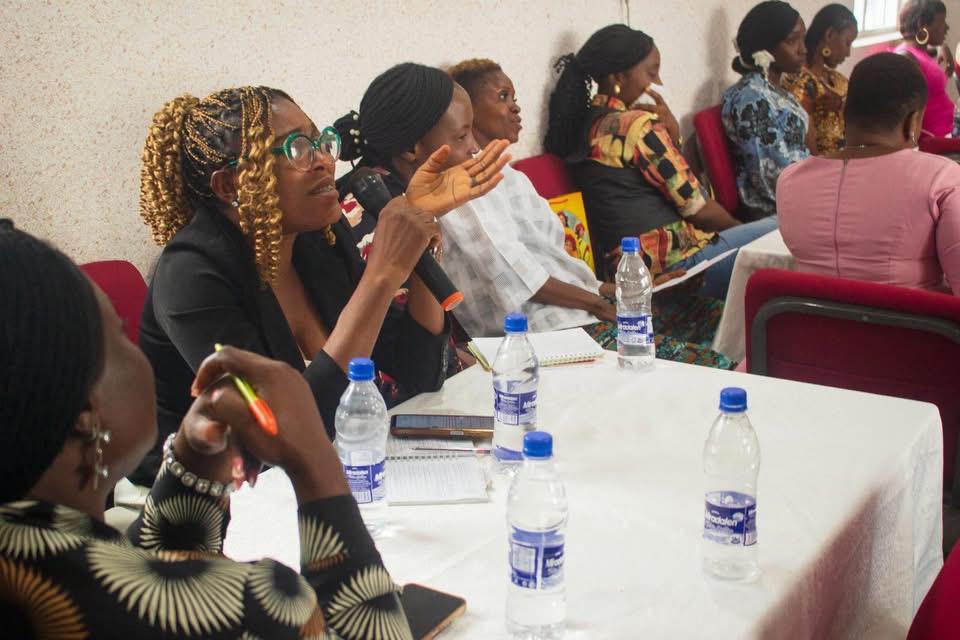
The Cross River State Government has declared that meaningful climate action and environmental sustainability cannot be achieved without deliberately placing women and vulnerable communities at the heart of policy formulation and decision-making processes.
The state government made the declaration at the Environmental Justice and Human Rights Boot Camp held in Calabar under the WomenPower2030 initiative.

Speaking at the event, Chairman of the Cross River State Green Economy Commission, Hon. Oden Ewa, described the initiative as a strategic intervention capable of redefining environmental advocacy and community participation across the South-South region.
He commended the Women Environmental Programme (WEP), the WomenPower2030 consortium and their international partners for creating a platform aimed at equipping women with advocacy, campaigning and human rights skills necessary for driving sustainable development and climate justice.

Ewa observed that despite the South-South region’s vast ecological and natural resources, the area continues to grapple with environmental degradation, pollution and the devastating impacts of climate change, with women suffering the most severe consequences.
According to him, women have remained at the forefront of environmental challenges while also serving as custodians of natural resources and community wellbeing.
He stressed that the Cross River green economy agenda is built on the principles of inclusivity, equity and sustainability, insisting that environmental protection cannot be separated from human rights.
“We cannot achieve a thriving green economy while leaving women behind or ignoring systemic inequalities that hinder their progress,” he said.
Also speaking, Founder and Global Lead of the Women Environmental Programme (WEP), Dr. Priscilla Achakpa, said the WomenPower2030 initiative was established to strengthen feminist and civil society networks, influence gender-responsive climate policies and empower women and youths to become drivers of sustainable environmental change.
She explained that beyond advocacy, the programme also provides mentorship opportunities, grants and platforms for participants to engage in international conferences and global policy conversations on climate and environmental justice.
Achakpa expressed confidence that the initiative would help build stronger grassroots movements capable of transforming local environmental concerns into concrete policy actions and sustainable solutions.
Also, the Cross River State Commissioner for Environment, Hon. Obol Moses John Osogi, described environmental justice and human rights as essential pillars for sustainable development, social equity and responsible governance.
He commended WEP for empowering citizens, particularly women and youths, with practical tools required to promote environmental sustainability, climate resilience and human dignity.
Osogi noted that programmes such as the boot camp would deepen public awareness, encourage civic participation and strengthen collaborative efforts toward addressing growing environmental challenges.
He reaffirmed the commitment of the ministry to supporting partnerships and policies aimed at creating a cleaner, healthier and more sustainable environment across the state.
In the same vein, Director-General of the Cross River State Climate Change Council, Dr. Edu Effiom, said climate change continues to disproportionately affect women and girls, especially those in rural and coastal communities where flooding, pollution, deforestation and resource scarcity threaten livelihoods and survival.
She maintained that excluding women from climate-related policies and decision-making processes amounts to environmental injustice.
Effiom described the boot camp as more than a training programme, noting that it represents a launchpad for a new generation of environmental advocates equipped to transform community struggles into policy influence and measurable action.
She further pledged the council’s commitment to coordinating inclusive, equitable and rights-based climate policies across the state.
Participants and organisers expressed optimism that the boot camp would strengthen grassroots advocacy networks and accelerate inclusive climate solutions nationwide.
The Environmental Justice and Human Rights Boot Camp forms part of broader efforts under the WomenPower2030 initiative aimed at advancing feminist action, environmental justice and sustainable development across Nigeria.












NAN Staff appointed Media Director, Ashaka Carnival Group
Mr Emmanuel Mogbede, an Assistant Editor in Chief of the News Agency of Nigeria (NAN)has been appointed as the Director...


Ayra Starr joins 2027 Coachella lineup alongside Dua Lipa, SZA, Madonna
Nigerian singer Ayra Starr has been named among the artistes scheduled to perform at the 2027 edition of the Coachella...


Blessing CEO admits faking cancer diagnosis to raise donations
Social media personality says financial pressure prompted fundraising stunt Social media personality Blessing Okoro, popularly known as Blessing CEO, has...

Yahaya Bello and Edward David Onoja’s sad legacy of a brutal administration (2016–2023)

Fasoranti: Where does Yorubaland go from here?

Presidency accuses opposition of spreading fake news over viral ‘Tinubu Must Go’ video

Diabetes Malaysia And Alpro Pharmacy Set National Record With 11,007 Most Blood Glucose Screenings Conducted Across Malaysia In Just 48 Hours

PayerMax and ShopeePay Strengthen Strategic Partnership to Advance Digital Payment Collaboration in Southeast Asia

APC ‘rented crowds’ to fill ’empty seats’ at Kaduna rally – Opposition ADC claims

Harry Kane of Bayern Munich is winner of 2026 Ballon d’Or after display – Arsenal Midfielder Declan Rice deckares

UbuntuCare Africa introduces ‘Gift Health’ to Nigerians at OffChart NXT 2026

Protest looms as PAAU increases school fees over 150% amid NELFUND intervention confusion [Investigation]

BREAKING. Imo West Senatorial District: Uzodinma loses as Court orders publication of Okorocha as candidate

BREAKING: Suspected ‘Abu Odoma boys’ set Maikano Diesel Generator donated by Muri ablaze overnight at Idah LG

Research funding: Union demands 5% tax from 14 MDAs

2023: Senator Marafa, Ex-governor Yari defect to PDP
