
Article
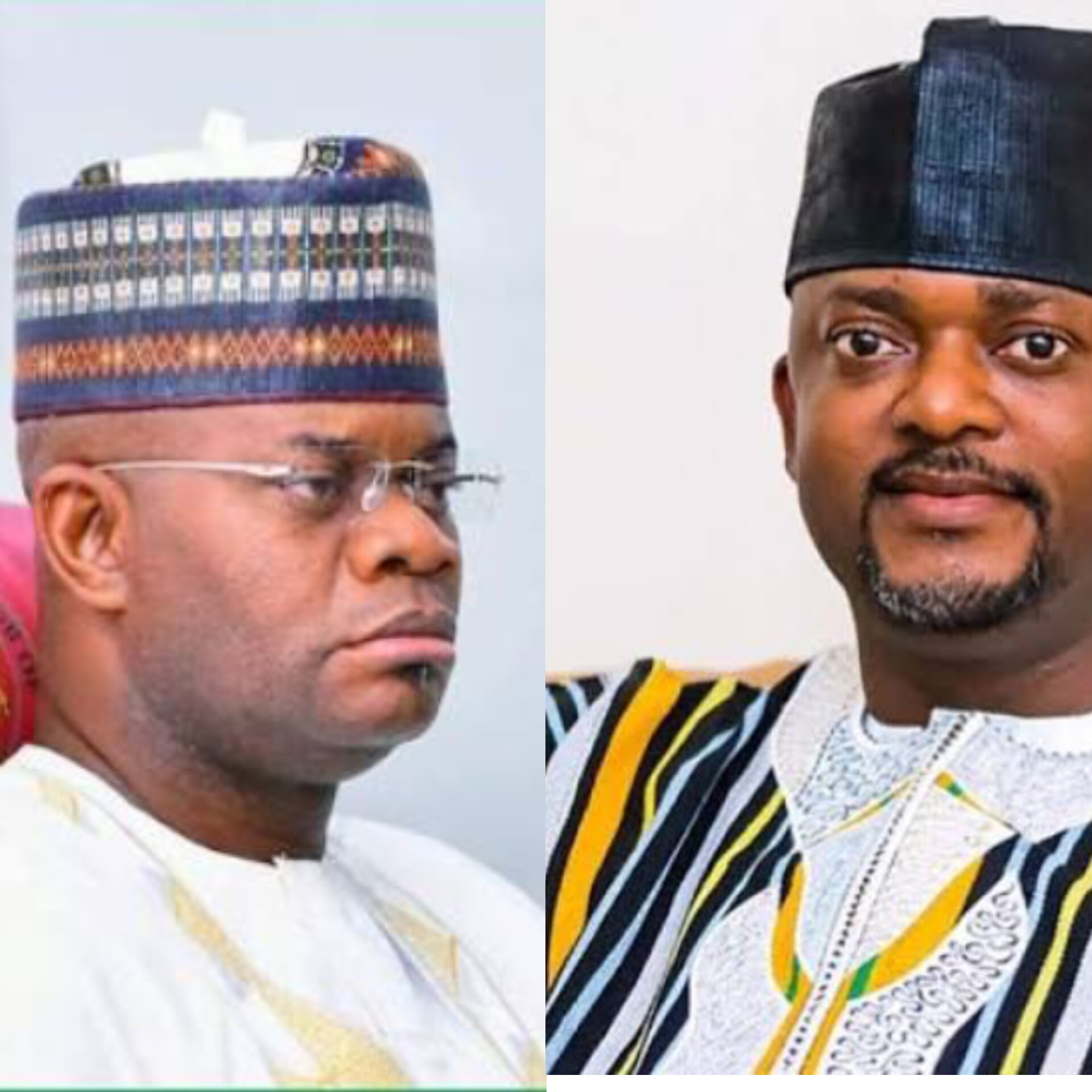
Yahaya Bello and Edward David Onoja’s sad legacy of a brutal administration (2016–2023)

By Atekojo Samson Usman
In this article, Atekojo Samson Usman recalls the painful memories of the administration of former Kogi State Governor Yahaya Adoza Bello and Chief Edward David Onoja, who served as Chief of Staff and later as Deputy Governor.

The administration appeared to pay little attention to the welfare of the people. What began as a staff audit after Bello assumed office in 2016 soon became a source of serious concern, as numerous civil servants were reportedly removed from service after being labelled ghost workers, accused of lacking recognised academic qualifications, or alleged to have been improperly recruited into the civil service by previous administrations.
The Controversial Staff Screening Exercise
After taking over the reins of government in 2016, the Bello administration established a separate staff screening committee headed by retired Brigadier General Olusola Okuntimo. Other members included Dr Jerry Agbaji and the State Auditor-General, Yakubu Okala.

Bello appeared to have drawn inspiration from the administration of the late Alhaji Ibrahim Idris, who engaged Sally Tibbot, a consultancy firm, between 2003 and 2012 to investigate allegations of an inflated state government payroll. However, the implementation of the Sally Tibbot exercise encountered serious difficulties, and Governor Idris eventually abandoned it.
Bello’s screening committee submitted one of the most controversial reports in the state’s history. The report allegedly identified 25,103 ghost workers on the state and local government payrolls, leading to the removal of thousands of workers from service.
The implementation of the report worsened the plight of Kogi workers. The state’s workforce reportedly declined from 88,973 employees, whom Bello inherited upon assuming office, to 63,870.
Some workers were left in a state of uncertainty. They were neither issued formal letters of disengagement nor paid their salaries. Others, having been forced out of service, returned to their respective local government areas but were subsequently invited back to Lokoja several times by the post-screening review committee to defend their employment status.
Tragically, some workers reportedly died in road accidents while travelling to Lokoja for the screening exercise, while others sustained injuries that resulted in permanent disabilities.
The Tragic Death of Mrs Olubunmi Abraham
On 2 February 2017, Mrs Olubunmi Abraham, a staff member of the Health Department of Mopamuro Local Government Council, was invited by the post-screening review committee after lodging a complaint that she had been validly employed despite being classified as a ghost worker.
Unfortunately, she was involved in an accident while travelling to Lokoja and lost her life.
Her tragic death triggered widespread public outrage, with many people expressing anger over the Bello administration’s handling of the screening exercise. At the time, the governor’s media handlers reportedly attempted to manage the resulting public relations crisis by claiming that the deceased had been abducted and found dead three days later.
The circumstances surrounding her death and the conflicting accounts of the incident further deepened public concern about the treatment of civil servants during the screening exercise.
Another Screening-Related Death
Despite the controversy surrounding the screening exercise and its reported human cost, the Bello administration continued screening civil servants until the final period of its tenure.
On 4 December 2023, Fadumila Olowo, a civil servant, reportedly died while undergoing screening in Lokoja. The incident renewed concerns about the human consequences of the administration’s prolonged screening and verification exercises.
Bello had argued that reducing the size of the civil service would free up resources for infrastructure development across the state. His administration also benefited from the bailout and debt-restructuring initiatives introduced under the late President Muhammadu Buhari.
According to figures cited in the account of the administration, the Central Bank of Nigeria released ₦50.84 billion as salary bailout funds, while the Debt Management Office facilitated ₦810 million in debt restructuring. These figures should be verified against official records to establish the exact amounts and nature of the financial assistance.
Despite these interventions, Kogi civil servants reportedly endured prolonged salary arrears and low wages during Bello’s tenure. Some workers in the directorate cadre allegedly earned as little as ₦22,000 monthly. Pensioners also complained of severe hardship, with some reportedly receiving only ₦18,000 monthly.
These conditions raised serious questions about the management of public resources and the prioritisation of workers’ welfare under the administration.
Allegations of Ethnic Imbalance in Appointments
Amid the controversy surrounding the screening exercise, allegations emerged that the administration dismissed numerous workers from Kogi East and replaced some directors, deputy directors and assistant directors with individuals from Kogi Central Senatorial District.
Critics argued that this pattern of appointments and replacements created an imbalance in the distribution of public-sector opportunities among the state’s three senatorial districts. They further alleged that the consequences of the imbalance continued to affect the civil service beyond Bello’s tenure.
Such allegations deserve independent scrutiny, including an examination of recruitment records, promotion lists, dismissal notices and the geographical distribution of appointments.
World Bank Loans and Questions About Project Delivery
During Bello’s eight-year administration, Kogi State accessed World Bank financing for various development programmes. Questions have since been raised about the implementation of some projects associated with these loans and the long-term implications of the state’s borrowing commitments.
Available figures cited in this account put the total World Bank-related financing secured during the period at approximately $190.9 million. This figure, however, requires verification against official World Bank and state government records, particularly to distinguish approved financing from amounts actually disbursed.
One of the most controversial initiatives was a $100 million financing package reportedly approved by the National Assembly in March 2020 for food processing, infrastructure and agricultural development. Critics have questioned the extent to which the intended benefits of the programme materialised.
It is also important to distinguish between World Bank financing and other development funding. According to the information presented in this account, $10 million was associated with financing from the International Fund for Agricultural Development (IFAD), intended to support agricultural value-chain development. The precise relationship between this amount and the broader financing package requires clarification from the relevant project documents.
Concerns have also been raised about development projects linked to borrowing conditions and the extent to which the projects were executed before repayment obligations became due.
One example frequently cited by critics is Prince Abubakar Audu University (PAAU), Anyigba. They argue that the institution did not receive the level of infrastructure investment it required during Bello’s tenure, particularly in classroom construction and other essential facilities.
Critics further alleged that ethnic considerations influenced aspects of the administration’s education policy, contributing to the university’s decline. These claims warrant an examination of budgetary allocations, project records and the distribution of educational resources across the state.
Prince Abubakar Audu University and the College of Medicine.
One of the most contentious decisions associated with Bello’s administration was the closure of PAAU’s College of Medicine and Medical Sciences, which reportedly affected students who had already reached the 300-level of their medical studies.
The decision generated concerns about the academic future of the affected students, the investment already made in their education and the university’s capacity to sustain its medical training programmes.
Critics questioned the justification for shutting down the programme while a new institution, Confluence University of Science and Technology (CUSTECH), Osara, was established under the same administration.
They also raised questions about the pace at which CUSTECH’s College of Medicine and Surgery reportedly secured accreditation compared with the difficulties experienced by PAAU.
During the administration of Governor Ahmed Usman Ododo, steps were reportedly taken to review PAAU’s medical programme for possible reaccreditation by the National Universities Commission.
The controversy surrounding the programme also raised concerns about the loss of qualified academic personnel and the quality of teaching available to students. Reports that members of the National Youth Service Corps (NYSC) were brought in to support teaching during a difficult period further highlighted the challenges facing the institution.
For critics, the episode remains a troubling example of how policy decisions can affect students, lecturers and the long-term development of higher education.
Financial Misconduct Allegations Against Yahaya Bello
Beyond the controversies surrounding civil-service screening, workers’ welfare, education and borrowing, former Governor Yahaya Bello has faced allegations of financial misconduct relating to his administration.
The Economic and Financial Crimes Commission (EFCC) has pursued separate cases involving approximately ₦110.4 billion and ₦80.2 billion in alleged financial crimes. The allegations relate to the management and movement of public funds during the period under investigation.
In the ₦110.4 billion case, an EFCC investigator reportedly told an Abuja court in October 2026 that bank records indicated that substantial funds paid into accounts belonging to companies under investigation originated from Kogi State local government accounts.
Another prosecution witness reportedly testified about foreign-exchange transactions worth ₦1.425 billion involving Bello’s associate, Abba Adaudu.
These testimonies form part of the prosecution’s evidence. They do not, by themselves, establish Bello’s guilt. The allegations must be assessed through the evidence presented in court and the applicable legal process.
Bello has denied wrongdoing and challenged his accusers to examine his administration’s budgets, financial records and completed projects. He has also declined to comment extensively on the EFCC investigation while the cases remain before the courts.
The Question of Accountability
For the people of Kogi State, the central question remains one of accountability.
Citizens deserve transparent answers about public revenue, local government allocations, workers’ salaries, pension payments, infrastructure expenditure, educational development and the management of state resources.
Atekojo Samson Usman is a journalist and a media entrepreneur @ capitalposteditor20@gmail.com







NAN Staff appointed Media Director, Ashaka Carnival Group
Mr Emmanuel Mogbede, an Assistant Editor in Chief of the News Agency of Nigeria (NAN)has been appointed as the Director...


Ayra Starr joins 2027 Coachella lineup alongside Dua Lipa, SZA, Madonna
Nigerian singer Ayra Starr has been named among the artistes scheduled to perform at the 2027 edition of the Coachella...


Blessing CEO admits faking cancer diagnosis to raise donations
Social media personality says financial pressure prompted fundraising stunt Social media personality Blessing Okoro, popularly known as Blessing CEO, has...

Yahaya Bello and Edward David Onoja’s sad legacy of a brutal administration (2016–2023)
Technology at Work, Heritage for All: The “Chinese Approach” to Safeguarding the Leshan Giant Buddha

Fasoranti: Where does Yorubaland go from here?

Presidency accuses opposition of spreading fake news over viral ‘Tinubu Must Go’ video

Diabetes Malaysia And Alpro Pharmacy Set National Record With 11,007 Most Blood Glucose Screenings Conducted Across Malaysia In Just 48 Hours

APC ‘rented crowds’ to fill ’empty seats’ at Kaduna rally – Opposition ADC claims

Harry Kane of Bayern Munich is winner of 2026 Ballon d’Or after display – Arsenal Midfielder Declan Rice deckares

UbuntuCare Africa introduces ‘Gift Health’ to Nigerians at OffChart NXT 2026

Protest looms as PAAU increases school fees over 150% amid NELFUND intervention confusion [Investigation]

BREAKING. Imo West Senatorial District: Uzodinma loses as Court orders publication of Okorocha as candidate

BREAKING: Suspected ‘Abu Odoma boys’ set Maikano Diesel Generator donated by Muri ablaze overnight at Idah LG

Research funding: Union demands 5% tax from 14 MDAs

2023: Senator Marafa, Ex-governor Yari defect to PDP
