
Features
Oyebamiji: In Our Best Interest?

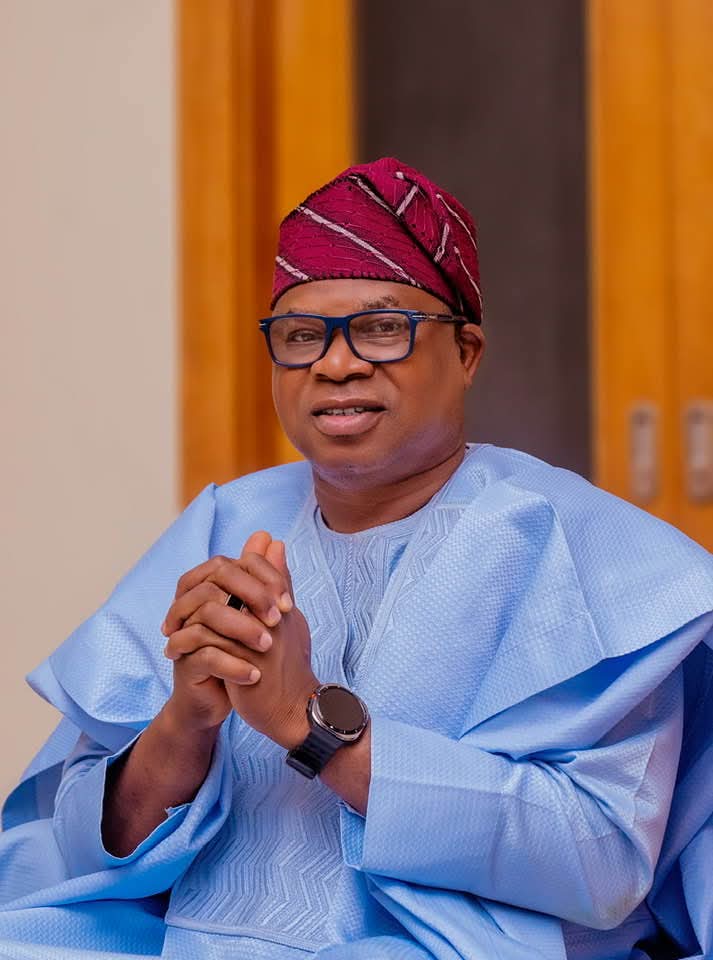
By Olanrewaju Iyunade
In developing democracies, public officials constantly face a tough balancing act: keeping up with their official duties while managing political party expectations. As Osun State approaches its crucial governorship election on August 15, 2026, this tension is taking centre stage. At the heart of the debate is Asiwaju Munirudeen Bola Oyebamiji, the governorship candidate for the All Progressives Congress (APC).

An individual’s candidacy is rarely just about the person. It reflects deeper shifts among political leaders, government systems and public expectations. The central question of this analysis – is this candidacy in our best interest? – helps us look past standard campaign speeches. It forces us to ask whether Oyebamiji brings real, practical skills to improve the state, or if his run is simply a tactical move by the political elite to maintain power.
As we all know, governments run best on competence, predictability and financial discipline. However, in Nigerian state politics, these ideals often clash with informal political networks and local favoritism. When a political party picks a candidate, it needs to convince the public that this leader will serve everyone, not just a small, well-connected group.

Popularly addressed as AMBO, Oyebamiji’s professional background positions him right at this crossroads. He transitioned from a corporate banking executive to the Managing Director of the Osun State Investment Company Limited (OSICOL). Later, he served as the state’s Commissioner for Finance and led the National Inland Waterways Authority (NIWA). His career shows that strong professional competence can directly benefit the public welfare.
Looking closely at Osun State’s government, Oyebamiji’s background matches the state’s actual needs. Osun has historically struggled with a low internal tax revenue and relies heavily on monthly funds from the federal government. To survive and grow, the state needs an expert hand in finance.
AMBO’s experience is a direct answer to this financial challenge. His time as Finance Commissioner under previous APC administrations proved he could manage a budget under pressure. He designed financial plans that kept the state running during national economic downturns, proving his focus is on protecting the state’s financial health.
integrated into the governance framework. By addressing longstanding public sector welfare liabilities and practicing a style of politics that avoids public friction, the administration has left opposition platforms fragmented and lacking a compelling counter-narrative.
“Bí omọdé bá m’ọwọ́ wẹ̀, á bá àgbà jẹun” (If a youth knows how to wash his hands properly, he will dine with the elders). By approaching the state’s historically critical and highly demanding elite structure with institutional respect and tactical inclusion, Oyebanji has earned an unprecedented level of calm. Through the recent signing of the comprehensive Peace Accord alongside eleven other political contenders, the administration has leveraged the moral authority of the state’s elder statesmen, ensuring that the run-up to the June 20 polls remains exceptionally tranquil.
This structural calm serves a distinct electoral objective: the ambition to definitively shatter the historic Ekiti “continuity jinx.” Since the return to democratic governance in 1999, the Ekiti electorate has established a reputation for political volatility, consistently refusing to grant back-to-back, straight-line tenures to a single administration. The political pendulum has traditionally swung wildly between competing forces, driven by an independent-minded and highly literate populace.
Ahead of the June polls, the ruling All Progressives Congress (APC) has set an aggressive target: mobilizing a minimum of 500,000 votes across the state’s 2,445 polling units. This target is designed not just to secure victory, but to deliver a definitive statement of total political consolidation.
From an analytical standpoint, this leaves the independent commentator with a critical question: Is this impending landslide a pure democratic validation of first-term performance, or is it the inevitable result of an asymmetric playing field where alternative platforms have failed to mount a cohesive challenge? The administration’s preference for soft-power pacification over aggressive coercion has made the approaching historic shift look almost effortless.
It is precisely at this point of total consolidation that the discerning analyst must look past the immediate horizon of Election Day. A quiet election that culminates in an overwhelming landslide creates an entirely new socio-political reality. While a landslide victory is a major political achievement, it simultaneously introduces a significant governance challenge. In public administration, an absolute mandate removes the structural shields that office holders traditionally rely on to justify developmental delays.
A democracy devoid of robust internal friction faces unique vulnerabilities. When the fountain is entirely quiet, and opposition structures are muted or co-opted, the informal checks and balances that preserve administrative accountability naturally weaken. For a highly educated, analytical population like Ekiti’s, the expectations attached to a second term will double. With the “continuity jinx” broken and the excuse of political survival removed, the incoming administration will face immediate, unmitigated pressure to deliver profound, structural development.
“Ẹni tí a bá fún ní púpọ̀, lọ́wọ́ rẹ̀ ni a ti ń retí púpọ̀” (To whom much is given, much is expected). An overwhelming electoral victory cannot merely be celebrated as a partisan triumph; it must be understood as an immense administrative obligation. A 500,000-vote mandate represents an expansive fabric. Consequently, the populace will expect nothing less than a masterpiece of infrastructural growth, fiscal sustainability, and economic modernization.
Looked at closely, “Ekiti: The Quiet Fountain” must not be misconstrued as a description of a static pool. It is, instead, a reservoir building up significant structural pressure for the dispensation that begins after June 20. The impending election is merely the prologue; the real test of this governance model begins on the morning after the victory.
Throughout the ongoing campaigns, the administration has consistently emphasized its alignment with the federal centre, urging the Ekiti electorate to deliver a historic turnout as a strategic response to critical central interventions, such as the major federal-state road rehabilitations. Yet, once the ballot boxes are put away, the core challenge of sub-national survival remains.
Ekiti must ultimately transcend its historical limitations as a primary civil service state. The true measure of the BAO phenomenon will not be found in the quietness with which he secured the 2026 ballot, but in how effectively that absolute peace is leveraged to build a self-reliant, knowledge-driven, and agriculturally sustainable economy for the generations to come.
Dr. Babajide is from Omuo-Ekiti.











BB Bucks, kisses, fake eviction: How Temi Nkem won BBNaija Season II
From BB Bucks drama and a memorable custard episode to a controversial kiss with Tram, a fake eviction and a...


22-year Nigerian model moves beyond Lagos streets into global scene
A 22-year Nigerian model Rachel Ojuromi has taken her fashion career from the streets of Lagos to the global scene....


Geh Geh lashes Burna Boy over ₦9bn Bugatti, demands youth empowerment
Social commentator Geh Geh has criticised Afrobeats star Burna Boy over his newly acquired customised Bugatti Chiron VXX, reportedly valued...

2027: Wike launches scathing attack on Atiku, says no 25% votes for ADC in Rivers

Global Youth Powerhouse Summit 2026 Concludes Successfully

Somerset Diamond Bay Garden Phnom Penh appoints Jamila Nsouli as General Manager ahead of planned November opening

INEC releases 10 States with highest numbers of voters [See List]

Tinubu, Gumi, prominent Nigerians mourn late Islamic scholar, Baba-Ahmed

Kogi East Senator Isah Jibrin commences construction of ICT centre in Ankpa

BREAKING: NAF reveals identity of pilot, names of 25 dead soldiers on crashed aircraft

BREAKING: Thugs pounce on ADC campaign vehicles in Koton-Karfe LG, several party supporters injured

PC-NCG calls for immediate cessation of unauthorized activities in the name of proposed Nigerian Coast Guard
22-year Nigerian model moves beyond Lagos streets into global scene

BREAKING: Suspected ‘Abu Odoma boys’ set Maikano Diesel Generator donated by Muri ablaze overnight at Idah LG

Research funding: Union demands 5% tax from 14 MDAs

2023: Senator Marafa, Ex-governor Yari defect to PDP
