
News
NCC gives MTN, Airtel, other telecom operators December 31 deadline to utilise spectrum or risk losing licences

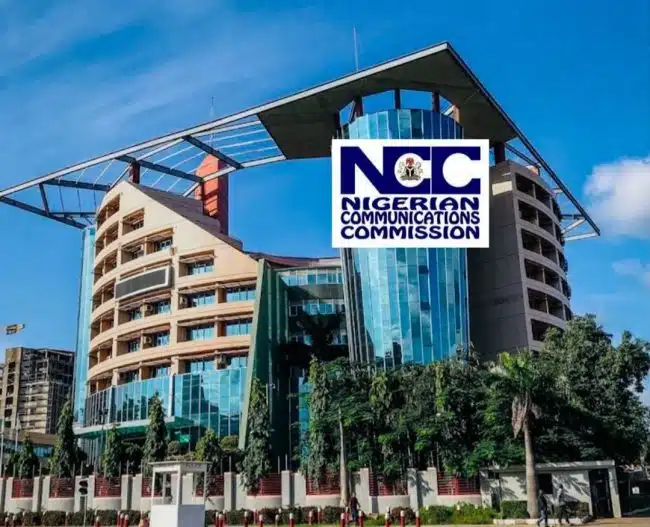
The Nigerian Communications Commission (NCC) has given telecommunications operators, including MTN Nigeria and Airtel Nigeria, until December 31, 2026, to demonstrate effective utilisation of their assigned spectrum or risk losing the valuable frequencies.
The directive is aimed at ensuring that operators deploy their allocated spectrum to support actual network infrastructure, improve service delivery and expand telecommunications coverage, rather than allowing scarce frequency resources to remain underutilised.

The regulator warned that spectrum found to be inadequately deployed could be withdrawn and reassigned to other operators without compensation.
The development comes amid growing concerns over Nigeria’s slow 5G expansion, rising data consumption and persistent complaints about network quality and service affordability.

Nearly $880 Million Invested in Spectrum
The directive places renewed attention on the billions of dollars committed by telecommunications companies to acquire spectrum for 5G and other mobile services.
Mafab Communications paid $273.6 million for a 100MHz block in the 3.5GHz band during the December 2021 spectrum auction. MTN Nigeria secured a similar block at a cost of approximately $289.5 million, including its bid and assignment fee.
In January 2023, Airtel Nigeria committed approximately $316.7 million to acquire spectrum for 5G and additional 4G services.
Combined, the investments amount to nearly $880 million, raising questions about the pace at which the acquired frequencies have translated into wider coverage and improved services for subscribers.
As of April 2026, 5G coverage reportedly reached only about 13 per cent of Nigeria’s population.
During legislative budget reviews, NCC Executive Vice-Chairman Aminu Maida highlighted the underutilisation of 5G spectrum by major operators, including MTN and Airtel.
Mafab’s Spectrum Transfer Raises Competition Questions
Mafab Communications has faced scrutiny over delays in rolling out its 5G network, prompting questions about the continued allocation of valuable spectrum to the company.
The operator has since commenced arrangements to transfer its 3.5GHz spectrum holdings and 2×20MHz of spectrum in the 2.1GHz band to MTN.
Such transactions could enable faster deployment of network services by allowing operators with the infrastructure and financial capacity to put the frequencies to use.
However, the proposed transfer also raises concerns about market concentration and whether the consolidation of spectrum holdings among a small number of dominant operators could weaken competition in Nigeria’s telecommunications industry.
The NCC faces the challenge of balancing efficient spectrum utilisation with the need to maintain a competitive market that encourages investment, innovation and better services for consumers.
Rising Data Demand Intensifies Pressure on Operators
Nigeria’s rapidly increasing appetite for internet services has added urgency to the regulator’s intervention.
Industry figures cited by the NCC indicate that monthly data consumption rose from approximately 517,670 terabytes in January 2023 to 1.73 million terabytes in September 2026.
The surge reflects growing dependence on mobile internet for communication, business, education, entertainment and other digital activities.
However, increased consumption has also intensified scrutiny of network capacity, data billing and service quality. MTN Nigeria, for instance, held a public engagement in June to respond to customer questions concerning data billing.
Industry analysts have also emphasised that acquiring spectrum alone cannot guarantee better connectivity. Operators must invest in base stations, fibre-optic infrastructure, reliable electricity and other supporting facilities to translate frequency allocations into improved network performance.
This infrastructure challenge is also relevant to MTN Group’s February announcement of plans to acquire the remaining interest in IHS Towers in a transaction valued at approximately $6.2 billion.
NCC Considers New Spectrum Investment Framework
Beyond the December 31 compliance deadline, the commission is considering a broader regulatory approach through its proposed Incentive-Based Spectrum Investment Framework (IBSIF).
The framework seeks to link spectrum-related incentives to measurable investments in network coverage, capacity expansion and service quality.
One of the proposals under consideration is an extension of spectrum licence tenures from 10 years to 15 years, potentially giving operators a longer period to plan and recover investments in network infrastructure.
Stakeholders have until November 30, 2026, to submit their comments on the consultation paper.
The proposed framework is separate from the December 31 deadline requiring operators to demonstrate that their assigned spectrum is being used effectively.
For MTN Nigeria, Airtel Nigeria and other licence holders, the coming weeks will therefore be significant as the NCC moves to enforce existing spectrum obligations while considering reforms intended to encourage further investment.
The outcome could influence the distribution of spectrum resources, the pace of 5G deployment and the competitive balance within Nigeria’s telecommunications sector.
Ultimately, the regulator’s challenge will be to ensure that spectrum, a limited public resource, delivers tangible benefits to consumers through wider coverage, more reliable connections and improved quality of service.












NAN Staff appointed Media Director, Ashaka Carnival Group
Mr Emmanuel Mogbede, an Assistant Editor in Chief of the News Agency of Nigeria (NAN)has been appointed as the Director...


Ayra Starr joins 2027 Coachella lineup alongside Dua Lipa, SZA, Madonna
Nigerian singer Ayra Starr has been named among the artistes scheduled to perform at the 2027 edition of the Coachella...


Blessing CEO admits faking cancer diagnosis to raise donations
Social media personality says financial pressure prompted fundraising stunt Social media personality Blessing Okoro, popularly known as Blessing CEO, has...

2027: INEC moves ad hoc recruitment deadline to December 3

NCC gives MTN, Airtel, other telecom operators December 31 deadline to utilise spectrum or risk losing licences

Tinubu’s praise singer Rarara assaulted by worshippers at Abuja National Mosque

2027: Opposition parties to suspend campaigns for coalition summit November 30

Defence Minister Musa, Shettima, Obasanjo, Mahama wttend Jim Ovia’s 75th birthday dinner

Ebola: Tinubu gov’t tells Nigerians not to panic

APC ‘rented crowds’ to fill ’empty seats’ at Kaduna rally – Opposition ADC claims

Harry Kane of Bayern Munich is winner of 2026 Ballon d’Or after display – Arsenal Midfielder Declan Rice deckares

Protest looms as PAAU increases school fees over 150% amid NELFUND intervention confusion [Investigation]

UbuntuCare Africa introduces ‘Gift Health’ to Nigerians at OffChart NXT 2026

BREAKING: Suspected ‘Abu Odoma boys’ set Maikano Diesel Generator donated by Muri ablaze overnight at Idah LG

Research funding: Union demands 5% tax from 14 MDAs

2023: Senator Marafa, Ex-governor Yari defect to PDP
