
Politics
2027: Sports stakeholders target 8.9m votes for Tinubu through 8,809 wards

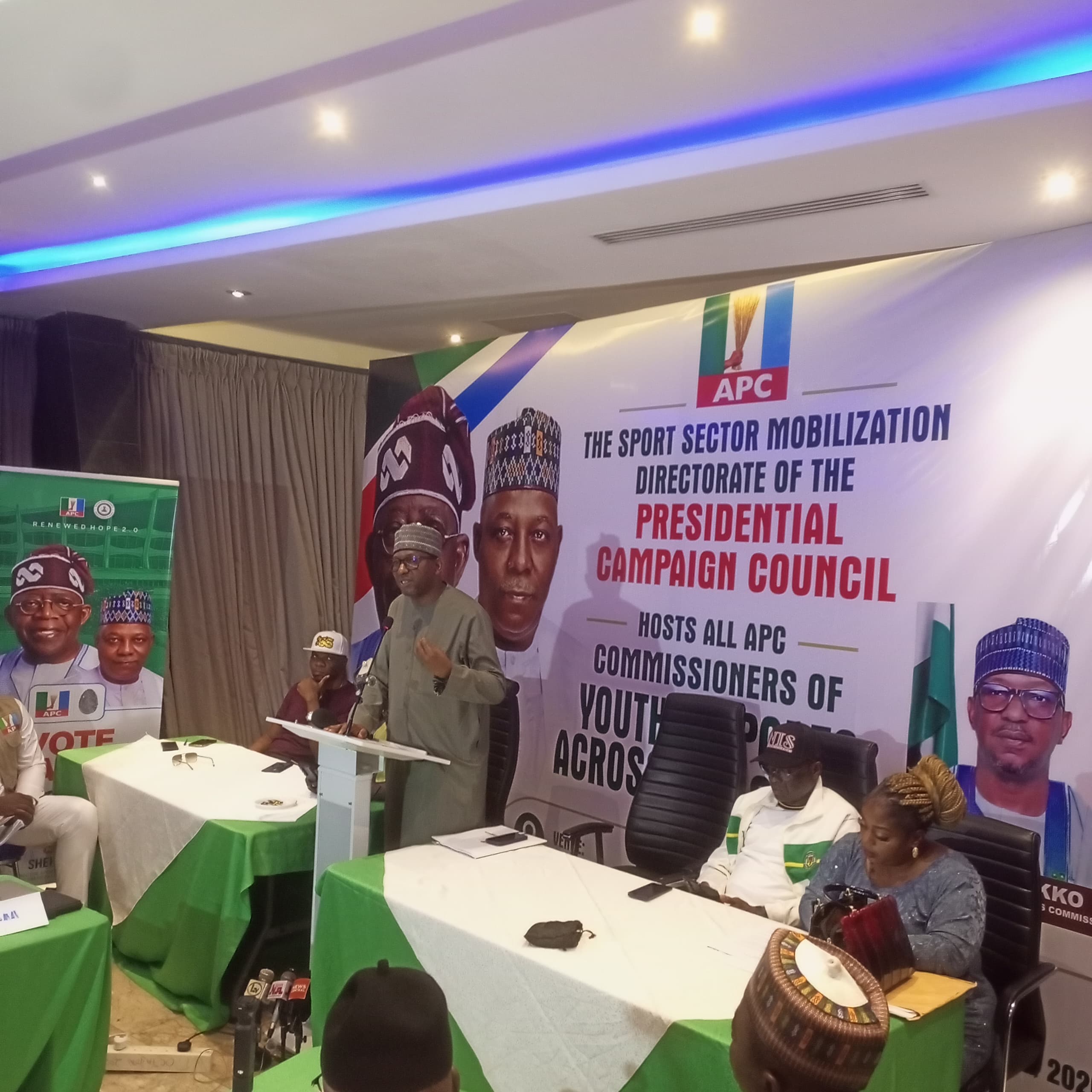
Sports stakeholders across Nigeria have unveiled a grassroots mobilisation strategy targeting about 8.9 million people in the country’s 8,809 electoral wards to secure support for President Bola Tinubu’s re-election in 2027.
The initiative, spearheaded by the National Sports Commission (NSC), will leverage the country’s sporting structures, including athletes, coaches, former sportsmen and women, administrators and sports associations, to canvass votes for the president ahead of the 2027 general elections.

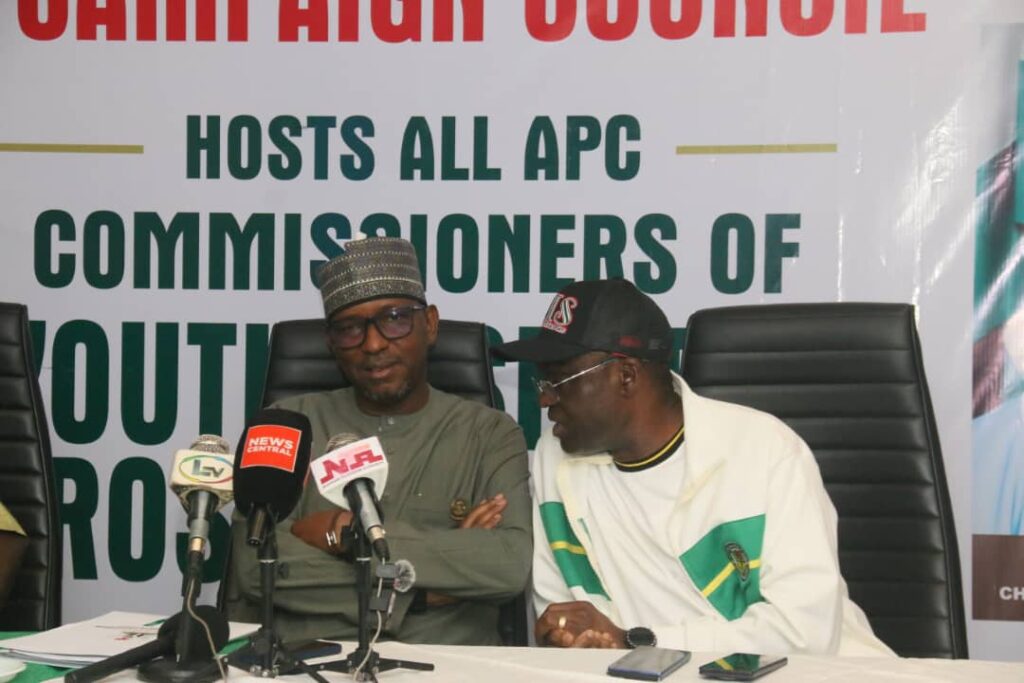
Chairman of the NSC and Director of the Sports Sector Mobilisation Directorate of the All Progressives Congress Presidential Campaign Council (APC PCC), Alhaji Shehu Dikko, disclosed this on Thursday in Abuja.
He spoke after a strategy meeting with commissioners for sports and youth development from the 36 states of the federation and the Federal Capital Territory (FCT).

Dikko said the directorate was targeting an average of 1,000 sports enthusiasts and stakeholders in each of the 8,809 electoral wards, who would be incorporated into a nationwide political support network for Tinubu.
He explained that the mobilisation would involve state commissioners, chairmen of sports commissions, sports administrators, former athletes, coaches, referees, sports associations and other influential figures in the industry.
According to him, the strategy would rely on existing sports associations, federations and institutions at national, state, local government and ward levels to establish a coordinated grassroots campaign structure.
Under the proposed arrangement, each local government would have a director of sports, while at least five coordinators would be appointed in every ward to identify sports enthusiasts, organise activities and develop a database of potential supporters.
“We believe that if we are able to bring about 1,000 people on average from each ward, we are bringing about 8.9 million people into the database,” he said.
He said the directorate also planned to organise community sporting competitions, beginning with football and another popular sport selected according to the interests of individual communities.
Other activities, he said, could include basketball, athletics and traditional sports, depending on the sporting culture of the respective wards.
According to Dikko, the competitions would serve a dual purpose of identifying emerging sporting talents and creating opportunities to engage participants on the Federal Government’s sports policies and Tinubu’s second-term agenda.
He said a digital database would be established to capture participants’ details, identify their locations and facilitate sustained communication with them.
Those registered would subsequently be integrated into the campaign structure as grassroots mobilisers, vote canvassers and supporters.
Dikko, however acknowledged that registering participants would not automatically translate into political support, stressing the need for sustained engagement and persuasion to secure their backing.
He added that the mobilisation structure would extend to polling units, where sports representatives would be appointed to strengthen the campaign network.
The NSC chairman urged state commissioners and sports administrators who attended the meeting to take ownership of the initiative and begin consultations with relevant stakeholders in their respective states.
He said the framework had been presented to the central campaign council and was awaiting the necessary approval before implementation could commence.
Dikko said the initiative was informed by the extensive grassroots reach of sports and its ability to unite Nigerians across ethnic, religious and political divides.
“We are not just taking sports as a campaign, we are using our sporting structures to go down and tell the people what the president has done for sports,” he said.
Explaining the administration’s record in the sector, Dikko identified the restoration of the National Sports Commission as one of the major interventions introduced by the Tinubu government to reposition sports administration in the country.
He said the decision was aimed at eliminating unnecessary bureaucratic intermediaries and ensuring that professionals with the requisite knowledge and experience managed the industry.
He also claimed that funding for the sports sector had increased by more than 600 per cent under the present administration compared with previous governments.
According to him, the government had introduced a funding arrangement under which allocations to the sector would be released immediately after the national budget was signed into law.
He said the policy was designed to address delays in fund releases, which often disrupted sporting competitions and programmes, particularly at the state level.
On infrastructure development, Dikko said the Federal Government had initiated and awarded projects across the country, including interventions in community sports facilities and major stadiums.
He also disclosed that the government was working on a sports infrastructure development bond to attract private capital for the rehabilitation and development of sporting facilities nationwide.
The proposed bond, he said, could raise up to $1 trillion, providing an alternative financing mechanism and reducing the sector’s dependence on conventional government budgetary allocations.
On capacity development, Dikko said the National Institute for Sports (NIS) had expanded its operations by establishing offices across the six geopolitical zones to improve coaching standards and provide professional training opportunities.
He added that efforts were underway to secure collaborations with the world football governing body, FIFA, and the Confederation of African Football (CAF), to ensure that qualifications issued by the institute gained wider international recognition.
The NSC chairman further said the administration had approved the establishment of six Centres of Excellence in selected universities in collaboration with the Federal Ministry of Education.
He explained that the centres would combine academic education with professional sports training, enabling talented young Nigerians to pursue their education while developing their sporting abilities and careers.
According to him, the initiative would be extended to the states through the establishment of one or two specialised sports schools in each state, with talent identification beginning at the local government and primary school levels.
Dikko cited the example of 16-year-old Nigerian athlete Rosemary, who recently won gold at the Youth Olympics, as evidence of the government’s commitment to rewarding outstanding young athletes while encouraging them to remain in school.
He said the athlete received $20,000 in recognition of her achievement and subsequently returned to school to continue her education alongside her classmates.
He added that the Federal Government was developing a National Sports and Education Excellence Programme to ensure that promising athletes were not forced to abandon their education in pursuit of sporting careers.
Dikko also recalled that the administration introduced the invited junior athletes initiative at the National Sports Festival, through which outstanding young talents from across the country were identified, trained and supported to participate in the competition.
He said some beneficiaries had secured scholarships to study and train abroad, while others had progressed to represent Nigeria in international competitions.






NAN Staff appointed Media Director, Ashaka Carnival Group
Mr Emmanuel Mogbede, an Assistant Editor in Chief of the News Agency of Nigeria (NAN)has been appointed as the Director...


Ayra Starr joins 2027 Coachella lineup alongside Dua Lipa, SZA, Madonna
Nigerian singer Ayra Starr has been named among the artistes scheduled to perform at the 2027 edition of the Coachella...


Blessing CEO admits faking cancer diagnosis to raise donations
Social media personality says financial pressure prompted fundraising stunt Social media personality Blessing Okoro, popularly known as Blessing CEO, has...

2027: Sports stakeholders target 8.9m votes for Tinubu through 8,809 wards

Oyo PHC Board trains healthcare workers to improve child health

2027: Ododo urges Ebira youths to reject electoral violence

Katsina Court jails fraudster 14 years, orders N9.3m restitution to 53 victims

LANDMARK’s ‘Destination CENTRAL’ Opens an Inspiring New Chapter for the Festive Season in Hong Kong

Ebola: Tinubu gov’t tells Nigerians not to panic

The silent killer among Nigeria’s youth

APC ‘rented crowds’ to fill ’empty seats’ at Kaduna rally – Opposition ADC claims

Harry Kane of Bayern Munich is winner of 2026 Ballon d’Or after display – Arsenal Midfielder Declan Rice deckares

BREAKING: Ebola hits FCT, FG identifies 44 contacts

BREAKING: Suspected ‘Abu Odoma boys’ set Maikano Diesel Generator donated by Muri ablaze overnight at Idah LG

Research funding: Union demands 5% tax from 14 MDAs

2023: Senator Marafa, Ex-governor Yari defect to PDP
