
News
Kwankwaso accuses Kano Governor Yusuf of plotting his prosecution, cites betrayal of 43-year relationship

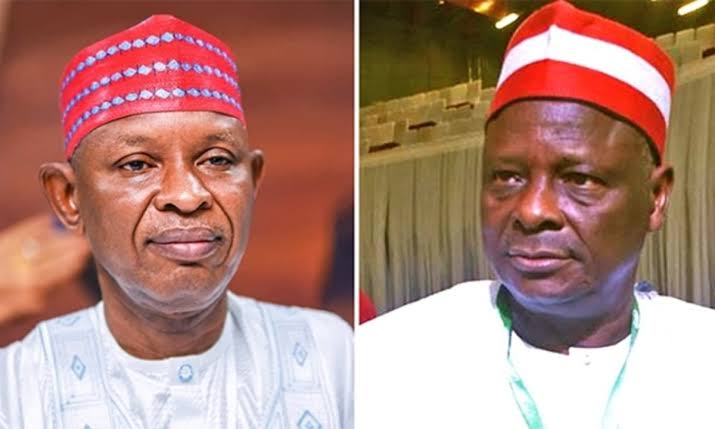
Former Kano State Governor Rabiu Musa Kwankwaso has accused his successor, Abba Kabir Yusuf, of allegedly attempting to use anti-corruption agencies to damage his reputation, claiming that their 43-year relationship has been betrayed.
Kwankwaso, the vice-presidential candidate of the Nigerian Democratic Congress (NDC), made the allegations in a statement on his X, expressing concern over the political developments surrounding his relationship with the Kano State governor.

He alleged that Yusuf had approached the Economic and Financial Crimes Commission (EFCC) in an attempt to initiate action against him but resorted to other means after allegedly failing to get the desired response from the commission.
According to the former governor, Yusuf’s access to his personal and political affairs stemmed from their longstanding relationship, during which the incumbent governor served in several capacities under him.
“His Excellency Abba Kabir Yusuf once served under me in various capacities, including as my Personal Assistant (PA), Principal Private Secretary (PPS), and Commissioner,” Kwankwaso said.

He added that Yusuf was the political movement’s preferred candidate in the 2019 and 2023 general elections, eventually winning the governorship election in 2023 through their collective political efforts.
Kwankwaso expressed disappointment over what he described as the alleged misuse of the trust built over several decades.
“The longstanding relationship of 43 years with him and trust I reposed in him afforded him access to information and insight into the value I place on personal integrity, trust that has, regrettably, been misused and abused,” he stated.
EFCC Allegedly Approached
The former governor alleged that Yusuf had, months earlier, submitted a formal request to the EFCC seeking an investigation or action against him.
Kwankwaso claimed that after the governor allegedly failed to secure the commission’s cooperation, another organisation, the Society for Anti-Corruption and Good Governance Initiative (SACGGI), was used to organise protests at the EFCC’s premises.
He questioned the organisation’s legitimacy, alleging that it was neither registered with the Corporate Affairs Commission (CAC) nor had a verifiable digital presence or formal relationship with the EFCC or the Independent Corrupt Practices and Other Related Offences Commission (ICPC).
Kwankwaso further alleged that the protests were intended to pressure the anti-graft agency into taking action against him.
He also accused the governor and some members of his administration of using media reports and selective information to create a negative impression about him and his family.
The allegations, however, were presented as Kwankwaso’s account of the events. The statement did not include a response from the Kano State Government, while independent verification of the claims was not provided.
Raises Concerns Over 2027 Elections
Kwankwaso linked the alleged campaign against him to preparations for the 2027 general elections, arguing that the developments could undermine his political movement’s electoral prospects.
He said the situation appeared designed to distract attention from substantive issues, damage the credibility of his political camp and weaken its capacity to compete in the forthcoming elections.
According to him, the unfolding political tension could also threaten peace and security in Kano State.
The former governor alleged that the dispute extended beyond his personal political interests to the governorship candidacy of Comrade Aminu Abdussalam, who he said was defending his ticket before the Independent National Electoral Commission (INEC) and the courts.
Kwankwaso accused Yusuf of allegedly attempting to influence institutions to prevent the publication of Abdussalam’s name as a candidate for the 2027 election.
He claimed that such an outcome could pave the way for the incumbent governor to contest without a major opponent.
However, the allegations of interference with INEC and the judiciary were not independently substantiated in the statement.
Kwankwaso Defends His Public Record
Despite his allegations against the governor, Kwankwaso commended the EFCC for what he described as its professional handling of previous invitations extended to him during his years in public service.
He expressed appreciation for the commission’s approach, saying it had demonstrated prudence in its dealings with him.
The former governor also highlighted his public service record, noting that he had served two terms as governor of Kano State, alongside other positions in government and national politics.
His listed roles included 17 years in the civil service, Deputy Speaker of the House of Representatives during the aborted Third Republic, service as a delegate to the 1994–1995 Constitutional Conference, Minister of Defence, Special Adviser to the President on Darfur, membership of the Niger Delta Development Commission representing the North-West, and service in the 8th Senate.
Kwankwaso maintained that he had preserved his reputation throughout his years in public service.
“I thank God that more than eleven years after leaving the Kano State Government, having served two full terms as Governor spanning eight years, in addition to seventeen years in the civil service… I have maintained a clean record,” he said.
He also urged serving and aspiring public office holders to exercise caution in their conduct, warning that political power and public office were temporary.
“Public office is transient; those who live in glass houses should be careful about throwing stones,” he cautioned.
Kwankwaso concluded by thanking members of the public who, according to him, had refused to be misled by the allegations and had continued to defend his reputation and public record.
The statement adds another dimension to the political tensions surrounding Kano State ahead of the 2027 general elections. The response of Governor Yusuf and the outcome of any formal proceedings by the relevant institutions would be important in establishing the facts surrounding the allegations.






BREAKING: Nollywood King Pete Edochie dies at 79
Nollywood King and father, Pete Edochie is dead. He died at the age of 79. His family confirmed that he...


‘I have pedigree’ — Aki reacts to cheating allegations
Popular Nollywood actor Chinedu Ikedieze, popularly known as Aki, has reacted to those accusing him of cheating in his marriage,...

Australian music legend Molly Meldrum dies at 83
Australian music legend Molly Meldrum has died at the age of 83 following a long illness. The veteran music promoter...
2027: Atiku, Obi in presidential race to make money – Shettima claims

Xabi Alonso on the impact and desire of Emmanuel Emegha

CAF unveils finalists for 2026 Men’s Player of the Year Award

Defence Minister urges Nigerian Universities to strengthen national security, technology

Fashola rejects death penalty for election rigging, seeks tougher jail terms

Tinubu approves SUVs for FCT monarchs as Wike declares operation deliver your polling units

Nollywood Actress, Bimbo speaks about Funke Akindele’s ugly past before her shining time

TotalEnergies sells 40% interest in OPL257 offshore Nigeria

President Tinubu ends 29-year wait, elevates 16 FCT chiefs, to upgrade palaces

OAGF urges heads of agencies to assume greater responsibility of personnel budgets, nominal rolls

BREAKING: Suspected ‘Abu Odoma boys’ set Maikano Diesel Generator donated by Muri ablaze overnight at Idah LG

Research funding: Union demands 5% tax from 14 MDAs

2023: Senator Marafa, Ex-governor Yari defect to PDP
