
Opinion
Ododo and the open gate – Let Nigeria follow Kogi

By Dr Victor Alewo Adoji
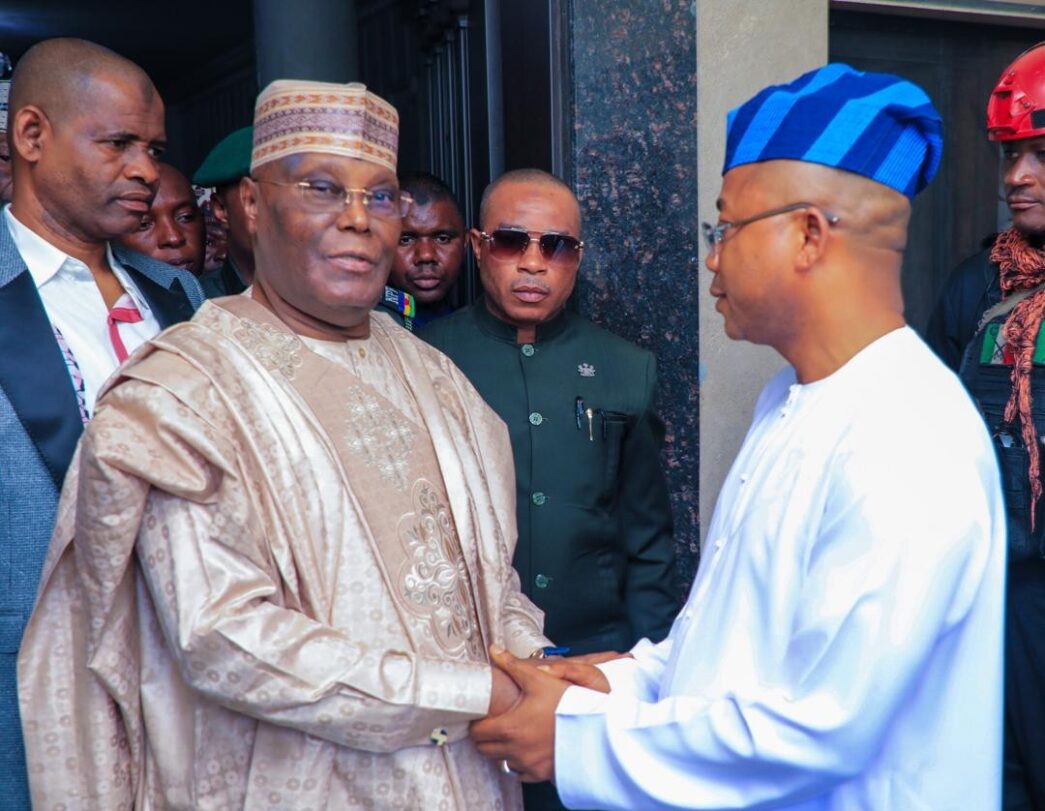
Across Nigeria, governors bolt their gates, padlock stadia, inflate venue fees and annex public squares as private estates. Governor Usman Ododo of Kogi State chose the opposite. He obliged. A gate is a verdict passed on strangers; he reversed it.

He lent the opposition African Democratic Congress (ADC) Muhammadu Buhari Square in Lokoja for its rally, and he guaranteed its security. A party campaigning against his own APC stood at the heart of his capital and addressed his people. That is not weakness, nor naivety. It is political maturity: the quiet discipline of those who need not fear a voice.
In a Nigeria already tallying its dead in Delta before the election, restraint is the rarest courage, and maturity is nothing short of revolutionary. Where the air is thick with powder, an open hand is the boldest gesture.

WHAT ODODO DID, AND WHY IT MATTERS
Precision matters, for history distorts whatever is described vaguely. The ADC, led by presidential candidate Atiku Abubakar and figures such as Senator Aminu Tambuwal, sought to hold a rally in Kogi. In many states, the request would have met a familiar liturgy: “The stadium is under renovation.” “The square is booked for sanitation.” “The fee is ₦50 million.” “Approval withdrawn.” That liturgy was recited in Sokoto, where the ADC accused the state government of shutting it out of Gingiya Stadium and the Racecourse and of withdrawing approval for the Trade Fair Complex. It echoes in other states where opposition parties are treated as invaders rather than citizens.
Ododo rejected the liturgy and its incivility. He approved the venue, secured lives and property, and let the rally proceed in peace. The people of Kogi, to their credit, kept that peace. The outcome? Atiku publicly thanked him: “Governor Ododo showed that political competition need not stand in the way of hospitality or public safety. He accommodated our campaign, respected our right to meet the people of Kogi State and helped create an atmosphere in which everyone could participate peacefully.” Tambuwal echoed this on X: “A commendable show of statesmanship in granting the ADC the use of Muhammadu Buhari Square for its rally in Kogi State.” The Foundation for Democracy in Africa (FDA) went further, calling it a demonstration of political tolerance and commitment to democratic principles.
When your opponent thanks you, you have not lost; you have gained what no election can confer: respect. Votes are counted; honor is weighed.
THE FATHER WITH TWO SONS
Picture two fathers, each with a son running for head boy. The first declares, “My son must win. Lock the other boy out of the compound. Don’t let him speak to anyone. If he comes near, chase him away.” The second says, “Let both boys speak. Let the school hear them. Let the best boy win. My house is big enough for both.” Which father is stronger? Which is more assured? Which truly believes in his son? The first is afraid: knowing his son cannot prevail fairly, he rigs the contest by silencing the rival. The second is certain: if his son is worthy, he need silence no one. Truth does not fear competition; light does not fear darkness. A house worthy of its heir keeps its doors wide enough for rivals. Ododo is the second father.
By opening Buhari Square, Ododo was saying: “I am not afraid of the ADC, of Atiku or of Tambuwal. Let them speak. Let the people of Kogi hear them. If my party is good, the people will choose us. If not, they have the right to choose another.” That is confidence; that is maturity; that is leadership.
The governor who locks the stadium is not strong; he is frightened. Every padlock is a confession, and every wall a map of what its builder fears. Without a word, he concedes that his record cannot survive a debate and that he can win only if his opponent is silenced. Ododo made no such concession. He showed faith in his people, his party and democracy.
LEADERSHIP INCLUDES ACCOMMODATION
Nigeria defines leadership narrowly: building roads, paying salaries, commissioning projects and shouting at enemies. Leadership also means accommodation: the art of making room for those who disagree with you. The great tree shades even its rivals; only the thorn guards its own ground. A leader who cannot tolerate dissent is not a leader but a dictator in agbada.
A governor governs his state, not his party. Buhari Square belongs to no political party. It belongs to the people of Kogi, the non-partisan included. Built with public money for public use, it cannot be withheld from the opposition without stealing public property for private politics. Ododo understood this. He saw his office as a trust, not a weapon, and his oath as one to the Constitution, not to his party. Section 40 of the Constitution guarantees freedom of association and assembly. Ododo honored it in practice, not merely on paper: in Lokoja, with a real square, a real rally and real security.
That sets him apart: many governors invoke the Constitution like a talisman; Ododo practiced it like a discipline.
THE CONTRAST THAT SHAMES US
Ododo’s maturity shines brightest against the darkness around it, for a lamp is judged by the night it enters. The same week Ododo opened a square in Kogi, gunmen opened fire in Uduere, Delta. Kogi stayed peaceful; Delta bled. The same week Atiku thanked Ododo for his hospitality, other opposition figures complained of being shut out, chased and attacked. Nigeria now has two examples to follow: the Kogi Example and the Delta Example.
The Kogi Example says: we can disagree without killing, campaign without bloodshed, and be opponents without being enemies. The Delta Example says: campaign and you die, speak and you are shot, and a rally becomes a funeral. Two roads, then: one ends at the ballot box, the other at the graveyard.
WHICH WILL DEFINE 2027?
If the Delta Example prevails, Nigeria slides into a war no one wins. If the Kogi Example prevails, Nigeria proves it can be a democracy. A nation, like a river, becomes whichever channel it is allowed to cut. Ododo has shown the way. Will other governors follow?
MATURITY IS NOT SURRENDER
To those in Ododo’s own party who may whisper, “Why did he allow them? Has he decamped? Has he become weak?”, let us be clear: maturity is not surrender, and accommodation is not betrayal. A sword sheathed is not a sword surrendered.
Granting a venue is not granting victory; it is granting fairness. Ododo gave the ADC a square, not votes. A square is only soil; the harvest still belongs to the people of Kogi. If the APC is performing well, they will vote for it. If not, no locked gate will save it.
One thing most people forget: the choice of candidate will not be decided at rallies. The message, ideology and trajectory of every presidential candidate are already out there for all to see.
Voters need no rally to learn who stands for what. The candidates’ words, positions and records are public, and every citizen can weigh them. A rally repeats what is already known; it does not decide the outcome. The candidates are already open books, and no padlock can unwrite a book. Hence locking the gate gains nothing, and opening it loses nothing.
Ododo has, in fact, strengthened the APC. As the Foundation for Democracy in Africa put it, granting opposition access does not mean losing an election. It strengthens democratic norms and punctures the allegation that the APC has a secret instruction to stifle opposition. Ododo is regarded as one of the governors closest to President Tinubu. With this single act, he has cleared his party and his president of that allegation. Had there been a plot to deny opposition venues, he would have been the first to execute it. He did the opposite, proving that the APC can be democratic. That is an asset to his party, his president and Nigeria. A creed is proved not by the silence it commands but by the questions it survives.
A party afraid of opposition rallies fears itself; a party that welcomes them believes in itself. The insecure build walls; the secure build thresholds. Ododo believes in his party, and in Nigeria.
A CALL TO OTHER GOVERNORS: COPY ODODO
To every governor in Nigeria, copy Ododo. Open the stadium. Open the square. Open the school field. Open the town hall. Let the opposition speak, be heard and be safe. Guard them as you guard yourself. The day you deny them a venue, you deny democracy itself. Democracy is a flame: it survives by being shared, and dies when hoarded.
And to the opposition: honor the welcome. Ododo gave you a square, so give him peace. Do not repay his tolerance with lawlessness, or insult the host who opened his door. Hospitality is a covenant, not a loophole. Contend with issues, not insults. Win with votes, not violence. Prove you deserve the space you were given. Democracy is a two-way street. Ododo has opened his lane. Keep yours clean.
FINAL WORD: THE MEASURE OF A MAN
History does not count convoys, nor the gates a governor locked, nor the opponents he silenced. Time is a sieve: noise and chrome fall through, and only deeds remain. It remembers the freedoms a leader protected when protecting them cost him something.
Letting your own party rally is easy; letting your opponent rally is the test. Freedom is proved at the threshold, not at the feast. Democracy is cheap when everyone agrees with you, and costly when everyone does not. Ododo paid the price, and passed the test.
While others make a fashion of shutting the opposition out, he threw the gate open. He proved that leadership includes accommodation, that real power has no need to exclude, that strength is never found in silencing others, and that a governor can be loyal to his party and to the Constitution at once. Power that must silence has already lost the argument. That is political maturity.
Kogi has shown Nigeria the way. Let Nigeria follow Kogi.
Dr Victor Alewo writes from Kogi State, Nigeria













BREAKING: Nollywood King Pete Edochie dies at 79
Nollywood King and father, Pete Edochie is dead. He died at the age of 79. His family confirmed that he...


‘I have pedigree’ — Aki reacts to cheating allegations
Popular Nollywood actor Chinedu Ikedieze, popularly known as Aki, has reacted to those accusing him of cheating in his marriage,...

Australian music legend Molly Meldrum dies at 83
Australian music legend Molly Meldrum has died at the age of 83 following a long illness. The veteran music promoter...

Ododo and the open gate – Let Nigeria follow Kogi

BREAKING: Tension as thugs open fire on Peter Obi’s supporters at airport road

Endless attacks on NDC supporters troubling, Obi breaks silence after Delta killings

VinFast: Redefining Vietnam’s place in the global automotive industry

2027: Tinubu has won Nigerians’ confidence with courageous leadership, 2023 muslim-muslim ticket sentiments gone – Wike

UbuntuCare Africa introduces ‘Gift Health’ to Nigerians at OffChart NXT 2026

BREAKING. Imo West Senatorial District: Uzodinma loses as Court orders publication of Okorocha as candidate

Kogi: Suspected kidnappers informants arrested after robbery operation

America supported Biafra, lack morality to claims of Christian genocide – Gumi

NELFUND set to stop students collecting tuition fees after loan payment

BREAKING: Suspected ‘Abu Odoma boys’ set Maikano Diesel Generator donated by Muri ablaze overnight at Idah LG

Research funding: Union demands 5% tax from 14 MDAs

2023: Senator Marafa, Ex-governor Yari defect to PDP
