
News
Fashola rejects death penalty for election rigging, seeks tougher jail terms

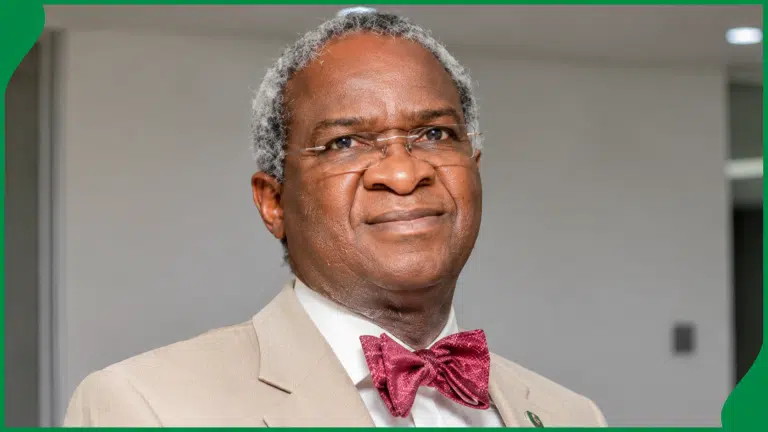
Former Lagos State Governor and Senior Advocate of Nigeria (SAN), Babatunde Fashola, has rejected calls for the death penalty for electoral offenders, insisting that election rigging should be addressed through lawful and proportionate punishment.
Fashola, a former Minister of Power, Works and Housing, said Nigeria must discourage electoral malpractice without resorting to extreme political rhetoric or violence ahead of the 2027 general elections.

He made the remarks during an interview with Arise News while reacting to the controversial “rig and die” slogan attributed to former Deputy Senate President Ovie Omo-Agege and comparisons with former President Muhammadu Buhari’s comments on ballot-box snatchers ahead of the 2019 elections.
Asked whether politicians who rig elections should be sentenced to death, Fashola firmly rejected the proposal.

“Absolutely not. I mean, come on,” he said.
The former governor maintained that although electoral fraud poses a serious threat to democracy, offenders must be punished in accordance with the law.
According to him, the Electoral Act does not prescribe capital punishment for electoral offences, stressing that criminal allegations must be subjected to due process, including a fair trial and an opportunity for the accused to defend themselves.
“The punishment under the Electoral Act is not death. And even if it were death, which I will not support, there’s a process before you take human life; a charge, a trial, an opportunity to defend yourself,” he said.
Fashola urged political parties to abandon the mentality that elections must be won at all costs, advising them to focus on campaigns, voter mobilisation and persuading Nigerians to support their candidates.
“The penalty for rigging is not death. But don’t rig. Go and campaign for your party,” he said.
He explained that political parties have different levels of support across the country and should develop strategies based on their strengths rather than resorting to electoral manipulation.
Fashola Advocates Harsher Penalties
While opposing the death penalty, the former minister called for tougher sanctions against individuals found guilty of serious electoral offences.
He suggested that certain violations should attract stricter prison terms without the option of a fine, arguing that financial penalties alone might not sufficiently discourage misconduct capable of undermining democratic institutions.
“I think maybe there might be stiffer sentences without option of fine, maybe a defined custodial sentence that is deterrent in nature,” he said.
Fashola added that serious acts that threaten the integrity of democracy should not be treated as offences that wealthy individuals can resolve simply by paying fines.
He nevertheless maintained that stronger custodial sentences would be more appropriate than capital punishment for electoral offences.
Calls for Nationwide Civic Education
Beyond strengthening legal sanctions, Fashola advocated a comprehensive civic education programme to improve Nigerians’ understanding of democracy and electoral responsibilities.
He argued that while considerable attention had been devoted to reforming electoral laws, insufficient emphasis had been placed on educating citizens about democratic principles and responsible political participation.
The former governor proposed that civic education should begin at the primary school level and be taught in Nigeria’s major languages to reach a wider audience.
He said improved public understanding of democratic processes could help reduce political desperation and discourage the perception that elections must be treated as contests in which victory is essential at any cost.
Fashola also reminded political actors that electoral fortunes can change, with parties winning or losing depending on voters’ preferences and prevailing circumstances.
He maintained that Nigeria’s democratic development would benefit from a political culture that promotes lawful competition, respects voters’ choices and rejects electoral malpractice without encouraging violence.



BREAKING: Nollywood King Pete Edochie dies at 79
Nollywood King and father, Pete Edochie is dead. He died at the age of 79. His family confirmed that he...


‘I have pedigree’ — Aki reacts to cheating allegations
Popular Nollywood actor Chinedu Ikedieze, popularly known as Aki, has reacted to those accusing him of cheating in his marriage,...

Australian music legend Molly Meldrum dies at 83
Australian music legend Molly Meldrum has died at the age of 83 following a long illness. The veteran music promoter...
2027: Atiku, Obi in presidential race to make money – Shettima claims

Xabi Alonso on the impact and desire of Emmanuel Emegha

CAF unveils finalists for 2026 Men’s Player of the Year Award

Defence Minister urges Nigerian Universities to strengthen national security, technology

Fashola rejects death penalty for election rigging, seeks tougher jail terms

Tinubu approves SUVs for FCT monarchs as Wike declares operation deliver your polling units

Nollywood Actress, Bimbo speaks about Funke Akindele’s ugly past before her shining time

TotalEnergies sells 40% interest in OPL257 offshore Nigeria

President Tinubu ends 29-year wait, elevates 16 FCT chiefs, to upgrade palaces

OAGF urges heads of agencies to assume greater responsibility of personnel budgets, nominal rolls

BREAKING: Suspected ‘Abu Odoma boys’ set Maikano Diesel Generator donated by Muri ablaze overnight at Idah LG

Research funding: Union demands 5% tax from 14 MDAs

2023: Senator Marafa, Ex-governor Yari defect to PDP
