
News
Mock Elections: INEC Chairman vows free, fair elections in 2027

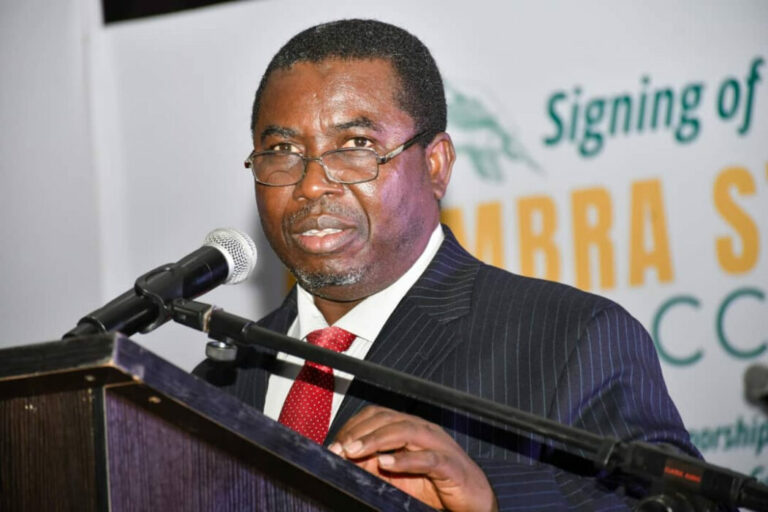
The Chairman of the Independent National Electoral Commission (INEC), Prof. Joash Amupitan, has assured Nigerians that the commission will deliver free, fair, credible, transparent and inclusive elections in 2027.
Amupitan gave the assurance on Saturday in Jos, Plateau State, while monitoring the nationwide mock accreditation and voting exercise organised to assess the commission’s preparedness for the forthcoming general elections.

He expressed satisfaction with the performance of the Bimodal Voter Accreditation System (BVAS), describing the exercise as impressive and commending the turnout at the centres he visited.
“As you can see, the exercise is very impressive. The turnout is also very good. I want to assure Nigerians that INEC will deliver a free, fair, credible, transparent and inclusive election in 2027,” the INEC chairman said.

The mock exercise, conducted in 17,676 selected polling units across the 36 states and the Federal Capital Territory (FCT), was designed to test the readiness of electoral officials, evaluate accreditation technology and assess the electronic transmission of polling unit results ahead of the 2027 polls.
Amupitan explained that the exercise would enable the commission to identify operational and technical challenges and resolve them before the general elections.
He also expressed satisfaction with the speed of voter accreditation, noting that the process was orderly and that voters were accredited within seconds. The successful participation of an elderly woman, he added, demonstrated the system’s capacity to accommodate voters of different age groups.
However, reports from several states revealed challenges that could test INEC’s preparations, including poor voter turnout, delays in the arrival of electoral officials and concerns about public confidence in the electoral process.
In Ondo State, the commission attributed the low turnout at some polling centres partly to expectations of financial inducements and other environmental factors.
The Resident Electoral Commissioner, Mutiu Agboke, said participation at some of the centres visited fell below expectations, despite the importance of the exercise in preparing for the 2027 elections.
Agboke recalled an encounter with an elderly man who reportedly asked whether money had been brought, suggesting that some residents expected financial incentives before participating in electoral activities.
Despite the disappointing turnout, he maintained that the exercise had largely achieved its objectives, particularly in testing the BVAS and assessing the speed of uploading polling unit results to the INEC Result Viewing Portal (IReV).
According to him, accreditation was completed in less than one second at the centres monitored, while the second phase of the exercise was intended to evaluate the uploading of Form EC8A, which contains polling unit results.
He also dismissed concerns that the BVAS would fail in areas without internet connectivity, explaining that the device could operate offline during accreditation and required internet access to upload results.
In Kano State, the exercise exposed concerns over voter participation and the timely deployment of electoral officials in parts of Tarauni, Gwale and Gwarzo local government areas.
At polling units 1 and 2 in Gyadi-Gyadi South Ward, Tarauni, INEC officials confirmed that no voter had participated as of 10am. A similar situation was recorded at Polling Unit 8 in Tarauni Garden, where officials and election materials were available but no voters had arrived.
Some voters, however, participated at polling units 7 and 8 in Diso Ward, Gwale, expressing satisfaction with the performance of the BVAS and reporting no network-related difficulties.
In Gwarzo, prospective participants were waiting at polling units 14 and 15 in Getso and units 1 and 2 in Kawuri, but INEC officials had yet to arrive as of 10am.
The delays highlighted the importance of effective logistics and the timely deployment of personnel, particularly as the commission works towards delivering credible elections in 2027.
Jigawa Records Smoother Exercise
The situation was comparatively better in Jigawa State, where the mock accreditation exercise recorded average turnout across monitored polling centres.
Conducted in all 27 local government areas, the exercise saw voters participate in Kachi Ward, Dutse, and Shuwarin Ward, Kiyawa, with the BVAS reportedly functioning effectively and election materials arriving on time.
An INEC presiding officer in Kachi Ward, Abdulwahamid Abubakar, described the exercise as successful and commended voters who participated.
The APC chairman in the ward, Alhaji Falalu Jibril, also expressed satisfaction with INEC’s arrangements.
However, an ADC stalwart in Shuwarin Ward urged the commission to ensure that political parties did not exploit the exercise to facilitate electoral malpractice during the 2027 general elections.
Imo, Taraba Raise Voter Apathy Concerns
In Imo State, low participation and the late arrival of electoral officials were reported at some designated polling units, although security personnel were said to have arrived at their duty posts as early as 8am.
Visits to Polling Unit 08013 in Azuzi Ward 4 and Polling Unit 006 in Umuowa Ward 6, both in Ngor-Okpala Local Government Area, revealed poor turnout and delays in the arrival of INEC officials.
A resident, Ndidiamaka Uzuigwe, blamed the situation partly on inadequate publicity by the commission. She urged INEC to learn from the exercise, improve its preparations and reconsider the organisation of designated polling units ahead of the general elections.
In Jalingo, the Taraba State capital, the exercise recorded little or no participation at several polling units visited, as many residents continued with their normal activities.
At Anguwan Gullum, Polling Unit 023, Kona Ward, INEC officials had yet to arrive as of 9am. No voter participation was recorded at Model Primary School, Polling Unit 004, Mayo-Gwoi Ward, or Sabon Gari Primary School, Polling Unit 008, Kachala Sambe Ward.
An INEC headquarters staff member on the monitoring team, Mrs Hauwa Enejoh, attributed the situation to public apathy towards civic responsibilities.
“We are here to monitor the mock accreditation exercise, and so far there have been no voters. As you can see, we have not had a single voter since morning,” she said.
Enejoh explained that the exercise was necessary to test the accreditation machines and assess their efficiency ahead of the elections. She added that the commission had embarked on public awareness campaigns and expressed optimism that participation would improve before the general elections.
An observer with the Kimpact Development Initiative (KDI), Miss Lydia Eric Garba, also expressed concern about the poor turnout, saying she had not seen any voter at the polling unit she monitored.
“Even if five to 10 voters had turned up, it would have been better than having nobody come out to exercise their civic responsibility,” she said.
Garba identified inadequate sensitisation as one of the possible reasons for the low turnout, while warning that the development could point to broader voter apathy ahead of 2027.
She noted that frustration among citizens who believe elected representatives have failed to respond adequately to their concerns could further discourage participation in the electoral process.
Beyond the challenges recorded during the mock exercise, questions about the credibility of Nigeria’s electoral process remain prominent, particularly following controversies surrounding the electronic transmission of results during the 2023 general elections.
Political affairs analyst Ben Ukeji said the failure to transmit results electronically in 2023 contributed to public suspicion and weakened confidence in the process.
He argued that the controversy created doubts about the credibility of the election, regardless of debates over the candidates’ performance.
“When you give room for suspicion, especially in a context such as a presidential election, you create that kind of doubt and perception,” Ukeji said.
He stressed that public perception and confidence were essential to democratic governance, noting that the legitimacy of elected leaders depends on the mandate given to them by the electorate.
According to him, democracy must reflect the wishes and aspirations of the people, while public trust remains central to the relationship between citizens and government.
With the 2027 general elections approaching, INEC’s ability to address logistical shortcomings, improve voter education, ensure the reliable performance of its technology and strengthen confidence in results management will be crucial to fulfilling Amupitan’s promise of free, fair and credible polls.
The mock exercise has provided the commission with an opportunity to identify areas requiring improvement before election day. Whether the lessons will translate into a more transparent and widely trusted electoral process remains a key question as preparations for the 2027 elections continue.
CAPITAL POST



BREAKING: Nollywood King Pete Edochie dies at 79
Nollywood King and father, Pete Edochie is dead. He died at the age of 79. His family confirmed that he...


‘I have pedigree’ — Aki reacts to cheating allegations
Popular Nollywood actor Chinedu Ikedieze, popularly known as Aki, has reacted to those accusing him of cheating in his marriage,...


Australian music legend Molly Meldrum dies at 83
Australian music legend Molly Meldrum has died at the age of 83 following a long illness. The veteran music promoter...

Mock Elections: INEC Chairman vows free, fair elections in 2027

APC stalwart escapes assassination as thugs take over Tinubu rally in Zamfara

INEC warns Nigerians against fake mock election results on neis.ng

Rejoinder: Sahara Reporters, where is your proof on Taura?

2027: We’ll vote for Peter Obi, not all NDC candidates – OK Movement

Tinubu approves SUVs for FCT monarchs as Wike declares operation deliver your polling units

Nollywood Actress, Bimbo speaks about Funke Akindele’s ugly past before her shining time

TotalEnergies sells 40% interest in OPL257 offshore Nigeria

President Tinubu ends 29-year wait, elevates 16 FCT chiefs, to upgrade palaces

OAGF urges heads of agencies to assume greater responsibility of personnel budgets, nominal rolls

BREAKING: Suspected ‘Abu Odoma boys’ set Maikano Diesel Generator donated by Muri ablaze overnight at Idah LG

Research funding: Union demands 5% tax from 14 MDAs

2023: Senator Marafa, Ex-governor Yari defect to PDP
