
News
N2.5 Billion Niger Delta Training Funds: Petitioners accuse Regional Development Minister of dodging NASS probe

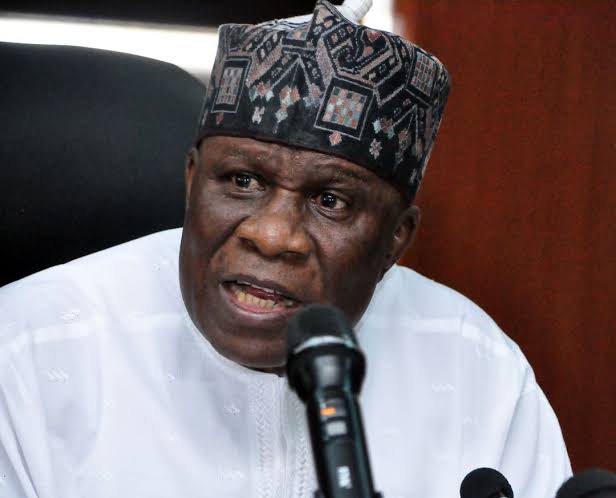
Civil society group alleges irregularities in empowerment programme, seeks EFCC, ICPC intervention
A civil society organisation, Niger Delta Focus (NDF), has accused the Minister of Regional Development, Abubakar Momoh, and his Special Assistant, James Okanoba, of repeatedly failing to appear before a House of Representatives committee investigating alleged irregularities in the implementation of economic empowerment training programmes for beneficiaries in the Niger Delta.

In a press statement dated October 14, 2026, the organisation alleged that the minister and his aide had failed to attend seven scheduled investigative hearings convened by the House Committee on Public Petitions.
According to NDF, the hearings were scheduled for February 11, April 15, June 9, July 7, July 16, September 23 and October 14, 2026.
The organisation said the committee subsequently adjourned the matter to November 10, 2026, and directed its clerk to summon the minister and his aide to appear again.
The allegations stem from a petition submitted by NDF on October 25, 2025, concerning what it described as gross impropriety and abuse of office in the administration of the ministry’s economic empowerment training programmes.
The claims, however, remain allegations, and the minister’s response was not included in the statement made available for this report.
Alleged diversion of programme responsibilities
At the centre of the petition is an allegation that Momoh transferred substantial responsibilities for administering the training programme to Okanoba, whom the organisation claims is not a management staff member of the ministry.
NDF alleged that the arrangement displaced the ministry’s relevant departments and the Permanent Secretary from responsibilities associated with the programme’s implementation.
The group further questioned the selection of beneficiaries, the credibility of consultants and contractors engaged to execute the programme, and the transparency of the process through which participants were selected across the nine states of the Niger Delta.
It also disputed the reported involvement of state governors in submitting beneficiary lists, arguing that such a process differed from the programme’s previous administrative arrangements.
The organisation did not provide documentary evidence in its statement to independently establish the alleged transfer of responsibilities or the extent of any financial irregularities.
Dispute over beneficiaries’ allowances
Another major allegation concerns the amount reportedly paid to participants in the training programme.
NDF claimed that beneficiaries under previous administrations received allowances of ₦500,000 upon completion of a two-week training programme, while participants under the current administration allegedly received ₦250,000.
The organisation questioned the basis for the reported reduction, alleging that beneficiaries had been shortchanged.
It further estimated that programme budgets ranged between ₦1.5 billion and ₦2.5 billion, with between 1,500 and 2,500 participants reportedly covered under previous administrations.
However, the statement did not include budget documents, payment records, audited accounts or beneficiary registers to independently verify the figures or establish whether the amounts cited represented approved entitlements under the current programme.
Establishing the facts would require examination of the relevant appropriation documents, procurement records, contracts, approved beneficiary lists, training schedules and payment vouchers for the 2023 and 2024 fiscal years.
Allegations of favouritism in beneficiary selection
NDF also alleged that the selection process favoured individuals from Edo State at the expense of eligible stakeholders from other Niger Delta states.
The organisation described the alleged practice as nepotistic and unjust, calling for a review of the beneficiary selection process and the criteria used to determine eligibility.
It also questioned whether the training programmes for 2023 and 2024 had been implemented as approved, raising concerns about the quality and scale of training delivered to participants.
The allegations raise questions about how the ministry verified attendance, confirmed the delivery of training services and ensured that public funds reached the intended beneficiaries.
Nevertheless, the claims of favouritism, inadequate implementation and financial impropriety require independent verification through official records and responses from the ministry and the contractors involved.
Committee hearings and accountability questions
NDF described the minister’s alleged repeated absence from the committee’s proceedings as unacceptable, particularly given his previous experience as a member of the National Assembly.
The organisation argued that public officials should cooperate with legislative oversight processes and respond to allegations concerning the administration of public funds.
The reported adjournment to November 10 was expected to provide another opportunity for the committee to hear from the minister and his aide.
The committee’s official records, including the original summons, hearing notices, attendance registers, minutes and any subsequent decisions, would be important in establishing the circumstances surrounding the reported absences and the committee’s next steps.
A failure to attend a hearing, if established, does not by itself prove the underlying allegations of financial misconduct. The committee’s findings and any supporting documentary evidence would be necessary to determine whether breaches occurred.
NDF calls for anti-corruption investigation
The organisation called on Senate President Godswill Akpabio and Speaker of the House of Representatives Tajudeen Abbas to intervene and ensure that the petition receives proper consideration.
It also appealed to President Bola Ahmed Tinubu to direct the relevant authorities to examine the allegations against the minister.
Specifically, NDF called for investigations by the Economic and Financial Crimes Commission (EFCC) and the Independent Corrupt Practices and Other Related Offences Commission (ICPC) into the handling of funds allocated to the training programmes for the 2023 and 2024 fiscal years.
It also urged the Code of Conduct Bureau (CCB) to examine the alleged abuse of public office.
The group demanded the refund of any allowances found to have been withheld unlawfully from beneficiaries and called for the minister’s resignation if the allegations were substantiated.
Questions requiring answers
The controversy raises several questions that investigators and the ministry would need to address.
These include the amount appropriated and released for the training programmes in 2023 and 2024; the number of beneficiaries approved and trained; the criteria used to select participants; the contractual arrangements with consultants and training providers; and the amounts authorised and actually paid to beneficiaries.
Investigators would also need to establish whether the reported reduction in allowances was authorised, whether the training programmes were delivered as contracted, and whether any public funds were diverted or improperly expended.
The ministry’s response would be essential in clarifying its administrative arrangements, the basis for the payments, and the reasons for any failure to attend the committee’s hearings.
As of the information contained in NDF’s October 14 statement, no findings by the committee or anti-corruption agencies were provided to establish the allegations as proven facts.
The outcome of the legislative inquiry, the documentary evidence presented and the minister’s response will be central to determining whether the allegations disclose administrative shortcomings, breaches of public financial regulations or criminal misconduct.
Editorial note: This report is based on allegations contained in a statement attributed to Niger Delta Focus. Before publication, the newspaper should obtain the petition and relevant National Assembly records, verify the programme’s approved budgets and payment figures, and seek responses from the Ministry of Regional Development, Abubakar Momoh, James Okanoba and the House Committee on Public Petitions. Any response received should be incorporated fairly.







Nollywood Actress, Bimbo speaks about Funke Akindele’s ugly past before her shining time
A colleague of Nollywood actress, Funke Akindele has spoken about Funke’s struggles in the past before she shot to limelight....

Mista Xto marks 30 years anniversary in music industry
Nigerian musician and entertainer, Mista Xto, is set to mark 30 years in the entertainment industry with a special anniversary...


Music star John Anderson dies at 71
Country music singer John Anderson, known for hits including Swingin’, Straight Tequila Night and Seminole Wind, has died at the...

Eisenkot, Netanyahu meet for two-hour security briefing amid tensions over potential Iran strikes

NLC issues Delta govt two-week ultimatum over alleged harassment, ban on MOUN

Emefiele created system to extort Forex seekers, EFCC tells Court

Namadi, Tompolo to Jigawa voters: Give your 2m votes to Tinubu, 31 campaign vehicles unveiled

I was once a “millionaire”, became a “billionaire farmer” 20 years ago – Terry Waya

Court sentences christian mother to 14 years imprisonment for sharing faith with muslim woman

‘Suspend frequent travels in pursuit of money and attend to me’, heavily pregnant Jarvis to Peller

Nigeria meets OPEC quota for 5th consecutive month as daily peak hits1.84m barrels in September

Wike inducted into Idoma Hall of Fame, calls for shift in ‘politics of entitlement ‘

Ebola: Tinubu gov’t tells Nigerians not to panic

BREAKING: Suspected ‘Abu Odoma boys’ set Maikano Diesel Generator donated by Muri ablaze overnight at Idah LG

Research funding: Union demands 5% tax from 14 MDAs

2023: Senator Marafa, Ex-governor Yari defect to PDP
