
Sponsored
The Illusion of Power: When Institutions forget whom they serve

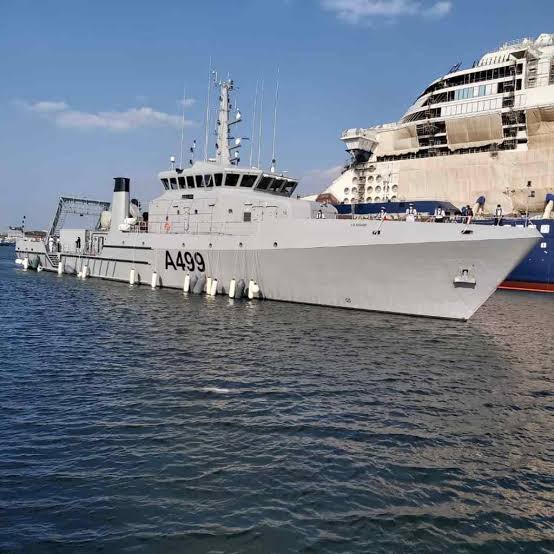
The Provisional Committee for the Establishment of the Nigerian Coast Guard (PC-NCG) respectfully submits that, given how long Nigeria has waited for a clear and coherent solution to its maritime law-enforcement challenges, the Senate’s recent call for further consultation on the Nigerian Coast Guard Establishment Bill should not become another invitation to prolong debate over a problem for which the evidence is established, the need is evident, and the solution is already within reach.
The nation has consulted, studied, deliberated, and accumulated sufficient knowledge to act; having realized that the absence of Coast Guard is the reason for continued existence of institutional gap, overlapping mandate, fragmented funding, constrained operational capability and fragmented response; what is now required is the courage to move from recognition to resolution, from deliberation to decision, and from institutional hesitation to decisive legislative action. Nigeria must not remain held back by competing interests, institutional preferences, or what may be described as caged consciences that struggle to place the national interest above every other consideration.

From successive Senates to the present 10th Senate, the overshadowing vested interests against the Bill has remained intact and always come up claiming that Nigeria is fundamentally different from other nations that operate both naval and coast guard institutions. Whatever legitimate differences may exist between countries, such differences cannot reasonably be used to deny Nigeria the institutional arrangements necessary to meet the particular realities of her own maritime domain.
The argument that Nigeria is not like other countries cannot become an argument that Nigeria should remain without institutions that other countries have found necessary to address comparable maritime responsibilities. Its continued existence therefore demands not another justification for maintaining the status quo, but a sober examination of the assumptions, interests, and perceptions of power that may have contributed to delaying meaningful reform. The question before the nation is no longer whether the need exists, but whether the present moment will produce the legislative courage required to translate long-established knowledge and evidence into a coherent and enduring national solution.

At the heart of the matter, lies a question far greater than institutional preference and illusion of power: what is power, influence and public responsibility for, whom does it serve, and to whom is it ultimately accountable? Should the destiny of Nigeria be determined by personal interests, institutional preferences, or perceived power of individuals? Shouldn’t it be determined by what best serves the nation and its people? power, authority, wealth, armies, influence, and position, but none of these can stand against the supreme authority of Jehovah. Again and again, God intervenes in human affairs and demonstrates that He alone has the final word.
Beyond the appearance of power, a fundamental truth remains: power does not belong to those who merely occupy high office. Office may confer authority; it does not confer greatness. Position may command obedience; it does not command moral legitimacy. Wealth does not belong to those who merely control public resources. Influence does not belong to those who command public institutions or wield the machinery of the State for personal purposes.
True power is the strength to uphold justice when injustice is profitable; true influence is the ability to inspire trust rather than fear; and true wealth is the integrity that cannot be bought, stolen, corrupted or caged. Every office will one day be vacated. Every title will one day be surrendered. Every earthly privilege will one day pass away.
On that day, neither official position, accumulated wealth, nor the instruments of privileged power will speak. Only truth, justice, integrity and the record of one’s service to God, humanity and the nation will endure. Those with real power who earn respect are they who served, sacrificed and accepted accountability. They understood that public office is a sacred trust, not a private inheritance; that authority is a responsibility, not a license for drowning national interest; and that every exercise of power is ultimately answerable to God and to history. To Those Who Have Consistently Opposed the Coast Guard:
Do Not Mistake Influence for Permanence. Those who have, at different times, opposed, resisted, delayed, or questioned the establishment of the Nigerian Coast Guard, the issue deserves a deeper examination than institutional preference or the preservation of established arrangements. No office, rank, influence, professional allegiance, or institutional interest is permanent; and no individual or institution is greater than the nation whose laws, resources, opportunities, and public trust made that position possible.
History repeatedly demonstrates that human authority has limits and that resistance to necessary reform cannot permanently defeat the legitimate aspirations of a nation. If the objections are genuine, let them be subjected to evidence, law, operational reality, and the national interest. But if opposition is sustained merely because a reform alters established influence or institutional advantage, then conscience must ask a simple question: when the nation needs to move forward, should those entrusted with serving Nigeria become the reason Nigeria cannot move? The Coast Guard should therefore be judged not by whose institutional territory it touches, but by what Nigeria gains from its establishment.
To the Distinguished Senators: let history record courage, not hesitation. As such, the Nigerian Coast Guard Establishment Bill now presents the 10th Senate with an opportunity to do more than pass another piece of legislation; it presents an opportunity to close a longstanding institutional gap and establish a coherent maritime law-enforcement architecture for Nigeria. The duty of a legislator is not merely to preserve what exists, but to recognize what the nation requires and provide the legal framework to meet that need. Where evidence establishes a national necessity, where institutional gaps persist, and where the national interest demands reform, legislative courage must rise above institutional preference and temporary considerations.
We therefore urge the distinguished Senate to examine the Bill on its constitutional, operational, economic, security, and national-interest merits and, having resolved every legitimate concern, bring the matter to decisive legislative conclusion. Let the record of the 10th Senate show that when Nigeria needed institutional courage, its lawmakers chose Nigeria.
To all stakeholders in Nigeria’s maritime sector—public institutions, regulators, operators, professionals, coastal communities, labour, industry, academia, and development partners—the time has come to place the collective maritime interest of Nigeria above institutional rivalry and sectional preference. Nigeria’s maritime domain is too vast, too economically important, and too strategically vital to be governed through fragmented responsibilities, overlapping mandates, avoidable rivalry, and gaps in enforcement.
The establishment of a dedicated Coast Guard should therefore not be approached as a contest over institutional territory, but as an opportunity to clarify responsibilities, strengthen coordination, improve enforcement, protect lives and assets, support maritime commerce, secure coastal communities, and unlock the full potential of the blue economy. No stakeholder loses when Nigeria’s maritime domain becomes safer, better governed, more productive, and more secure.
The greatest victory is not for one institution; it is for the maritime future of Nigeria. Let the Maritime Domain Be Greater Than Institutional Rivalry. To every facilitator, advocate, supporter, professional, expert, community leader, maritime stakeholder, legislator, researcher, organization and citizen who has contributed to the pursuit of a Nigerian Coast Guard, remain steadfast. Great national reforms are rarely accomplished without resistance, delay, misunderstanding, or opposition. The measure of a worthy cause is not the absence of resistance, but the strength of the evidence, the legitimacy of the purpose, and the persistence of those who carry it.
Let the pursuit remain anchored in truth, law, evidence, national interest, and service—not bitterness, personal ambition, or hostility toward those who disagree. History has repeatedly shown that positions of human power are temporary, while the consequences of decisions can endure for generations. Above all, let every facilitator remember that public causes are ultimately accountable not only to history and posterity, but to Almighty God, who sees the motive behind every action. Do the work faithfully, speak the truth courageously, remain open to legitimate correction, and leave the outcome to God.
Nigeria is greater than any individual, and the future of Nigeria is worth persevering for. Let no individual, office, institution, interest, or temporary opposition become greater than the nation whose future we have all been entrusted to protect. Nations are built by those who refuse to abandon necessary causes.
Capt. Noah Ichaba, Chief Executive & Accounting Officer of the PC-NCG.













Frank Edwards: I could have owned three private jets if I had yielded to temptation
Gospel singer recounts how he rejected a lucrative music deal that required him to replace the name of Jesus with...


NAN Staff appointed Media Director, Ashaka Carnival Group
Mr Emmanuel Mogbede, an Assistant Editor in Chief of the News Agency of Nigeria (NAN)has been appointed as the Director...


Ayra Starr joins 2027 Coachella lineup alongside Dua Lipa, SZA, Madonna
Nigerian singer Ayra Starr has been named among the artistes scheduled to perform at the 2027 edition of the Coachella...

Jimmy insisted he remains Senior Pastor of Fountain of Life Church
Vinhomes Green Paradise: An ESG++ Megacity and the Future of Sustainable Urban Living

Epay Showcases Its Global Cross-Border Financial Capabilities at Singapore FinTech Festival 2026
Oyo Govt receives open defecation-free status certificates for two LGAS

Troops raid bandits’ hideout in Kogi, recover two AK-47 rifles, 65 rounds of ammunition

APC ‘rented crowds’ to fill ’empty seats’ at Kaduna rally – Opposition ADC claims

UbuntuCare Africa introduces ‘Gift Health’ to Nigerians at OffChart NXT 2026

BREAKING. Imo West Senatorial District: Uzodinma loses as Court orders publication of Okorocha as candidate

Kogi: Suspected kidnappers informants arrested after robbery operation

America supported Biafra, lack morality to claims of Christian genocide – Gumi

BREAKING: Suspected ‘Abu Odoma boys’ set Maikano Diesel Generator donated by Muri ablaze overnight at Idah LG

Research funding: Union demands 5% tax from 14 MDAs

2023: Senator Marafa, Ex-governor Yari defect to PDP
