
News
NELFUND rules out publishing names of student loan beneficiaries

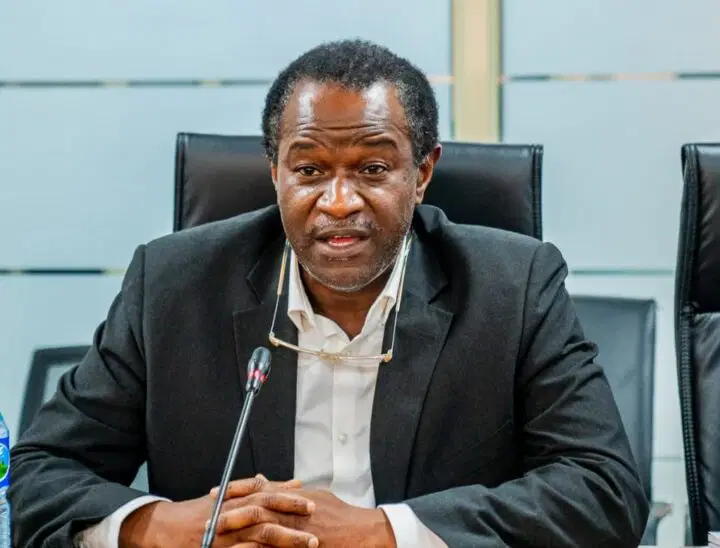
The Nigerian Education Loan Fund (NELFUND) has ruled out publishing the names of individual beneficiaries of its student loan scheme, citing data protection concerns and the need to protect students from embarrassment and potential targeting.
The Managing Director and Chief Executive Officer of NELFUND, Akintunde Sawyerr, said the fund would instead disclose the institutions that received payments and the number of students benefiting from the scheme.

Sawyerr stressed that students who borrowed money to finance their education should not have their financial circumstances exposed publicly.
According to him, NELFUND would continue to provide information on its disbursements without revealing the identities of individual beneficiaries.

The position comes amid growing calls from education and financial experts for greater transparency and accountability in the administration of the scheme, particularly as concerns persist over its long-term sustainability and loan recovery arrangements ahead of the first repayment window in 2028.
Since the launch of the student loan portal on May 24, 2024, NELFUND has disbursed a total of ₦375.28 billion as of November 9, 2026.
The amount comprises ₦194.77 billion paid as institutional fees and ₦180.50 billion disbursed as upkeep allowances.
The fund also reported that 1,675,474 student loans had been disbursed across 320 beneficiary institutions.
On the possibility of introducing interest on the loans, Sawyerr said the fund had no immediate plans to do so, maintaining that Nigerian students deserved access to interest-free education financing.
He also rejected calls for the conversion of the loans into grants, arguing that beneficiaries at the tertiary education level should understand their repayment obligations and be prepared to repay after securing employment.
According to him, the scheme is designed to provide students with financial support to obtain an education and improve their prospects of earning a living.
On concerns about the fund’s sustainability, the NELFUND chief executive said loan recovery was only one of several potential sources of financing.
He identified statutory allocations, investments, donations and other fundraising opportunities as additional sources of funding, arguing that educating more young Nigerians could expand the country’s tax base and generate additional revenue for public services, including education.
Sawyerr also disclosed that some beneficiaries had started repaying their loans, while several Nigerians had expressed interest in supporting the fund by paying the educational expenses of other students.
Addressing concerns about the absence of a clear statutory funding arrangement, he maintained that NELFUND was already covered under the development levy, from which it receives 15 per cent of the four per cent allocation shared among eligible beneficiaries.
The NELFUND boss further explained that the fund’s recently introduced tokenisation system was designed to prevent double payments of tuition fees and give students greater control over the payment process.
Under the previous arrangement, approved tuition fees were paid directly into institutions’ accounts, while separate allowances were provided to students for upkeep.
However, the system sometimes resulted in double payments when students had already paid their fees before NELFUND released the corresponding funds to their institutions. Some beneficiaries also experienced difficulties confirming fee payments ahead of examinations and other academic deadlines.
Sawyerr said the new system allows students to receive electronic tokens on their mobile phones and authorise tuition payments to their respective institutions.
The tokens are restricted to the institutions to which the beneficiaries have been admitted, preventing the funds from being diverted to other purposes.
On allegations of excessive tuition fee increases by some institutions, Sawyerr said NELFUND had made it clear that it would not finance fees considered excessive.
He disclosed that a price dispute feature had been introduced on the fund’s new portal, enabling students to challenge tuition charges before submitting loan applications.
The complaints, he said, would be forwarded to NELFUND for engagement with the affected institutions.
However, he acknowledged that the fund lacked the legal authority to penalise institutions over fee increases. Its available option, he explained, was to withdraw financial support, while the relevant regulatory agencies would be responsible for disciplinary action.
He identified the National Universities Commission (NUC), the National Board for Technical Education (NBTE) and the National Commission for Colleges of Education (NCCE) as the regulatory bodies responsible for the affected institutions.
Sawyerr maintained that the combination of interest-free loans, alternative funding sources, improved payment controls and cooperation with regulatory agencies would help strengthen the scheme and support access to tertiary education in Nigeria.












Nollywood Actress, Bimbo speaks about Funke Akindele’s ugly past before her shining time
A colleague of Nollywood actress, Funke Akindele has spoken about Funke’s struggles in the past before she shot to limelight....


Mista Xto marks 30 years anniversary in music industry
Nigerian musician and entertainer, Mista Xto, is set to mark 30 years in the entertainment industry with a special anniversary...


Music star John Anderson dies at 71
Country music singer John Anderson, known for hits including Swingin’, Straight Tequila Night and Seminole Wind, has died at the...

Eisenkot, Netanyahu meet for two-hour security briefing amid tensions over potential Iran strikes

NLC issues Delta govt two-week ultimatum over alleged harassment, ban on MOUN

Emefiele created system to extort Forex seekers, EFCC tells Court

Namadi, Tompolo to Jigawa voters: Give your 2m votes to Tinubu, 31 campaign vehicles unveiled

I was once a “millionaire”, became a “billionaire farmer” 20 years ago – Terry Waya

Court sentences christian mother to 14 years imprisonment for sharing faith with muslim woman

‘Suspend frequent travels in pursuit of money and attend to me’, heavily pregnant Jarvis to Peller

Nigeria meets OPEC quota for 5th consecutive month as daily peak hits1.84m barrels in September

Wike inducted into Idoma Hall of Fame, calls for shift in ‘politics of entitlement ‘

Ebola: Tinubu gov’t tells Nigerians not to panic

BREAKING: Suspected ‘Abu Odoma boys’ set Maikano Diesel Generator donated by Muri ablaze overnight at Idah LG

Research funding: Union demands 5% tax from 14 MDAs

2023: Senator Marafa, Ex-governor Yari defect to PDP
