
Sponsored
Bayelsa Boat Tragedy: Nigeria has road safety officers, where is the equivalent institutional presence for river safety

The Provisional Committee for the establishment of the Nigerian Coast Guard wishes to note that the problem is not merely what happens on our waterways. It is also what is missing from our waterways safety-control architecture or management.
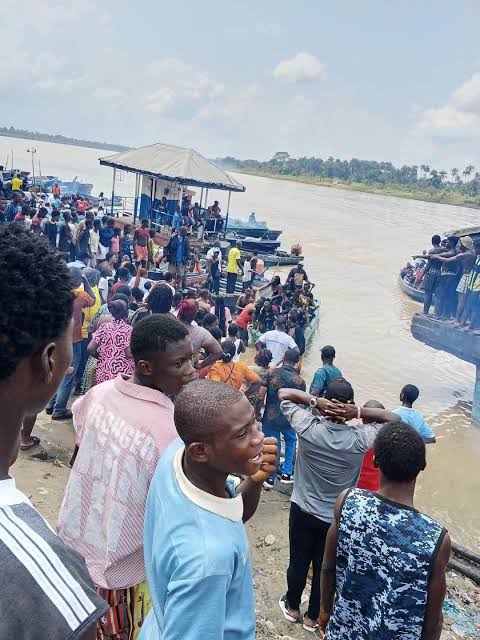
The tragic boat accident in Southern Ijaw Local Government Area of Bayelsa State, which reportedly claimed four lives while 24 passengers were rescued, presents Nigeria with a question that deserves national attention:

We have road safety officers to regulate, monitor and promote safety on our roads. Why does the safety of millions of Nigerians who depend on our rivers and inland waterways not receive an equally coherent, visible and adequately coordinated and accountable institutional safety presence?
When road accidents occur, we do not limit the national conversation to whether a driver was careless, a vehicle had faulty brakes or a passenger failed to observe safety precautions. We also examine road conditions, traffic regulation, enforcement, vehicle inspections, speed control, emergency response and the institutional arrangements responsible for preventing accidents.

Why should our waterways be treated differently?
A river is not an uncontrolled passageway where vessels can operate without effective safety supervision. It is a transportation corridor. It carries passengers, children, traders, workers, fishing communities and essential goods. Every person boarding a passenger boat has a legitimate expectation of safety and protection.
The Bayelsa incident raises fundamental questions of who is responsible for ensuring that passenger boats are fit for navigation? Who provides effective oversight of passenger loading and vessel capacity? Who monitors compliance with life-jacket requirements? Who ensures that unsafe vessels are identified before they embark? Who provides routine waterway safety patrols, and who coordinates immediate emergency response when a vessel develops a problem? Who is identifiably accountable?
Nigeria already has agencies with various statutory responsibilities relating to inland waterways, maritime safety and law enforcement. The issue, therefore, is not to pretend that no agency exists. It is to examine whether their respective responsibilities, personnel, resources, enforcement presence and emergency-response capabilities are sufficiently integrated into a coherent and accountable national system.
THE QUESTION IS NOT WHETHER NIGERIA HAS AGENCIES. THE QUESTION IS WHETHER NIGERIA HAS A COHERENT INSTITUTIONAL SYSTEM THAT KEEPS ITS WATERWAYS SAFE.
This is where the proposed Nigerian Coast Guard becomes an important subject of national legislative consideration.
The proposed Coast Guard, as envisaged under the appropriate enabling legislation, should provide a dedicated national institutional framework for civil maritime safety, security, protection, waterway patrol, civil maritime law enforcement and coordinated emergency response, with clearly defined jurisdiction and effective collaboration with existing agencies.
Its relevance is not that it would magically eliminate every accident or replace every existing maritime institution. Its relevance lies in the opportunity to establish a clearly mandated, professionally structured and adequately coordinated institution with responsibility for bringing greater coherence, presence, accountability and effectiveness to Nigeria’s civil maritime safety and security management.
The distinction is important: road safety is not achieved by investigating accidents alone; it requires prevention, monitoring, regulation and enforcement. Waterway management and safety must be approached with the same seriousness and patriotism.
This is one of the public-interest considerations that should urgently inform the ongoing legislative consideration of Senate Bill 575.
The Bayelsa tragedy must therefore prompt more than condolences, warnings to boat operators and post-accident investigations. It should stimulate a national examination of the institutional arrangements governing passenger safety across our rivers, creeks, coastal waters and inland waterways.
We cannot wait for another boat to capsize before remembering that our rivers need safety supervision. We cannot wait for another family to lose a child before asking who is responsible for preventing avoidable waterway tragedies.
Nigeria needs a system that is present before accidents happen, responsive when emergencies occur, and accountable after incidents are investigated.
The safety of Nigerians should not depend solely on the personal discretion of a boat operator. It must be supported by a functional, enforceable and coordinated institutional framework.
OUR ROADS HAVE A RECOGNISED ROAD SAFETY FRAMEWORK. OUR WATERWAYS DESERVE A COHERENT CIVIL MARITIME SAFETY AND SECURITY FRAMEWORK TOO.
The lives lost in Bayelsa must not become just another casualty figure. Let this tragedy deepen the national conversation about the future of civil maritime governance in Nigeria.
No Blue Economy Without Blue Security, Blue Justice, Blue Knowledge and Blue Reward.
Issued by:
Capt. Noah Omonu Ichaba
Chief Executive and Accounting Officer
Provisional Committee of the proposed Nigerian Coast Guard (PC-NCG)








Frank Edwards: I could have owned three private jets if I had yielded to temptation
Gospel singer recounts how he rejected a lucrative music deal that required him to replace the name of Jesus with...

NAN Staff appointed Media Director, Ashaka Carnival Group
Mr Emmanuel Mogbede, an Assistant Editor in Chief of the News Agency of Nigeria (NAN)has been appointed as the Director...


Ayra Starr joins 2027 Coachella lineup alongside Dua Lipa, SZA, Madonna
Nigerian singer Ayra Starr has been named among the artistes scheduled to perform at the 2027 edition of the Coachella...

The 15th China Innovation and Entrepreneurship Competition—2026 China-ASEAN Specialized Event Final Concludes Successfully

UnionPay International Showcases Agentic Payments and Financial AI Innovations at Singapore FinTech Festival 2026

Bayelsa Boat Tragedy: Nigeria has road safety officers, where is the equivalent institutional presence for river safety

Senate applauds Air Peace over N80,000 special fare for military personnel

Gumi calls for dethronement of Daura Emir if found involved in immoral misconduct

APC ‘rented crowds’ to fill ’empty seats’ at Kaduna rally – Opposition ADC claims

UbuntuCare Africa introduces ‘Gift Health’ to Nigerians at OffChart NXT 2026

BREAKING. Imo West Senatorial District: Uzodinma loses as Court orders publication of Okorocha as candidate

Kogi: Suspected kidnappers informants arrested after robbery operation

America supported Biafra, lack morality to claims of Christian genocide – Gumi

BREAKING: Suspected ‘Abu Odoma boys’ set Maikano Diesel Generator donated by Muri ablaze overnight at Idah LG

Research funding: Union demands 5% tax from 14 MDAs

2023: Senator Marafa, Ex-governor Yari defect to PDP
