
Oil and Gas
Senate probes LPG exports as Nigeria battles high cooking gas prices


Lawmakers question export figures, demand answers over domestic supply shortages
The Senate Committee on Gas Resources has raised concerns over the inadequate supply of Liquefied Petroleum Gas (LPG) to the Nigerian domestic market, launching an investigation into export figures and arrangements that could be affecting the availability and affordability of cooking gas.
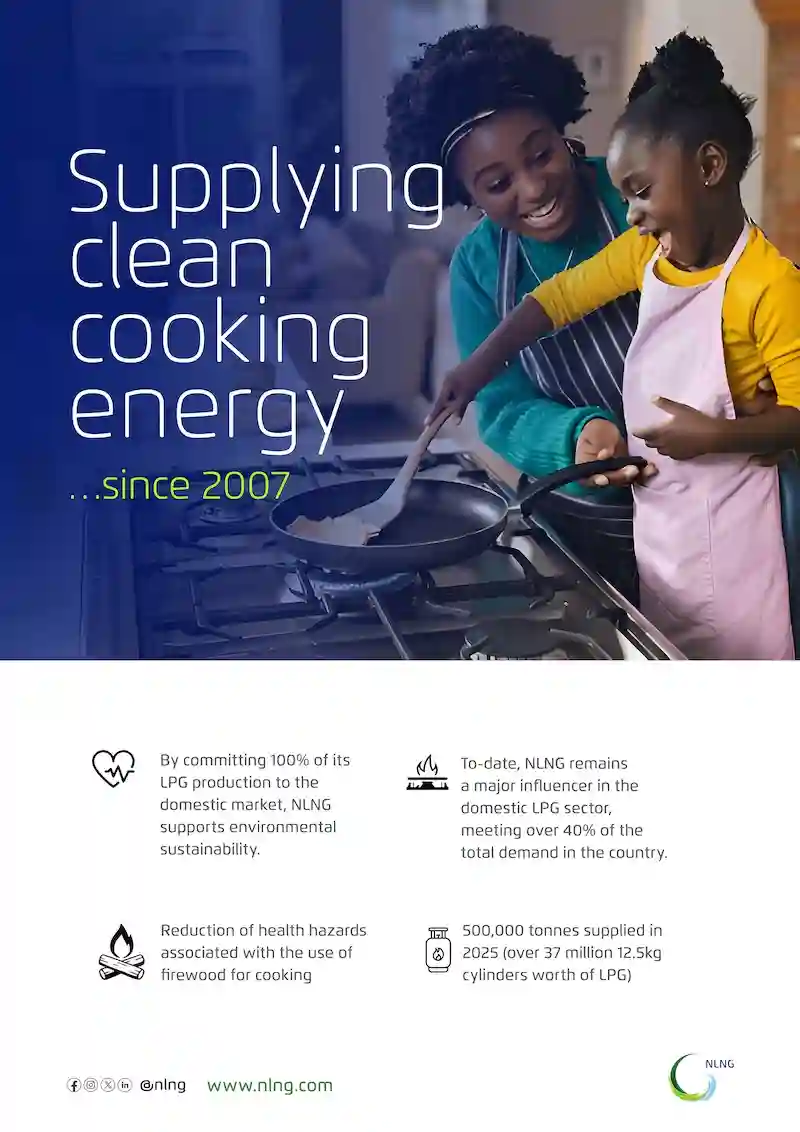
The committee, chaired by Senator Jarigbe Jarigbe, who represents Cross River North, raised the concerns on Wednesday during an investigative meeting with key stakeholders in the gas industry at the National Assembly complex in Abuja.
The session focused on LPG availability, export volumes, revenue remittances and the need to ensure that Nigeria’s gas resources serve the interests of its citizens.

With many households facing the financial burden of cooking gas costs, the lawmakers expressed concern that inadequate domestic supply could undermine efforts to make the commodity more affordable.
Jarigbe said the committee was determined to uncover the reasons behind the supply shortfall and examine how existing export arrangements could affect the domestic market.
He linked the investigation to Presidential Executive Order 9, signed by President Bola Ahmed Tinubu on February 13, 2026, which seeks to improve oil and gas revenue remittances to the Federation Account.
Although the order primarily addresses revenue remittances rather than expressly mandating domestic LPG supply, the senator argued that the country’s gas resources should be managed in ways that also benefit ordinary Nigerians.
“LPG has to be supplied to the domestic market for the good of the common man as intended with Executive Order 9 issued by President Tinubu to ameliorate the sufferings of the masses on price of gas,” Jarigbe said.
Speaking to journalists after the meeting, he stressed that the committee would pursue the matter to ensure that the reasons for inadequate supply were properly established.
“We are already working for Nigerians here, for our people, and that’s why we want to get to the root of it,” he said.
The senator maintained that increased domestic supply could help ease pressure on prices, provided other market conditions remained favourable.
“And we’ll make sure that the price of gas goes down, because when there is adequate supply in response to demand, the price will naturally go down,” he added.
Senate Questions Industry’s Explanation for LPG Exports
One of the issues raised during the hearing was the composition of LPG produced at certain facilities, particularly the proportion of propane to butane.
According to Jarigbe, industry operators had cited an 80:20 propane-to-butane ratio as a reason for exporting the product rather than supplying it to the domestic market.
The senator argued that blending could potentially adjust the composition to make more LPG suitable for local consumption.
He advocated a blend containing 80 per cent butane and 20 per cent propane for the Nigerian market.
“It’s a matter of blending, so that it will be the reverse: the quantity of butane will be 80%, while the quantity of propane will be 20% for local consumption in Nigeria,” he said.
However, the technical and commercial feasibility of such adjustments, as well as their implications for supply and pricing, will require further examination by the relevant industry stakeholders.
During the hearing, Caroline Kemen Niagwan, Deputy Comptroller-General of the Nigeria Customs Service in charge of Tariff and Trade, presented figures on LPG exports recorded by the agency.
She told the committee that Nigeria recorded approximately 190.8 metric tonnes of LPG exports in 2024 and 32.8 metric tonnes in 2025.
The figures presented placed cumulative exports for the two years at 223.699 metric tonnes.
Niagwan also disclosed that the Customs Service had no record of LPG exports at Escravos in 2026 as of the period covered by its system records.
She explained that LPG exports require an export clearance certificate from the Federal Ministry of Industry, Trade and Investment, alongside the necessary declarations by exporters through the Customs Service’s automated platform.
“For the 2026 export of LPG at Escravos, our system showed no records of export because, for you to make an export, there must be an export clearance certificate sent to us by the Federal Ministry of Industry, Trade and Investment, which we send to the commands, and the exporter must make a declaration on our system, which is automated,” she said.
Niagwan added that the agency’s system contained records for 2024 and 2025 but none for 2026.
She further disclosed that approved LPG export volumes stood at 400 metric tonnes for the Nigerian National Petroleum Company Limited (NNPC) and 386.4 metric tonnes for Chevron.
The figures are expected to form part of the committee’s continuing examination of export arrangements and the relationship between approved export volumes, actual shipments and domestic supply.




BREAKING: Nollywood King Pete Edochie dies at 79
Nollywood King and father, Pete Edochie is dead. He died at the age of 79. His family confirmed that he...


‘I have pedigree’ — Aki reacts to cheating allegations
Popular Nollywood actor Chinedu Ikedieze, popularly known as Aki, has reacted to those accusing him of cheating in his marriage,...


Australian music legend Molly Meldrum dies at 83
Australian music legend Molly Meldrum has died at the age of 83 following a long illness. The veteran music promoter...

Senate probes LPG exports as Nigeria battles high cooking gas prices

A Sad Memory of Yahaya Bello’s Final Days in Office: The destitution of monarchs that left painful mark on Kogi’s history

INEC, NSA warn political actors against violence ahead of 2027 elections

Life Sciences: From Lab to Landscape – How the Evolution of Life Sciences is Transforming Real Estate Demand on the Chinese Mainland

Enape Paul Odogwu defends IJN’s record, cites Iyale township road, other projects in response to Ben Ikani Okolo

UbuntuCare Africa introduces ‘Gift Health’ to Nigerians at OffChart NXT 2026

BREAKING. Imo West Senatorial District: Uzodinma loses as Court orders publication of Okorocha as candidate

Kogi: Suspected kidnappers informants arrested after robbery operation

NELFUND set to stop students collecting tuition fees after loan payment

Four dead as Niger governor’s convoy, FUT Minna students vehicle collide

BREAKING: Suspected ‘Abu Odoma boys’ set Maikano Diesel Generator donated by Muri ablaze overnight at Idah LG

Research funding: Union demands 5% tax from 14 MDAs

2023: Senator Marafa, Ex-governor Yari defect to PDP
