
News
Mambilla $6bn Fraud Trial: Court admits FEC minutes showing no approval for Sunrise contract

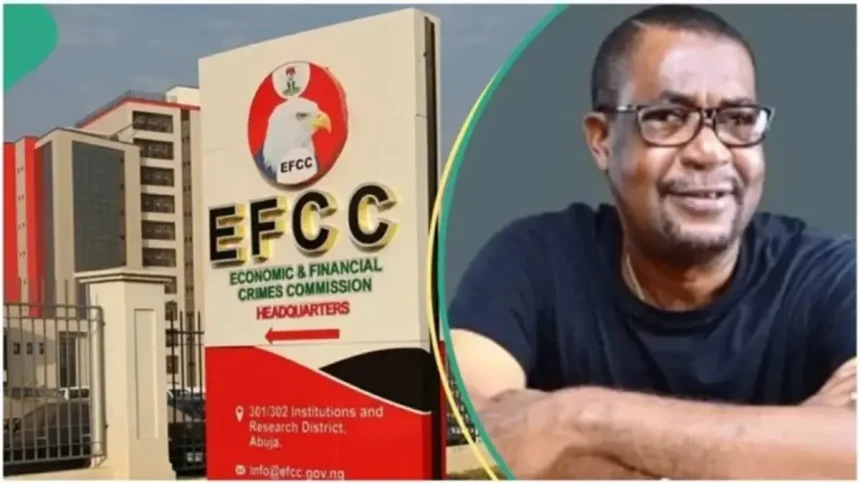
ABUJA — The Federal Capital Territory High Court in Apo, Abuja, has admitted minutes of a Federal Executive Council (FEC) meeting indicating that the Council did not approve the award of the $6 billion Mambilla Hydroelectric Power Project contract to Sunrise Power and Transmission Company Limited.
The document was admitted on Thursday, November 26, 2026, during the trial of former Minister of Power and Steel, Olu Agunloye, over allegations of official corruption and the fraudulent award of the multibillion-dollar contract.

A former Minister of Power, Liyel Imoke, who testified as the sixth prosecution witness (PW6), confirmed that he attended the FEC meeting held on July 23, 2003, at which the minutes of the previous meeting of May 21, 2003, were adopted.
The 17th FEC meeting minutes, tendered by the prosecution and admitted by Justice Jude Onwuegbuzie, indicated that the Council did not approve Agunloye’s memo seeking the award of the contract to Sunrise Power and Transmission Company Limited.

Agunloye is standing trial on an amended seven-count charge bordering on alleged official corruption and the purported fraudulent award of the $6 billion contract while he served as Minister of Power and Steel between 2002 and 2003.
The allegations remain before the court, and the admission of the document does not, in itself, amount to a determination of the defendant’s guilt.
During Thursday’s proceedings, prosecution counsel, Abba Mohammed, SAN, re-examined Imoke on whether he attended subsequent FEC meetings after the May 21, 2003 meeting.
The witness answered in the affirmative and was subsequently shown the minutes of the 17th FEC meeting, which he identified as a document he recognised.
Mohammed then sought the court’s permission to tender the minutes, alongside a forwarding letter dated November 12, 2026, as evidence.
However, defence counsel, Adeola Adedipe, SAN, opposed the admissibility of the documents, arguing that the prosecution had failed to satisfy the legal requirements for their admission.
Adedipe contended that the document contained an attachment of an original document that could not be tendered from the bar. He further argued that the prosecution was neither the maker of the document nor a witness to the proceedings recorded in it.
The defence counsel maintained that only a certified true copy could be admitted under the circumstances and argued that the necessary foundation for identifying the document had not been established through the witness before it was tendered.
Responding to the objection, Mohammed argued that the document became relevant because of issues raised by the defence during the cross-examination of Imoke.
According to the prosecution counsel, the re-examination provided an opportunity to clarify whether PW6 attended the 17th FEC meeting and to establish the existence of the relevant records.
Mohammed relied on Section 215(2) of the Evidence Act and cited the Supreme Court decision in Abdullahi v. FRN (2016), arguing that a certified true copy of a public document could be tendered from the bar.
He also cited Joseph v. The State (2021) and Section 146 of the Evidence Act in support of his argument concerning the presumption of genuineness applicable to certified copies of public documents.
The prosecution counsel further maintained that the officer who certified the document did not necessarily have to appear in court before the record could be admitted.
Mohammed also challenged the defence’s argument concerning the forwarding letter, insisting that the prosecution’s documentary evidence included correspondence between the Economic and Financial Crimes Commission (EFCC) and the Secretary to the Government of the Federation (SGF).
He explained that the letter from the EFCC prompted the response that formed part of the documentary trail being presented before the court.
According to him, official correspondence was the means through which the relevant government communications were exchanged, making the forwarding letter important to understanding the origin and context of the records.
The court’s admission of the FEC minutes places the document before it as part of the evidence to be considered in determining the allegations against Agunloye.
The Mambilla Hydroelectric Power Project, a major proposed electricity-generation project in Nigeria, has been at the centre of a prolonged legal controversy over the circumstances surrounding the award of its contract to Sunrise Power and Transmission Company Limited.
The ongoing trial is expected to examine the evidence surrounding the alleged contract award and the role attributed to Agunloye during his tenure as minister.



BREAKING: Nollywood King Pete Edochie dies at 79
Nollywood King and father, Pete Edochie is dead. He died at the age of 79. His family confirmed that he...


‘I have pedigree’ — Aki reacts to cheating allegations
Popular Nollywood actor Chinedu Ikedieze, popularly known as Aki, has reacted to those accusing him of cheating in his marriage,...


Australian music legend Molly Meldrum dies at 83
Australian music legend Molly Meldrum has died at the age of 83 following a long illness. The veteran music promoter...

Mambilla $6bn Fraud Trial: Court admits FEC minutes showing no approval for Sunrise contract

Transamerica Life Bermuda expands DIFC presence to serve growing cross-border private wealth needs

Media OutReach Newswire Named Among Top 10 Marketing Technology Organisations at 2026 Brand & Business Awards in Mainland China

VinEnergo Breaks Ground On 126 MWp Solar Power Project In The Philippines, Advancing Strategic Cooperation With The Department Of Energy

Schneider Electric Launches Ultra-Fast EV Charging and Battery Energy Storage Solutions to Advance Hong Kong’s EV Charging Infrastructure

UbuntuCare Africa introduces ‘Gift Health’ to Nigerians at OffChart NXT 2026

BREAKING. Imo West Senatorial District: Uzodinma loses as Court orders publication of Okorocha as candidate

Kogi: Suspected kidnappers informants arrested after robbery operation

NELFUND set to stop students collecting tuition fees after loan payment

Four dead as Niger governor’s convoy, FUT Minna students vehicle collide

BREAKING: Suspected ‘Abu Odoma boys’ set Maikano Diesel Generator donated by Muri ablaze overnight at Idah LG

Research funding: Union demands 5% tax from 14 MDAs

2023: Senator Marafa, Ex-governor Yari defect to PDP
