
News
Double blow for Omo-Agege as Court nullifies NDC Senatorial bid after campaign attack


Warri Court Orders INEC to Delist Former Deputy Senate President as Delta Central Candidate
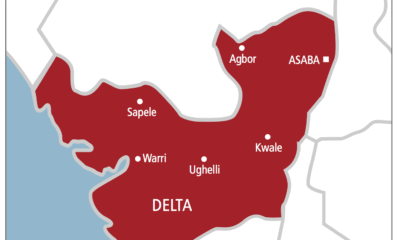
Former Deputy President of the Senate, Senator Ovie Omo-Agege, has suffered a major political setback following a Federal High Court judgment nullifying his nomination as the Nigeria Democratic Congress (NDC) candidate for Delta Central Senatorial District in the 2027 general elections, days after a deadly attack on his campaign train in Delta State.

The twin developments have cast a shadow over Omo-Agege’s political comeback, with the court ruling threatening his participation in the senatorial contest while the campaign attack has raised fresh concerns about political violence and the safety of candidates and their supporters ahead of the 2027 elections.
The Federal High Court sitting in Warri, Delta State, presided over by Justice Hyeladzira Ajiya Nganjiwa, ordered the Independent National Electoral Commission (INEC) to remove Omo-Agege’s name from its list of candidates after finding that the NDC failed to comply with mandatory provisions of the Electoral Act in conducting its senatorial primary.

The court also restrained Omo-Agege from presenting himself as the party’s candidate for Delta Central.
In a further blow to the NDC, the judge held that the statutory period for conducting fresh primaries to nominate another candidate had elapsed, raising questions about the party’s ability to field a replacement within the legally prescribed timeframe.
Court Cites Electoral Act Violations
The judgment followed a suit filed by Professor Alexander Osondu Akpodiete, marked FHC/WR/CS/120/2026, challenging the validity of Omo-Agege’s nomination.
The suit raised issues concerning his resignation from the All Progressives Congress (APC), membership of the NDC and eligibility to participate in the party’s senatorial primary.
Justice Nganjiwa dismissed five preliminary objections filed by Omo-Agege, the NDC and INEC before proceeding to determine the substantive issues in the case.
The court held that the NDC failed to satisfy statutory requirements relating to the submission of its membership register to INEC ahead of its primary election.
According to the ruling, Omo-Agege’s name was absent from the party’s membership register submitted to the electoral commission at least 21 days before the primary. The court also found that credible evidence had not been presented to establish that the register was subsequently updated and submitted within the required period.
The judge further relied on INEC’s revised electoral timetable in concluding that Omo-Agege participated in the APC senatorial primary held on May 18, 2026, indicating that he was still a member of the APC at the material time.
The court maintained that eligibility to participate in a party primary depended on compliance with the Electoral Act’s membership-register requirements.
It also held that a valid nomination could not stand where the sponsoring party failed to meet statutory conditions, stressing that INEC could not lawfully recognise a candidate whose nomination process violated the applicable provisions of the law.
Consequently, the court nullified Omo-Agege’s nomination and directed INEC to delist him.
Campaign Train Attack Raises Security Concerns
The court ruling comes against the backdrop of a violent attack on Omo-Agege’s campaign train in Delta State, adding a security dimension to the political crisis surrounding his 2027 ambition.
The Nigeria Democratic Congress had earlier reported that gunmen attacked the campaign train of its Delta Central senatorial candidate during campaign activities in the Ughelli area, with reports also identifying Uduere Community as the scene of the incident.
The attack reportedly left several people dead and others injured. The Delta State Police Command subsequently confirmed preliminary casualty figures indicating that six people had died, although the final circumstances and casualty details remained subject to investigation.
Inspector-General of Police Olatunji Rilwan Disu ordered an investigation into the incident, directing the relevant authorities to establish what happened and examine the circumstances surrounding the attack.
The violence has intensified concerns about the conduct of political activities in Delta State as political parties and aspirants begin positioning themselves ahead of the 2027 general elections.
For Omo-Agege and the NDC, the attack represented a serious security challenge, while the subsequent court judgment has introduced a separate legal obstacle to the former deputy Senate president’s senatorial ambition.
There is, however, no established evidence in the information available linking the campaign attack to the court case or suggesting that the two developments were coordinated.
NDC Faces Uncertainty Over Delta Central Contest
The court’s pronouncement that the statutory window for conducting fresh primaries had elapsed presents a significant challenge for the NDC.
With INEC ordered to remove Omo-Agege’s name from its list of candidates, the party faces uncertainty over its participation in the Delta Central senatorial contest unless a legally available remedy or further judicial development changes the position.
The ruling also raises questions about the party’s internal nomination procedures and compliance with electoral regulations, particularly the requirements governing membership registration and participation in party primaries.
The outcome could have wider political implications in Delta Central, where Omo-Agege remains a prominent political figure following his tenure as deputy president of the Senate.
However, the ultimate consequences for the party and the candidate will depend on the next legal steps, including any appeal or other proceedings that may follow.
Political Setback Ahead of 2027
The combination of a deadly campaign attack and an adverse court judgment places Omo-Agege’s political project under considerable pressure as the 2027 elections approach.
While the attack has highlighted the dangers confronting political actors and their supporters, the judgment underscores the legal requirements that political parties and aspirants must satisfy when selecting candidates for elective offices.
The court’s decision is a reminder that political prominence cannot substitute for compliance with electoral law, just as political competition must not be allowed to degenerate into violence.
The full certified judgment and official responses from Omo-Agege, the NDC and INEC were not available in the initial account of the ruling. Any appeal, subsequent court order or official clarification could further shape the final outcome of the dispute.
For now, Omo-Agege faces two major challenges: the security fallout from the attack on his campaign train and a judicial decision that threatens his bid to return to the Senate through the NDC.
The central question is whether the former deputy Senate president and his party can overcome the legal setback, while authorities ensure accountability for the campaign violence and protect political activities in the run-up to the 2027 elections.














Australian music legend Molly Meldrum dies at 83
Australian music legend Molly Meldrum has died at the age of 83 following a long illness. The veteran music promoter...


Frank Edwards: I could have owned three private jets if I had yielded to temptation
Gospel singer recounts how he rejected a lucrative music deal that required him to replace the name of Jesus with...


NAN Staff appointed Media Director, Ashaka Carnival Group
Mr Emmanuel Mogbede, an Assistant Editor in Chief of the News Agency of Nigeria (NAN)has been appointed as the Director...

Double blow for Omo-Agege as Court nullifies NDC Senatorial bid after campaign attack

From Strong Foundation to Soaring Heights: Amuchie Inherits Fidelity Bank’s Momentum

Innomotics showcases innovative drive solutions for critical infrastructure at SPS 2026

“Galaxy Stars of Gastronomy 2026” Celebrated a Stellar Weekend of Creativity, Entertainment and Indulgence with 15 Global Culinary Masters and Mixologists at the Cutting-Edge of their Craft

AiDA Global Design Award 2026

UbuntuCare Africa introduces ‘Gift Health’ to Nigerians at OffChart NXT 2026

BREAKING. Imo West Senatorial District: Uzodinma loses as Court orders publication of Okorocha as candidate

Kogi: Suspected kidnappers informants arrested after robbery operation

America supported Biafra, lack morality to claims of Christian genocide – Gumi

NELFUND set to stop students collecting tuition fees after loan payment

BREAKING: Suspected ‘Abu Odoma boys’ set Maikano Diesel Generator donated by Muri ablaze overnight at Idah LG

Research funding: Union demands 5% tax from 14 MDAs

2023: Senator Marafa, Ex-governor Yari defect to PDP
