
Oil and Gas
Nigeria among biggest beneficiaries as US-Iran war delivers $21.6 billion windfall

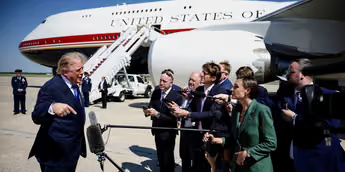
Washington’s military spending hits $48.3 billion
Washington has spent an estimated $48.3 billion on its military campaign in the ongoing US-Iran war, while nine African fossil-fuel exporting countries earned an additional $21.6 billion from higher energy prices in the six months to August 2026.

Nine African fossil-fuel exporting countries earned an extra $21.6 billion due to higher energy prices from March to August 2026.
Oil and gas exporters like Nigeria, Angola, and Libya saw the largest financial gains.
Egypt, South Africa, and Morocco were among the hardest hit by higher import bills.

South African diamond miners turn to farming as buyers in the US, China and India lose interest, while the state trader sources gems from Botswana [petra-diamonds] markets South African diamond miners turn to farming as buyers in the US, China and India lose interest, while the state trader sources gems from Botswana markets
The figures reveal how the conflict has created sharply different economic outcomes across Africa, with oil and gas exporters benefiting from higher prices while fuel-importing countries face increased costs.
Pentagon budget official Arthur Miller disclosed the US military spending estimate at a Senate Armed Services Committee hearing, according to the Associated Press. The figure, calculated as of November 13, covers military operations and the replacement of equipment and ammunition.
While Washington faces a mounting military bill, the conflict has generated an unexpected financial windfall for several African energy exporters, as disruptions to global oil and gas supplies pushed prices higher.
The war’s cost has become a flashpoint in Congress as Defence Secretary Pete Hegseth lobbies lawmakers to support the administration’s proposed $1.5 trillion Pentagon budget.
The war’s cost has become a flashpoint in Congress as Defence Secretary Pete Hegseth lobbies lawmakers to support the administration’s proposed $1.5 trillion Pentagon budget.
According to the Centre for Research on Energy and Clean Air (CREA), the nine African exporters generated the additional earnings between March and August 2026, following the disruption to global energy markets after the US-Israeli strikes on Iran.
Nigeria, Angola and Libya lead African energy gains
Nigeria recorded the largest net benefit at $7.5 billion, followed by Angola at $4.5 billion, Libya at $3.3 billion and Algeria at $2.8 billion. The other beneficiaries were the Republic of Congo, with $1.5 billion; Gabon, with $800 million; Cameroon, with $500 million; Equatorial Guinea, with $300 million; and Sudan, with $300 million.
Nigeria’s gains were also supported by the Dangote refinery, which helped boost petroleum product exports to 350,000 barrels per day in the second quarter of 2026, seven times the 2023 average, according to the US Energy Information Administration.
CREA’s country-level chart measures each country’s net position by subtracting additional fossil-fuel import costs from additional export earnings. The figures therefore show how much each country came out ahead, rather than its gross export windfall.
The gains helped offset the $21.9 billion in additional fossil-fuel import costs incurred by 32 African countries during the same six-month period. This left the continent with an estimated net additional cost of approximately $300 million.
Egypt, South Africa and Morocco paid more for imported fuel than they gained from higher energy export prices. Egypt had the biggest extra bill at $5.2 billion, followed by South Africa at $3.5 billion and Morocco at $2.2 billion.
The findings, based on Kpler trade data and CME futures settlements, show how higher energy prices have benefited exporting economies while increasing costs for countries reliant on imported fuels.
Credit: Business Insider Africa














Australian music legend Molly Meldrum dies at 83
Australian music legend Molly Meldrum has died at the age of 83 following a long illness. The veteran music promoter...


Frank Edwards: I could have owned three private jets if I had yielded to temptation
Gospel singer recounts how he rejected a lucrative music deal that required him to replace the name of Jesus with...


NAN Staff appointed Media Director, Ashaka Carnival Group
Mr Emmanuel Mogbede, an Assistant Editor in Chief of the News Agency of Nigeria (NAN)has been appointed as the Director...

Nigeria among biggest beneficiaries as US-Iran war delivers $21.6 billion windfall

APC Chairman mourns party members killed in Zamfara road accident

2027: Senator Diket Plang reaffirms support for Tinubu, collapses campaign structure

Innomotics unveils Motor Integrated Line at SPS 2026

‘Tinubu Must Go’ chants rock ADC rally as mammoth crowd turn out in Kogi

UbuntuCare Africa introduces ‘Gift Health’ to Nigerians at OffChart NXT 2026

BREAKING. Imo West Senatorial District: Uzodinma loses as Court orders publication of Okorocha as candidate

Kogi: Suspected kidnappers informants arrested after robbery operation

America supported Biafra, lack morality to claims of Christian genocide – Gumi

NELFUND set to stop students collecting tuition fees after loan payment

BREAKING: Suspected ‘Abu Odoma boys’ set Maikano Diesel Generator donated by Muri ablaze overnight at Idah LG

Research funding: Union demands 5% tax from 14 MDAs

2023: Senator Marafa, Ex-governor Yari defect to PDP
