
Article
Positioning Nigeria ‘s Power Sector: Commending Engr. Joseph Tegbe’s Infrastructure Driven Agenda

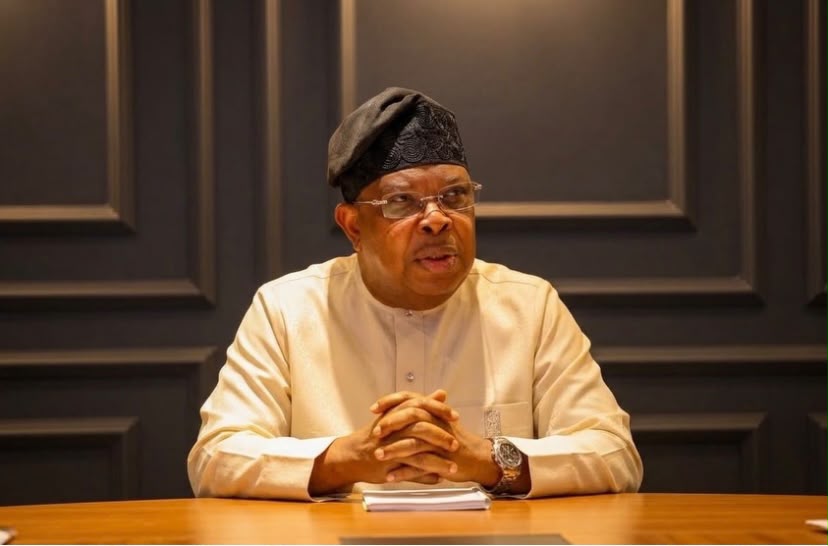
By Engr. Abayomi Onafuye
Nigeria’s quest for sustainable economic growth, industrialisation and national development is inseparably linked to the availability of reliable, affordable and efficient electricity. For decades, the power sector has grappled with structural deficiencies, inadequate transmission infrastructure, liquidity constraints, ageing facilities and persistent challenges in grid management. Addressing these longstanding problems requires not just policy pronouncements but deliberate institutional reforms, strategic investments and measurable implementation.

Against this background, the ongoing interventions under the leadership of the Honourable Minister of Power, Engr. Joseph Olasunkanmi Tegbe, deserve recognition, particularly his emerging focus on transmission infrastructure expansion, modernisation of critical national assets and restoration of financial confidence across the electricity value chain.
Expanding transmission capacity: A strategic investment in Nigeria’s future
One of the most significant developments is the Federal Executive Council’s approval of the procurement process for the proposed East and West Super Grids, with an ambitious objective of increasing Nigeria’s electricity transmission capacity to 19,000MW.

This is a major infrastructure ambition that speaks directly to one of the fundamental challenges confronting Nigeria’s electricity industry: the inability to transmit and evacuate available generation capacity efficiently to consumers.
The proposed super-grid infrastructure is expected to strengthen electricity transmission across major geographical corridors, improve grid resilience and create the capacity required to support increasing industrial, commercial and residential demand.
Equally important are the interventions at the Katampe, Ikeja West and Sagamu transmission facilities. These upgrades are intended to improve network capacity, reliability and operational efficiency.
For a country seeking to strengthen its manufacturing sector, expand industrial activities and attract foreign direct investment, investments in transmission infrastructure are indispensable.
Modernising the National Control Centre: A new chapter in grid management
Another important milestone is the commencement of construction of a modern National Control Centre in Osogbo, Osun State, to replace the existing facility, which dates back approximately 64 years.
The National Control Centre is central to the monitoring, coordination and management of Nigeria’s electricity grid. Its operational effectiveness is essential to maintaining grid stability, coordinating electricity transmission and responding to disturbances across the national network.
Replacing an ageing facility with modern technology represents an important step towards strengthening real-time grid monitoring, improving operational coordination and supporting more effective decision-making.
This intervention is particularly important because expanding transmission capacity must go hand in hand with modern control systems capable of managing a more complex and interconnected national electricity network.
Addressing the power sector’s financial challenges
Infrastructure development cannot be sustained without a financially viable electricity market.
The Minister’s disclosure that the Federal Government has paid approximately ₦1.2 trillion towards outstanding power-sector obligations is another significant development.
The financial commitments confronting the sector have historically affected liquidity, gas supply to generation companies, maintenance obligations and the operational sustainability of electricity market participants.
Addressing these liabilities is therefore important in rebuilding confidence among investors, gas suppliers, generation companies and other stakeholders across the electricity value chain.
Sustaining this intervention will require stronger financial discipline, improved revenue collection, transparent settlement mechanisms and measures to prevent the accumulation of fresh liabilities.
Recovering stranded electricity infrastructure
The Presidential directive to facilitate the clearance of more than 300 containers of electricity equipment stranded at Nigerian ports for several years is another intervention worthy of attention.
These containers reportedly contain transformers, cables and other essential electricity infrastructure materials. It is particularly concerning that critical equipment required for national infrastructure development could remain stranded for such an extended period while electricity projects across the country continue to require essential materials.
The collaboration between the Federal Ministry of Power, the Nigerian Ports Authority and the Nigeria Customs Service to facilitate their clearance is a practical demonstration of the importance of inter-agency coordination in resolving longstanding administrative and operational bottlenecks.
Following clearance, the equipment must undergo proper technical assessment to establish its condition, serviceability and suitability for deployment. Recovering usable equipment could support ongoing infrastructure projects, reduce procurement pressures and improve the utilisation of existing public assets.
Beyond infrastructure: Building a sustainable electricity ecosystem
The transformation of Nigeria’s power sector must extend beyond transmission infrastructure to include renewable energy, institutional reforms, private-sector participation and improved service delivery.
The reported deployment of solar mini-grids across federal universities and teaching hospitals is a positive step towards diversifying electricity sources and improving energy reliability in critical public institutions.
Similarly, technical audits of electricity infrastructure provide an opportunity to identify ageing facilities, prioritise investments and direct limited resources towards projects with measurable economic and operational benefits.
These interventions should be complemented by stronger accountability, effective project monitoring, transparent procurement and measurable performance indicators.
Conclusion: Turning infrastructure investments into reliable electricity for Nigerians
The ongoing reforms under Chief Joseph Tegbe’s leadership represent important steps in addressing some of the structural challenges confronting Nigeria’s electricity industry.
The proposed expansion of transmission capacity to 19,000MW, modernisation of the National Control Centre, upgrades at strategic transmission facilities, settlement of outstanding sector obligations and recovery of stranded electricity equipment demonstrate the breadth of the current intervention agenda.
Nevertheless, the ultimate measure of success must be the extent to which these initiatives translate into more reliable electricity supply, reduced system disruptions, improved industrial productivity and a better quality of life for Nigerian households.
As Nigeria pursues its broader economic transformation agenda, a functional and financially sustainable power sector remains one of the most important foundations for national development.
Again, as part of robust and intentional power sector reform, Engr. Tegbe is leading a wider stakeholder engagement across Nigeria to ensure everyone is carried along in the reform process and implementation of strategic approach to improve access to affordable energy
I commend the Honourable Minister of Power, Engr. Joseph Olasunkanmi Tegbe, for the strategic direction and attention being given to these critical infrastructure and institutional challenges.
These initiatives deserve sustained institutional support, adequate funding, transparent execution and rigorous monitoring to deliver lasting benefits to Nigerians.
Reliable electricity is not merely an infrastructure aspiration; it is a foundation for economic competitiveness, industrial prosperity and national development.


Australian music legend Molly Meldrum dies at 83
Australian music legend Molly Meldrum has died at the age of 83 following a long illness. The veteran music promoter...


Frank Edwards: I could have owned three private jets if I had yielded to temptation
Gospel singer recounts how he rejected a lucrative music deal that required him to replace the name of Jesus with...


NAN Staff appointed Media Director, Ashaka Carnival Group
Mr Emmanuel Mogbede, an Assistant Editor in Chief of the News Agency of Nigeria (NAN)has been appointed as the Director...

Positioning Nigeria ‘s Power Sector: Commending Engr. Joseph Tegbe’s Infrastructure Driven Agenda

OLU AROWOLO VERHEIJEN: The strategic woman behind Nigeria’s energy reform and billion-dollar investment drive

Nigeria among biggest beneficiaries as US-Iran war delivers $21.6 billion windfall

APC Chairman mourns party members killed in Zamfara road accident

2027: Senator Diket Plang reaffirms support for Tinubu, collapses campaign structure

UbuntuCare Africa introduces ‘Gift Health’ to Nigerians at OffChart NXT 2026

BREAKING. Imo West Senatorial District: Uzodinma loses as Court orders publication of Okorocha as candidate

Kogi: Suspected kidnappers informants arrested after robbery operation

America supported Biafra, lack morality to claims of Christian genocide – Gumi

NELFUND set to stop students collecting tuition fees after loan payment

BREAKING: Suspected ‘Abu Odoma boys’ set Maikano Diesel Generator donated by Muri ablaze overnight at Idah LG

Research funding: Union demands 5% tax from 14 MDAs

2023: Senator Marafa, Ex-governor Yari defect to PDP
