
Features
A Sad Memory of Yahaya Bello’s Final Days in Office: The destitution of monarchs that left painful mark on Kogi’s history

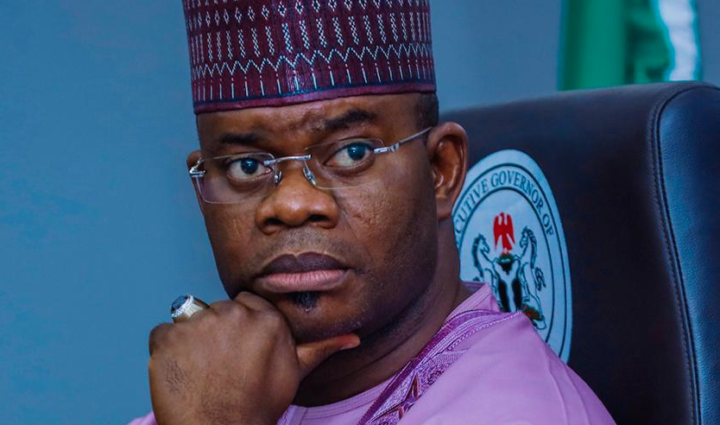
By Atekojo Samson Usman
Some memories are difficult to erase, not because they happened long ago, but because of the pain, controversy and questions they leave behind. One such memory in Kogi State is the controversy surrounding the reported dethronement of a traditional ruler by the administration of former Governor Yahaya Bello just days before he left office in January 2024.

Traditional institutions occupy a special place in the history and cultural identity of our people. A monarch is more than an occupant of a throne; he represents the heritage, customs, ancestral identity and collective memory of his people. The traditional stool is an institution that often outlives political administrations, which is why decisions affecting it deserve careful consideration, consultation and respect for due process.
Against this background, the reported removal of a monarch so close to the end of an administration remains a painful episode for those who believe that traditional institutions should be protected from unnecessary political interference.

One cannot help but reflect on the timing. With only a few days left before the end of his tenure, why did such a consequential decision have to be taken at that moment? What circumstances made the action necessary, and were all relevant traditional, legal and administrative considerations adequately addressed?
These are legitimate questions that deserve clear answers, not because anyone should be above the law, but because decisions affecting the dignity of traditional institutions carry consequences beyond the immediate political moment.
On January 8, Yahaya Bello deposed three traditional rulers and ordered them into banishment in Niger State while the fourth one was suspended few days to leaving office.
The three removed traditional rulers were also ordered into banishment in different local government areas of Niger State:
Alhaji Abdulrazaq Isah Koto. The Ohimege-Igu of Koton-Karfe (and Chairman of the Lokoja/Kogi Local Government Area Traditional Council) was deposed and banished to Rijau Local Government Area, Niger State.
Chief Sam Bola Ojoa. The Olu Magongo of Magongo was deposed and banished to Salka in Magama Local Government Area, Niger State.
Samuel Adayi Onimisi. The Obobanyi of Emani was deposed and banished to Doko in Lavun Local Government Area, Niger State.
Additionally, Boniface Musa, the Onu-Ife in Omala Local Government Area, was placed on indefinite suspension.
A governor’s tenure is temporary. The authority entrusted to a public officeholder is exercised for a limited period, but the consequences of decisions taken in office can remain in the consciousness of a community for generations. This is why the exercise of executive power requires restraint, wisdom and a deep appreciation of history.
The sadness of such an episode lies not merely in the loss of a throne by an individual monarch. It also lies in the possibility of a community feeling wounded, its traditions unsettled and its confidence in the impartiality of government weakened.
Traditional rulers should not be treated as instruments of political convenience. Where genuine grounds exist for disciplinary action or removal, the process should be transparent, lawful and fair. Where disputes arise, the interests of the affected community must not be forgotten.
As Kogi State continues to move forward, this episode should serve as a reminder to present and future leaders that power is best exercised with wisdom, especially when dealing with institutions that embody the identity and heritage of the people.
History has a way of remembering the decisions that political power makes in its final hours. The true measure of leadership is not simply the number of projects executed or the political influence accumulated, but also the fairness, restraint and humanity demonstrated when difficult decisions must be taken.
The throne may be occupied by one person at a time, but the heritage it represents belongs to generations. No administration should lose sight of that truth.
May the history of Kogi State be written not only through the actions of its political leaders, but also through the preservation of its cultural heritage, the protection of its traditional institutions and the pursuit of justice for all.
This reflection is a call for sober remembrance, fairness and respect for the traditional institutions that form an essential part of our collective identity.







BREAKING: Nollywood King Pete Edochie dies at 79
Nollywood King and father, Pete Edochie is dead. He died at the age of 79. His family confirmed that he...


‘I have pedigree’ — Aki reacts to cheating allegations
Popular Nollywood actor Chinedu Ikedieze, popularly known as Aki, has reacted to those accusing him of cheating in his marriage,...


Australian music legend Molly Meldrum dies at 83
Australian music legend Molly Meldrum has died at the age of 83 following a long illness. The veteran music promoter...

A Sad Memory of Yahaya Bello’s Final Days in Office: The destitution of monarchs that left painful mark on Kogi’s history

INEC, NSA warn political actors against violence ahead of 2027 elections

Life Sciences: From Lab to Landscape – How the Evolution of Life Sciences is Transforming Real Estate Demand on the Chinese Mainland

Enape Paul Odogwu defends IJN’s record, cites Iyale township road, other projects in response to Ben Ikani Okolo

SeABank officially appoints CEO and Standing Deputy CEO

UbuntuCare Africa introduces ‘Gift Health’ to Nigerians at OffChart NXT 2026

BREAKING. Imo West Senatorial District: Uzodinma loses as Court orders publication of Okorocha as candidate

Kogi: Suspected kidnappers informants arrested after robbery operation

NELFUND set to stop students collecting tuition fees after loan payment

Jibwis leadership condemns threat to kill Christians, urge DSS to arrest member in viral video

BREAKING: Suspected ‘Abu Odoma boys’ set Maikano Diesel Generator donated by Muri ablaze overnight at Idah LG

Research funding: Union demands 5% tax from 14 MDAs

2023: Senator Marafa, Ex-governor Yari defect to PDP
