
Article
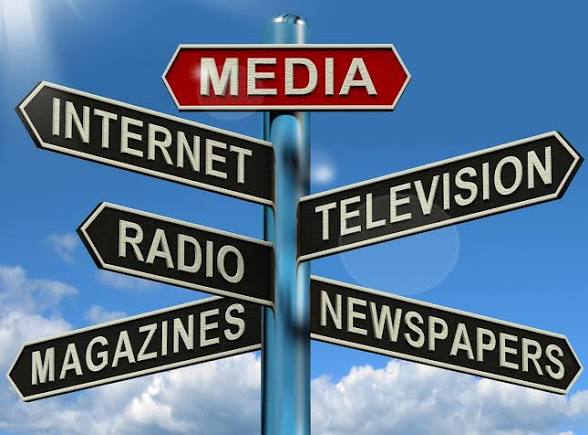
When Politics Captures The Media: The inherent dangers

By Sule E. Lazarus, PhD
The growing partisan disposition of some media organisations and their perceived affinity with political interests ahead of Nigeria’s 2027 general election raise fundamental questions about the independence of the press, the credibility of journalism, and the future of our democracy.

Increasingly, political affiliations, regional loyalties, ethnic sentiments, and what may be described as honorarium journalism appear to be influencing media narratives and professional engagements.
This trend is troubling because, when political interests begin to dictate editorial positions and professional conduct, journalism risks losing its independence, credibility, and moral authority.

The danger is not merely that the media may become politically divided, but that it may gradually abandon its responsibility to inform the public objectively, interrogate power, and hold those in authority accountable.
The greatest danger arises when the media ceases to be an independent watchdog and becomes an instrument of political manipulation.
The controversy surrounding The Nation editorial on the Nigerian Guild of Editors (NGE) conference, and the exchanges that followed among journalists, provide an opportunity for serious reflection on the state of the profession. While disagreement over editorial opinions, professional associations, and media practices is neither unusual nor inherently unhealthy, the manner in which such disagreements are expressed matters considerably.
What should ordinarily be an intellectual engagement grounded in facts, professional standards, and constructive criticism can quickly degenerate into exchanges driven by regional sentiments, ethnic affiliations, personal attacks, and partisan considerations. When this happens, the substance of the debate is overshadowed by the identities of those involved, the interests they represent, and the political implications attributed to their positions.
More concerning is the tendency to interpret professional disagreements through ethnic and regional lenses, as though the validity of an argument depends on the geographical origin or perceived political allegiance of the person advancing it. Such an approach undermines rational discourse and weakens the professional bonds that should unite journalists across regional, ethnic, and political divides.
A professional disagreement should be settled by the strength of the argument, not the identity, affiliation, or perceived political interest of the person making it.
This is not to suggest that media organisations or professional associations should be insulated from criticism. On the contrary, the Nigerian Guild of Editors and other professional bodies must remain open to scrutiny, constructive criticism, and legitimate questions about their leadership, decisions, and institutional responsibilities.
However, criticism must be evidence-based, proportionate, and guided by professional ethics rather than a desire to discredit institutions for political convenience.
The distinction between legitimate criticism and politically motivated attacks is therefore important. While the former strengthens institutions by exposing weaknesses and encouraging reform, the latter can undermine public confidence, deepen divisions, and distract attention from the substantive issues requiring resolution.
Another disturbing dimension is the growing influence of financial inducements and political patronage on journalistic practice. Where access to politicians, financial benefits, personal relationships, or regional solidarity becomes more important than truth and public interest, the independence of the journalist is compromised.
The problem is not that journalists should avoid all professional relationships with political actors; rather, such relationships must never compromise their obligation to report fairly, verify claims, question official narratives, and distinguish facts from propaganda.
Journalists must also recognise that political actors often have legitimate interests in shaping public opinion. The responsibility of the media, however, is not to advance those interests uncritically but to examine them independently and provide citizens with the information necessary to make informed decisions.
When journalists become willing participants in political propaganda, the public loses an important source of independent information. When media organisations selectively amplify narratives that favour particular political interests while suppressing or discrediting opposing perspectives, they risk transforming the public sphere into a battlefield of competing propaganda machines.
The consequences extend beyond the journalism profession. They affect democratic accountability, public trust, intergroup relations, and national cohesion. A society in which citizens receive information filtered primarily through political, ethnic, or regional loyalties becomes increasingly vulnerable to misinformation, mutual suspicion, and polarisation.
This is particularly significant in a diverse country such as Nigeria, where responsible journalism has an important role to play in promoting understanding across ethnic, religious, regional, and political boundaries.
The media should help citizens understand their differences without allowing those differences to become instruments of division. It should provide platforms for competing perspectives, challenge prejudice, expose injustice, and encourage informed public debate.
The media must not become a vehicle for ethnic mobilisation or a battleground for regional supremacy. Neither should journalists allow political actors to exploit professional disagreements to deepen existing divisions.
Our diversity should enrich public discourse, not determine which facts we accept, which arguments we defend, or which institutions we choose to discredit.
At the heart of this challenge lies a fundamental question: Can journalism retain its credibility when the political interests of its practitioners become more important than the public interest they are expected to serve?
The answer depends largely on the willingness of journalists and media organisations to uphold the principles that distinguish professional journalism from partisan communication. Accuracy, fairness, independence, accountability, balance, and intellectual rigour must remain central to the practice. These principles are not optional virtues to be embraced only when they favour our preferred political positions; they are professional obligations that must be upheld even when doing so is inconvenient or personally costly.
Journalists must also be prepared to subject their own conduct, institutions, and professional associations to the same scrutiny they routinely apply to political leaders. It is contradictory to demand accountability from public officials while resisting scrutiny within the profession. Similarly, it is difficult to defend press freedom convincingly when we are unwilling to tolerate dissenting opinions or acknowledge legitimate criticism.
Nevertheless, I remain convinced that journalism cannot be killed, even when its institutions and practitioners falter. Its enduring relevance lies in its fundamental responsibility to pursue truth, expose wrongdoing, promote accountability, and serve the public interest.
Individuals may compromise their professional obligations, institutions may experience periods of crisis, and political interests may attempt to influence editorial direction. Yet the principles upon which credible journalism rests remain indispensable to a functional democracy.
The survival of journalism, however, should not be confused with the survival of every media organisation or the preservation of every professional institution in its present form.
Journalism survives meaningfully when its practitioners continue to defend truth, question authority, correct errors, and resist the pressures that threaten their independence. Without these commitments, the profession may retain its name while gradually losing the credibility that gives it relevance.
As Nigeria approaches the 2027 general elections, journalists, editors, publishers, and professional associations must reflect seriously on the choices before them. Will they defend professional independence or surrender it to political expediency? Will they promote reasoned debate or encourage ethnic and regional antagonism? Will they hold all political actors to consistent standards or selectively scrutinise those outside their preferred circles?
These are not merely questions of professional conduct; they are questions about the kind of democratic society we seek to build.
The media cannot credibly demand responsible leadership from politicians while neglecting responsibility within its own ranks. Neither can journalists effectively promote national unity if their professional engagements consistently reproduce the divisions they ought to help society overcome.
Ultimately, the credibility of journalism will not be determined by the political influence of its proprietors, the proximity of its practitioners to the corridors of power, or the volume of its attacks against perceived opponents. It will be determined by its fidelity to truth, its independence from undue influence, its commitment to fairness, and its courage to hold power accountable, irrespective of whose interests are affected.
When politics captures the media, truth becomes negotiable, public trust becomes vulnerable, and national cohesion pays the price. The responsibility before Nigerian journalists is therefore clear: defend the independence of the profession, preserve its ethical foundations, and refuse to allow political, ethnic, or regional loyalties to define the boundaries of journalistic truth.
Dr Lazarus Sule writes from Jos, North Central Nigeria









BB Bucks, kisses, fake eviction: How Temi Nkem won BBNaija Season II
From BB Bucks drama and a memorable custard episode to a controversial kiss with Tram, a fake eviction and a...

22-year Nigerian model moves beyond Lagos streets into global scene
A 22-year Nigerian model Rachel Ojuromi has taken her fashion career from the streets of Lagos to the global scene....


Geh Geh lashes Burna Boy over ₦9bn Bugatti, demands youth empowerment
Social commentator Geh Geh has criticised Afrobeats star Burna Boy over his newly acquired customised Bugatti Chiron VXX, reportedly valued...
How the “Dual Olympic City” Activates the Sports Event Economy

When Politics Captures The Media: The inherent dangers
Gorilla Advances U.S. Market Entry with Proposed 36 MW Data Centre Acquisition and 100+ MW AI Infrastructure Expansion Plan

Presidency lectures Atiku Abubakar, Peter Obi on difference between “fuel subsidy and discount”
ONYX Hospitality Group Marks 60 Years with Curated Partnerships Bringing “More of What You Love” to Life

Kogi East Senator Isah Jibrin commences construction of ICT centre in Ankpa

BREAKING: NAF reveals identity of pilot, names of 25 dead soldiers on crashed aircraft

Security: Combined security agents crush kidnappers in Kogi East, recovers dangerous weapons

PC-NCG calls for immediate cessation of unauthorized activities in the name of proposed Nigerian Coast Guard

BREAKING: Thugs pounce on ADC campaign vehicles in Koton-Karfe LG, several party supporters injured

BREAKING: Suspected ‘Abu Odoma boys’ set Maikano Diesel Generator donated by Muri ablaze overnight at Idah LG

Research funding: Union demands 5% tax from 14 MDAs

2023: Senator Marafa, Ex-governor Yari defect to PDP
