
Energy and Power
₦418.79 billion electricity subsidy spent in Q4 – NERC

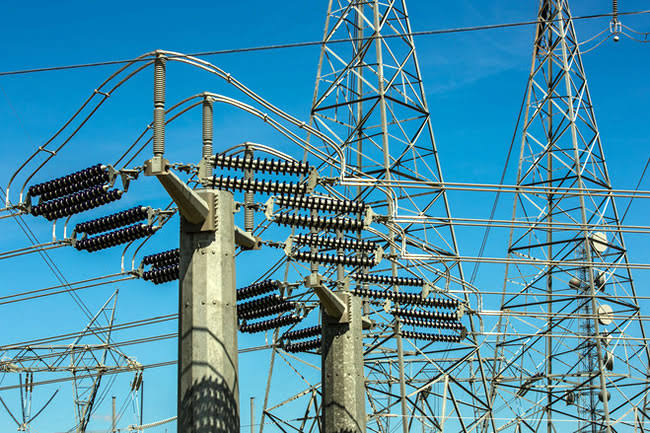
The Nigerian Electricity Regulatory Commission, NERC has reported that the sum of ₦418.79 billion was incurred as electricity subsidy in the fourth quarter, Q4 of 2025 by the Federal Government.
This was incurred as part of financial burden on the Federal Government in order to sustain Nigeria’s electricity market amid non-cost-reflective tariffs.
In its Q4 2025 quarterly report, the electricity market regulator disclosed that the total invoice from power generation companies, alongside the Differential Remittance Obligation-adjusted invoice issued by the Nigerian Bulk Electricity Trading Plc to electricity distribution companies, declined during the period.
The commission noted that the subsidy dropped by ₦39.96 billion, representing an 8.71 per cent decrease compared to ₦458.75 billion recorded in the third quarter of 2025.
The figure further showed that government subsidy accounted for 52.30 per cent of the total GenCo invoice in Q4, a reduction of 6.60 percentage points from 58.63 per cent in Q3.
Explaining the decline, the commission attributed it to increased energy allocation to high-paying customers.
According to NERC, the rise in supply to Band A customers, from 40 per cent to 45 per cent, contributed significantly to lowering the subsidy burden.
The report noted that this aligns with the Federal Government’s policy direction to improve electricity supply quality and cost recovery in the sector.
On remittance performance, the report revealed that the DRO-adjusted invoice from the Nigerian Bulk Electricity Trading Plc to DisCos stood at ₦386.13 billion in Q4 2025.
Out of this amount, the distribution companies remitted ₦359.27bn, translating to a remittance performance of 93.04 per cent.
This represents a slight dip when compared to the third quarter, where DisCos remitted ₦308.25bn out of ₦323.7bn, achieving a 95.23 per cent performance.
A breakdown of remittance performance showed that while most distribution companies met their obligations fully, a few recorded shortfalls.
These include Yola (99.42 per cent), Benin (98.30 per cent), Ibadan (95.58 per cent), Kano (75.14 per cent), Jos (49.80 per cent), and Kaduna (40.73 per cent).
Reiterating the government’s role in sustaining the sector, the commission stated, “In the absence of cost-reflective tariffs, the Government undertakes to cover the resultant gap (between the cost-reflective and allowed tariff) in the form of tariff subsidies.”







NAN Staff appointed Media Director, Ashaka Carnival Group
Mr Emmanuel Mogbede, an Assistant Editor in Chief of the News Agency of Nigeria (NAN)has been appointed as the Director...


Ayra Starr joins 2027 Coachella lineup alongside Dua Lipa, SZA, Madonna
Nigerian singer Ayra Starr has been named among the artistes scheduled to perform at the 2027 edition of the Coachella...


Blessing CEO admits faking cancer diagnosis to raise donations
Social media personality says financial pressure prompted fundraising stunt Social media personality Blessing Okoro, popularly known as Blessing CEO, has...

Yahaya Bello and Edward David Onoja’s sad legacy of a brutal administration (2016–2023)
Technology at Work, Heritage for All: The “Chinese Approach” to Safeguarding the Leshan Giant Buddha

Fasoranti: Where does Yorubaland go from here?

Presidency accuses opposition of spreading fake news over viral ‘Tinubu Must Go’ video

Diabetes Malaysia And Alpro Pharmacy Set National Record With 11,007 Most Blood Glucose Screenings Conducted Across Malaysia In Just 48 Hours

APC ‘rented crowds’ to fill ’empty seats’ at Kaduna rally – Opposition ADC claims

Harry Kane of Bayern Munich is winner of 2026 Ballon d’Or after display – Arsenal Midfielder Declan Rice deckares

UbuntuCare Africa introduces ‘Gift Health’ to Nigerians at OffChart NXT 2026

Protest looms as PAAU increases school fees over 150% amid NELFUND intervention confusion [Investigation]

BREAKING. Imo West Senatorial District: Uzodinma loses as Court orders publication of Okorocha as candidate

BREAKING: Suspected ‘Abu Odoma boys’ set Maikano Diesel Generator donated by Muri ablaze overnight at Idah LG

Research funding: Union demands 5% tax from 14 MDAs

2023: Senator Marafa, Ex-governor Yari defect to PDP
