
Politics
2027: 64.4% of Nigerians ready to vote women candidates

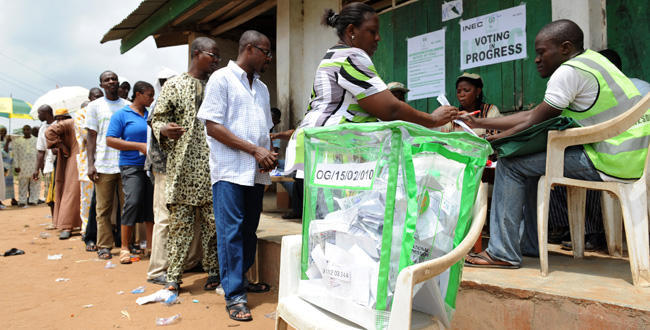
A new voters’ preference survey has revealed that 64.4 percent of Nigerians are willing to vote for a woman if she appears on the ballot, highlighting that the biggest challenge to women’s political representation may be securing party nominations rather than winning public support.
The finding is contained in a report released on Tuesday in Abuja by Invictus Africa, a civic-tech organisation that leverages data and technology to promote inclusive policies and programmes.

The report presented findings from three surveys focusing on women, youths and persons with disabilities to gauge voter intentions ahead of the 2027 general elections.
According to the organisation, while Nigerians appear willing to support candidates from underrepresented groups, public awareness of their participation remains low because many of them do not make it onto the ballot.

Speaking at the presentation, the Executive Director of Invictus Africa, Bukky Shonibare, referenced the 2023 general elections, noting that only 10.1 percent of women candidates emerged victorious.
She said one of the key observations from the survey was that voters are willing to support women, youths and persons with disabilities provided they campaign on their competence and track record rather than their identity.
“One of the things we are seeing in terms of people’s willingness to vote for women, young people and persons with disabilities is that people want them to put their merit forward and not their identity.
“So, when campaigning, women, young people and persons with disabilities should not campaign based on their identity alone. Voters are telling us that it is not identity that works for them. What works for them is merit, qualification and track record. That qualification is not necessarily academic. It is about whether, when we examine the things you have done, we can see that if you hold this office, you will be able to perform effectively,” she said.
The survey also found that voters are more inclined to elect women into legislative positions than into other elective offices.
She said the findings also debunk the long-held belief that female voters are less likely to support women candidates. According to the report, 70.3 percent of female voters expressed willingness to vote for women, compared with 59.1 percent of male voters.
Shonibare explained that the survey is designed to track both pre-election and post-election trends, adding that Invictus Africa would compare voters’ stated intentions with actual electoral outcomes.
Also speaking, the Head of Data and Research at Invictus Africa, Gabriel Mobogwu, stressed the need to dismantle structural barriers preventing women, youths and Persons with Disabilities from emerging as candidates.
According to him, women constitute nearly half of Nigeria’s population and almost half of registered voters, while young people form the country’s largest voting bloc. He added that persons with disabilities are estimated to number about 35 million, yet remain significantly underrepresented in political leadership.
“Nigerians are open to voting for women, youths as well as persons with disabilities. What matters now is for political parties and other stakeholders to give these groups a chance to emerge on the ballot.”














BB Bucks, kisses, fake eviction: How Temi Nkem won BBNaija Season II
From BB Bucks drama and a memorable custard episode to a controversial kiss with Tram, a fake eviction and a...


22-year Nigerian model moves beyond Lagos streets into global scene
A 22-year Nigerian model Rachel Ojuromi has taken her fashion career from the streets of Lagos to the global scene....


Geh Geh lashes Burna Boy over ₦9bn Bugatti, demands youth empowerment
Social commentator Geh Geh has criticised Afrobeats star Burna Boy over his newly acquired customised Bugatti Chiron VXX, reportedly valued...
Garvee Welcomes Fall With a Curated Collection for Home Refresh and Holiday Living

New Handheld Robotic Technology Powers Knee Surgery at Thomson Hospital

Lee Kum Kee Gluten Free Soy Sauce Wins Healthy Food Guide 2026 Award

2027: APC North Central mobilises for mega rally in support of Tinubu, Shettima

FG warns MDAs against poor performance, intensifies accountability drive

Kogi East Senator Isah Jibrin commences construction of ICT centre in Ankpa

BREAKING: NAF reveals identity of pilot, names of 25 dead soldiers on crashed aircraft

BREAKING: Thugs pounce on ADC campaign vehicles in Koton-Karfe LG, several party supporters injured

PC-NCG calls for immediate cessation of unauthorized activities in the name of proposed Nigerian Coast Guard

Security: Combined security agents crush kidnappers in Kogi East, recovers dangerous weapons

BREAKING: Suspected ‘Abu Odoma boys’ set Maikano Diesel Generator donated by Muri ablaze overnight at Idah LG

Research funding: Union demands 5% tax from 14 MDAs

2023: Senator Marafa, Ex-governor Yari defect to PDP
