
Religion
2027: Sultan urges religious leaders to shun political campaigns, fight corruption

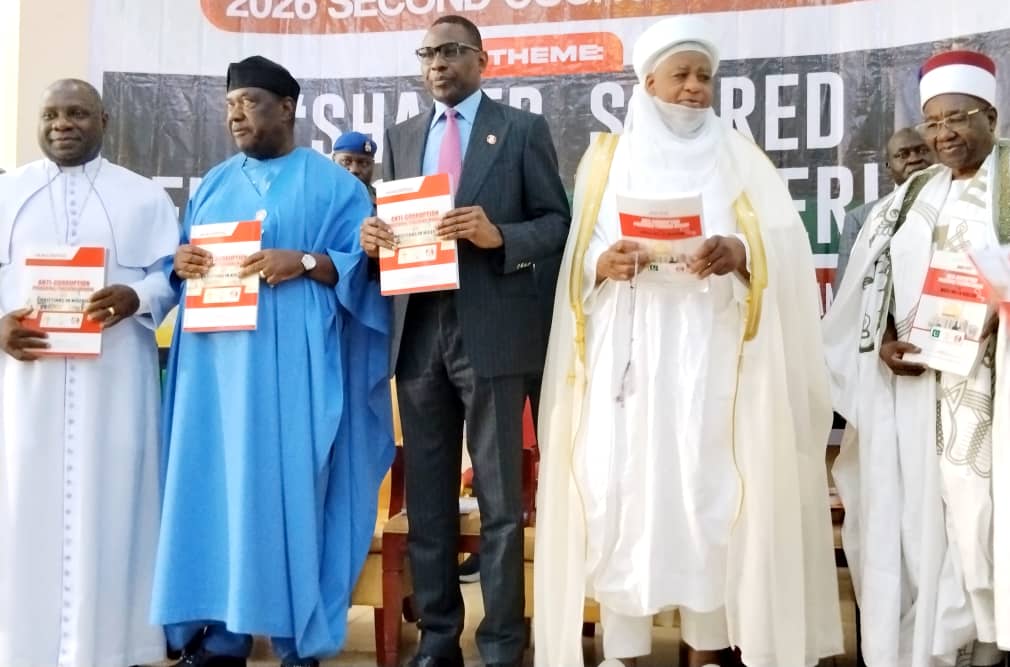
The Sultan of Sokoto, Alhaji Muhammad Sa’ad Abubakar III, has urged religious leaders to be cautious about their utterances and conduct, particularly in churches, mosques and other religious gatherings, as the 2027 general election approaches.
Alhaji Abubakar made the call at the second quarterly meeting of the Nigeria Inter-Religious Council (NIREC) in Abuja, held under the theme, “Shared Sacred Flourishing in Nigeria.”

The Sultan, who is also Co-Chairman of NIREC, said religious platforms should be used to promote peace rather than serve as avenues for campaigning for or against political leaders.
He also cautioned religious leaders against using their platforms to influence political choices, stressing that the responsibility of choosing leaders ultimately belongs to God.

“We are going into the 2027 election, and our religious leaders must be wary of what they say, whether in churches, mosques or any religious gathering,” he said.
The Sultan also called on Nigerians to continue praying for the country’s leaders, including the President and governors, rather than praying for their downfall.
He said religious leaders and their followers should pray for those in authority whenever they pray for themselves, regardless of their political differences.
“I always feel bad when I see people saying bad things about the President, governors or others on the pages of newspapers or on social media, and praying for their downfall. That is not right,” he said.
Abubakar further called for greater support for the fight against corruption, insisting that no religious title or political connection should shield anyone who violates the law.
He urged Christian and Muslim leaders to work with the Economic and Financial Crimes Commission (EFCC) in tackling corruption, stressing that anyone found culpable should be allowed to face the law, regardless of their religious or political status.
“We are religious leaders; we must fight corruption. Why? Because God Almighty does not like corruption. You cannot use corrupt money to send people to Jerusalem, Saudi Arabia or Mecca and think God will accept your deeds.
“God is not corrupt, and He does not like corruption. Let us see how we can come together and help the EFCC Chairman to really fight corruption. Whoever is involved, whether our brother, sister or friend, should face the law. The law does not respect anybody.
“Whoever does something wrong should face the law. And when he is facing the law, don’t say he is a pastor of a church or the Chief Imam of such-and-such national mosque. Let the EFCC go after that person, whoever he is, and deal with him according to the law. And in dealing with him according to the law, don’t deviate. Don’t listen to politics or political leaders when dealing with such people,” he added.
The Sultan also warned against attempts to justify corruption by using illicit wealth for religious activities, saying acts of worship funded with corrupt proceeds would not be acceptable to God.
“You cannot use corrupt money to send people to Jerusalem, Saudi Arabia or Mecca and think God will accept your deeds. God is not corrupt and He does not like corruption,” he said.
Also speaking, the President of the Christian Association of Nigeria (CAN) and Co-Chairman of NIREC, Archbishop Daniel Okoh, called on religious leaders not to merely preach peace but to become active partners in building a society where everyone has the opportunity to live with dignity and hope.
According to him, a country can only flourish when its communities live in peace, urging religious communities to move from dialogue to practical cooperation for the well-being of society.
He said, “As religious leaders, therefore, we must ask ourselves, what kind of Nigeria are we helping to create through our words, our actions, and our influence? Our churches, our mosques, and religious institutions possess enormous moral and social influence.
“We can use that influence to build bridges, rather than walls, promote reconciliation, rather than suspicion, and encourage our followers to pursue the common good, rather than narrow sectional interests. Shared sacred flourishing must, therefore, find expression in practical action.”
Declaring the meeting open, the Secretary to the Government of the Federation, Senator George Akume, also emphasised the need for peaceful coexistence, stressing that it is the bedrock of a developed society.
He urged religious leaders to unite and speak with one voice in countering narratives that trigger division and insecurity in the country.
He said, “Whenever leaders of faith, Christian, Muslims, and so on, traditional community leaders speak with one voice, it reverberates across Nigeria to effectively counter the narrative of division and conflict.
“All religions must condemn in a very strong way the barbaric tactics of bandits and terrorists because they debase humanity and violate all that our faith stands for. We must stand together today saying enough is enough.”
On his part, the Chairman of the Economic and Financial Crimes Commission (EFCC), Ola Olukoyede, stated that corruption presents not just a legal problem but also a profound moral challenge.
The EFCC Chairman further launched a manual for religious leaders to use in teaching anti-corruption messages to their members.








BB Bucks, kisses, fake eviction: How Temi Nkem won BBNaija Season II
From BB Bucks drama and a memorable custard episode to a controversial kiss with Tram, a fake eviction and a...


22-year Nigerian model moves beyond Lagos streets into global scene
A 22-year Nigerian model Rachel Ojuromi has taken her fashion career from the streets of Lagos to the global scene....


Geh Geh lashes Burna Boy over ₦9bn Bugatti, demands youth empowerment
Social commentator Geh Geh has criticised Afrobeats star Burna Boy over his newly acquired customised Bugatti Chiron VXX, reportedly valued...

2027: Wike launches scathing attack on Atiku, says no 25% votes for ADC in Rivers

Global Youth Powerhouse Summit 2026 Concludes Successfully

Somerset Diamond Bay Garden Phnom Penh appoints Jamila Nsouli as General Manager ahead of planned November opening

INEC releases 10 States with highest numbers of voters [See List]

Tinubu, Gumi, prominent Nigerians mourn late Islamic scholar, Baba-Ahmed

Kogi East Senator Isah Jibrin commences construction of ICT centre in Ankpa

BREAKING: NAF reveals identity of pilot, names of 25 dead soldiers on crashed aircraft

PC-NCG calls for immediate cessation of unauthorized activities in the name of proposed Nigerian Coast Guard

BREAKING: Thugs pounce on ADC campaign vehicles in Koton-Karfe LG, several party supporters injured
22-year Nigerian model moves beyond Lagos streets into global scene

BREAKING: Suspected ‘Abu Odoma boys’ set Maikano Diesel Generator donated by Muri ablaze overnight at Idah LG

Research funding: Union demands 5% tax from 14 MDAs

2023: Senator Marafa, Ex-governor Yari defect to PDP
