
News
NCC, NSA seek protection of telecom infrastructure


\
The Nigerian Communications Commission and the National Security Adviser have called on Nigerians to support the protection of telecommunications infrastructure, warning that infrastructure related disruption could undermine the economy and national security.
This call was jointly made on Wednesday after the Federal Government’s intervention in the planned strike by the Natural Oil and Gas Suppliers Association of Nigeria.

If the planned strike had gone ahead, it would have affected diesel supply to numerous telecommunication sites, as many rely on generators to stay online amid Nigeria’s unreliable power grid.
The intervention, led by the Office of the National Security Adviser in partnership with the NCC, highlighted just how fragile the country’s connectivity is.

Without fuel, operators would struggle to keep base stations running, leaving millions without voice and data services.
“Telecommunications infrastructure is the backbone of our connectivity and digital economy.
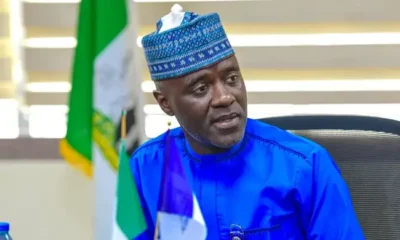
“Any disruption has far-reaching implications for service delivery, economic stability, and national security,” the National Security Adviser, Nuhu Ribadu, said.
NCC Chief Executive Officer, Aminu Maida, said the agency will continue to enforce technical standards and work closely with security agencies, operators, and the public to safeguard these assets.
He also urged Nigerians to see the infrastructure as “a shared national asset” that powers everything from business transactions to healthcare and education.
“We also recognise mediation as an effective tool for building consensus among stakeholders. This resolution underscores the importance of dialogue in preventing avoidable service disruptions.
“Ultimately, we call on all Nigerians to regard telecom infrastructure as a shared national asset, one that underpins our ability to connect with loved ones, transact businesses, access healthcare, pursue education, and participate in the global digital economy,” the executive stated.
Nigeria’s $75bn telecom industry relies on more than 40 million litres of diesel monthly to keep towers running due to unreliable grid power, according to industry data.
Operators are stepping up investment in hybrid energy systems, with the NCC and GSMA estimating that a shift to solar and battery storage could cut operating costs by as much as 50 per cent while reducing emissions.








Music star John Anderson dies at 71
Country music singer John Anderson, known for hits including Swingin’, Straight Tequila Night and Seminole Wind, has died at the...


‘Suspend frequent travels in pursuit of money and attend to me’, heavily pregnant Jarvis to Peller
“Money isn’t everything. You are chasing money more than the baby that is coming and my own mental health. Your...


BB Bucks, kisses, fake eviction: How Temi Nkem won BBNaija Season II
From BB Bucks drama and a memorable custard episode to a controversial kiss with Tram, a fake eviction and a...

‘Nigerian men in politics are ass lickers, quick to grovel’ – Aisha Yesufu hits Fubara

N110.4 Billion Money Laundering: How ex-governor Bello looted Kogi alongside other ‘persons of particular concern’

2027: Akpabio urges Arewa Youths to mobilise support for Tinubu

UbuntuCare Africa introduces ‘Gift Health’ to Nigerians at OffChart NXT 2026
Oyo APM Campaign Council expands committees, announces Friday inauguration

22-year Nigerian model moves beyond Lagos streets into global scene

PC-NCG calls for immediate cessation of unauthorized activities in the name of proposed Nigerian Coast Guard

Security: Combined security agents crush kidnappers in Kogi East, recovers dangerous weapons
BB Bucks, kisses, fake eviction: How Temi Nkem won BBNaija Season II

BREAKING: NAF reveals identity of pilot, names of 25 dead soldiers on crashed aircraft

BREAKING: Suspected ‘Abu Odoma boys’ set Maikano Diesel Generator donated by Muri ablaze overnight at Idah LG

Research funding: Union demands 5% tax from 14 MDAs

2023: Senator Marafa, Ex-governor Yari defect to PDP
