
News
Nasir El-Rufai: Human rights activists, legal expert raise alarm


By Hassan Taiye
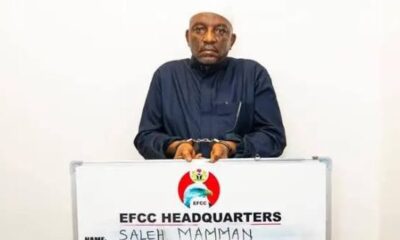
Human rights activists and legal experts have been drawn into the attempts by security agents to arrest Malam Nasir El-Rufai, the former governor of Kaduna state at the Nmandi Azikiwe international Airport, in Abuja and the subseguent interview on the Arise Television.

In a statement made available to CAPITAL POST in Abuja, Barrister Hamza N Dantani, a human rights activist, Lawyer stated that:
“The recent development involving former Kaduna State Governor, Nasir El-Rufai, and the National Security Adviser, Nuhu Ribadu, raises serious legal and constitutional concerns”.
According to Barrister Hamza ” At the heart of the matter is El-Rufai’s claim, made during an interview on Prime Time on Arise Television, that he had access to an intercepted phone conversation in which Ribadu allegedly instructed security operatives to arrest him”.


“If this statement is indeed true, it triggers profound national security and legal implications. However, if it is untrue or fabricated, it equally demands lawful and professional investigation. What must not happen in a constitutional democracy is the weaponization of the criminal justice system for political vendetta or witch-hunting”
“The fundamental principle of criminal jurisprudence is clear: “he who asserts must prove. “‘ The burden of proof lies squarely on the prosecution. Before any charge is filed, there must be a credible investigation, collection of admissible evidence, and documented statements capable of sustaining a conviction beyond a reasonable doubt”
“If El-Rufai publicly admitted to unlawful interception, the proper course of action would be:
1. Invite him for questioning.
2. Obtain a written statement under caution.
3. Conduct a forensic and technical investigation.
4. Identify the alleged “cohorts” or third parties involved.
5. Establish the existence (or otherwise) of the alleged intercepted communication.
Charging an individual directly, without painstaking investigation and extraction of evidence, risks collapsing the case at trial. Criminal litigation is not a media contest; it is an evidentiary exercise governed by strict legal standards.
A careful look at the counts filed reveals troubling defects:
Count One
This count alleges that El-Rufai “admitted” to unlawfully intercepting the NSA’s communication and invokes Section 12(1) of the Cybercrimes Act (as amended).
However:
* A media statement does not automatically constitute a legal confession.
* An admission must be clear, voluntary, and unequivocal.
* There must be proof of actual interception, technical, digital, or forensic evidence, not mere inference from an interview.
Without establishing the corpus delicti (the fact that a crime occurred), the prosecution faces serious evidentiary hurdles.
Count Two
This alleges that El-Rufai failed to report the interception of communications, relying on Section 27(b) of the Cybercrimes Act.
Here again:
* Mere knowledge or alleged association does not automatically translate to criminal liability.
* The prosecution must prove actual knowledge of a completed offence and deliberate concealment.
* The identity of the alleged interceptor must first be established.
The charge appears speculative rather than evidence-driven.
Count Three
This count invokes Section 131(2) of the Nigerian Communications Act 2003, alleging compromise of public safety and national security.
This is a grave allegation. Yet:
* Where is the technical report?
* Where is the digital trail?
* Where is the expert evidence establishing interception infrastructure or equipment?
National security offences require the highest level of proof, not assumptions drawn from televised remarks.
There is a growing perception that, in some politically sensitive cases, prosecution is less about securing a conviction and more about subjecting defendants to the rigours of arraignment, remand, and a prolonged trial.
Arraigning a high-profile political figure, taking a plea, and seeking remand, even if bail is eventually granted, can itself constitute administrative punishment. Such practice undermines public confidence in the justice system.
A prosecution that is not evidence-based but strategy-driven risks being viewed as persecution.
If El-Rufai’s statement is false and injurious to national security, the NSA should formally petition relevant security agencies for a comprehensive investigation. If the investigation establishes a prima facie case, prosecution should follow firmly, lawfully, and transparently.
If, however, the charges were drafted without adequate investigation, they risk being struck out for being incompetent or defective unless the prosecution is there for administrative punishment on Elrufa’i
The criminal justice system must not become a political instrument. It must remain a constitutional safeguard.
The issues raised in this matter go beyond the personalities involved. They touch on the integrity of Nigeria’s criminal justice architecture. The law must not be stretched to fit political narratives. Prosecution must not precede investigation. Allegations must not substitute evidence.
“In a democracy governed by law, power must always submit to due process.”










BB Bucks, kisses, fake eviction: How Temi Nkem won BBNaija Season II
From BB Bucks drama and a memorable custard episode to a controversial kiss with Tram, a fake eviction and a...


22-year Nigerian model moves beyond Lagos streets into global scene
A 22-year Nigerian model Rachel Ojuromi has taken her fashion career from the streets of Lagos to the global scene....


Geh Geh lashes Burna Boy over ₦9bn Bugatti, demands youth empowerment
Social commentator Geh Geh has criticised Afrobeats star Burna Boy over his newly acquired customised Bugatti Chiron VXX, reportedly valued...
Ping An Digital Bank Completes HKMA’s Second GenA.I. Sandbox Cohort

Fidelity Bank celebrates beauty industry excellence at Beauty in the Motherland dinner

Fidelity Bank, Foremost Radiology champion early breast cancer detection

Travelodge Gangnam Yeoksam Seoul Opens as Travelodge’s Largest Hotel in Asia
Focus Graphite Advances Lac Knife Toward Construction Readiness with Up to C$1.93 Million in Combined Government Infrastructure Support

Security: Combined security agents crush kidnappers in Kogi East, recovers dangerous weapons

Kogi East Senator Isah Jibrin commences construction of ICT centre in Ankpa
22-year Nigerian model moves beyond Lagos streets into global scene

BREAKING: NAF reveals identity of pilot, names of 25 dead soldiers on crashed aircraft

PC-NCG calls for immediate cessation of unauthorized activities in the name of proposed Nigerian Coast Guard

BREAKING: Suspected ‘Abu Odoma boys’ set Maikano Diesel Generator donated by Muri ablaze overnight at Idah LG

Research funding: Union demands 5% tax from 14 MDAs

2023: Senator Marafa, Ex-governor Yari defect to PDP
