
News
Boychild advocacy: GAIYD reaches 49,585 beneficiaries, 37 schools

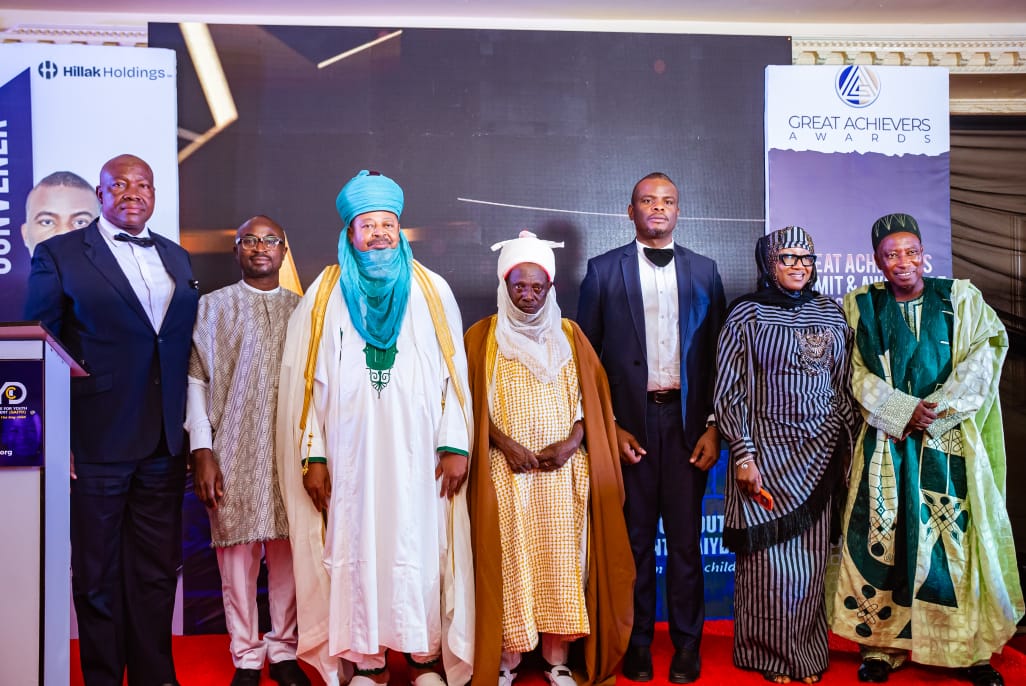
The Great Achievers Initiative for Youth and Community Development (GAIYD) says it reached 49,585 direct and indirect beneficiaries through its youth development and boychild advocacy programmes in 2026, covering 37 schools across three states.
The organisation also distributed more than 4,300 copies of its book, Unheard Voices of the Boychild, and provided learning materials to five schools as part of efforts to promote education and responsible upbringing among boys.


Its President, Dr Hillary Akpua, disclosed this at the fourth edition of the Great Achievers Awards 2026, held in Abuja on Saturday, where he announced plans to double the organisation’s impact in 2027.
Akpua said GAIYD, which began its boychild advocacy campaign in 2021 and was formally registered in 2023, was established to address challenges confronting boys and equip them with the values needed to become responsible members of society.

He said the organisation was guided by the belief that raising responsible boys would contribute to stronger families and a better society.
“We found out that our society is going through a lot of challenges, and we believe that if there is a better boychild, there will be a better family. If there is a better family, there is going to be a better society,” he said.
He explained that the organisation had sustained school sensitisation programmes, community engagements and parental initiatives to provide boys with the guidance and support needed to fulfil their potential.
Giving a breakdown of its activities, Akpua said GAIYD engaged 435 students and 33 teachers in secondary schools in Nasarawa and Niger states on drug abuse, mental health, personal hygiene, personal responsibility and positive decision-making.
The sensitisation exercises were conducted with the support of partners, including personnel of the National Drug Law Enforcement Agency (NDLEA).
The organisation also distributed more than 4,300 copies of Unheard Voices of the Boychild, launched at its 2025 summit, to encourage students to understand and reflect on the experiences and challenges confronting boys. It also donated boards and markers to five schools to improve teaching and learning.
As part of activities marking the International Day of the Boychild, GAIYD organised a football and athletics competition between April 23 and May 16, involving 641 boys from eight schools.
The competition featured football matches and 100-metre, 200-metre and 400-metre races designed to promote teamwork, discipline, confidence and sportsmanship among participants.
Akpua said the campaign climaxed at the Moshood Abiola National Stadium, Abuja, on May 16, with nine schools, 18 teachers and coaches, and three media organisations participating.
He said the campaign recorded a reach of 49,151 people through direct engagements, online platforms and other activities, while the organisation’s year-end assessment put its overall direct and indirect beneficiaries at more than 49,585.
In his keynote address, Professor Okey Ikechukwu called for a change in Nigeria’s approach to leadership, stressing that responsible leaders must demonstrate tolerance, fairness and respect for others.
Speaking on the theme, “Raising Responsible Leaders, Building Sustainable Nations”, Ikechukwu said leadership was not determined by the position or title an individual occupied but by the ability to influence decisions and make meaningful contributions to society.
“Leadership is not about whether you have a title or whether you are heading an office. Even self-leadership is a form of leadership,” he said.
He identified cultural, religious and personal prejudices as major obstacles to responsible leadership, urging Nigerians to recognise their biases and avoid imposing them on others.
The professor also called for the upbringing of boys and girls with values that promote mutual respect and peaceful coexistence, warning against gender stereotypes that could undermine their development.
He challenged young Nigerians to avoid repeating the mistakes of older generations, particularly corruption and the abuse of public office, adding that nation-building was a collective responsibility requiring contributions from all citizens.
In a goodwill message, the Chairman of the Economic and Financial Crimes Commission (EFCC), Mr Ola Olukoyede, said responsible leadership and the fight against corruption were closely connected, warning that sustainable development could not thrive in an environment where financial crimes and indiscipline were tolerated.
Olukoyede, who was represented by the Head of the Commission’s Enlightenment and Re-orientation Unit, Aisha Muhammad, said the EFCC had established that many financial crimes were rooted in a failure of values.
He explained that the commission’s mandate extended beyond arresting and prosecuting offenders to preventing corruption through public enlightenment and early value re-orientation.
According to him, the EFCC had established Integrity Clubs in primary and secondary schools and Zero Tolerance Clubs in tertiary institutions to promote honesty, accountability and ethical conduct among young Nigerians.
He urged youths to reject internet fraud, Ponzi schemes and get-rich-quick practices, while embracing legitimate earnings, savings and financial discipline.
“The youth are not just the leaders of tomorrow; they are the leaders of today. In your homes, in your classrooms, in your social media spaces, and in your communities, you are already leading,” he said.
Olukoyede commended GAIYD for promoting youth integrity, civic responsibility and community development, expressing the commission’s willingness to partner with initiatives advancing such values.
Also speaking, the Chairman of the Code of Conduct Tribunal, Justice Mainasara Kogo Umar, identified money politics, weak ideological foundations and divisive sentiments as major challenges confronting Nigeria’s democracy.
He lamented that political parties had increasingly become platforms for personal interests rather than organisations driven by clear ideologies and policy programmes.
Umar said the frequent movement of politicians between political parties reflected a lack of ideological commitment, while the high cost of nomination forms continued to restrict participation in the political process.
He also criticised the practice of inducing voters with money and material gifts, noting that economic hardship had made many Nigerians vulnerable to such political manipulation.
The tribunal chairman urged Nigerians to prioritise national unity, peace and development in their political choices, stressing that sustainable democracy required accountability from both leaders and citizens.
Other speakers at the event included Imran Hassan and Mrs Hauwa Aminu Wambai, while Ms Oma Favour Igboanua served as discussion lead.
The awards ceremony recognised individuals and organisations for their contributions to youth development, community service, leadership and boychild advocacy.
Among the recipients, HRH Queen Haukawulu Adamu Ibrahim received the Community Development Advocate and Champion for Gender Equality and Justice Award, while HRH Alhaji Dr Usman Nga-Kupi was honoured as Champion of Education and Cultural Preservation.
Engr. Frank Nwike received the Outstanding Organisation of the Year Award, while Chief Eleduma Gbenga Abiodun was named Humanitarian of the Year. Mr Samuel Biboye Luwei received the Entrepreneur of the Year Award.
Dr Hassan’s Hospital received the GAIYD Legacy Award, while Mr Salihu Abdulahmed Dembos was honoured with the Outstanding Leadership in Broadcasting Award.
Other awardees included Mr Okeke Chidozie, Africa’s Trailblazer of the Year; Mr David Ogidinta, Youth Mentor of the Year; and Mrs Princess-Ekwi Ajide, Mental Health Advocate of the Year.
GAIYD acknowledged the support of the NDLEA, EFCC, National Emergency Management Agency (NEMA), Hillak Holdings, Rockbase Developers, Homadil Reality, Dr Hassan’s Hospital, Heladi Prime Limited, De Ace Cribs, Etazuma M&I, Boys2Men Coaching and Mentoring, Neovantage Foundation, Vinael Wines and other partners.




Nollywood Actress, Bimbo speaks about Funke Akindele’s ugly past before her shining time
A colleague of Nollywood actress, Funke Akindele has spoken about Funke’s struggles in the past before she shot to limelight....


Mista Xto marks 30 years anniversary in music industry
Nigerian musician and entertainer, Mista Xto, is set to mark 30 years in the entertainment industry with a special anniversary...


Music star John Anderson dies at 71
Country music singer John Anderson, known for hits including Swingin’, Straight Tequila Night and Seminole Wind, has died at the...

Hackers turn Europe’s fridges into weapons as Cyber War hits supermarkets and blood banks

FCT Minister prepares to receive President Bola Tinubu in Rivers

Ningbo Consensus on Collaborative Development released at 2026 Global Mayors Dialogue · Ningbo

ZTE Showcases at Hong Kong FinTech Week 2026: Architecting a Digital Foundation for the Era of Agentic Finance with “Zero Failure, Trust, Optimal TCO, and Open Ecosystem”
WIC 2026 (Plenary 1) 5th November: Divine Enlargement and Fulfilment

Security: Combined security agents crush kidnappers in Kogi East, recovers dangerous weapons

Court sentences christian mother to 14 years imprisonment for sharing faith with muslim woman

Shareholders commend Fidelity Bank’s strong performance

Federal University of Medical Lab, science and Technology Bill: A Win for Plateau State, says Indigenous Staff

2027: APC sharing N50m-N2bn to opposition candidates to step down from election in Abuja hotel – Buba Galadima

BREAKING: Suspected ‘Abu Odoma boys’ set Maikano Diesel Generator donated by Muri ablaze overnight at Idah LG

Research funding: Union demands 5% tax from 14 MDAs

2023: Senator Marafa, Ex-governor Yari defect to PDP
