
Politics
2027: Appoint neutral INEC chairman, group tells Tinubu

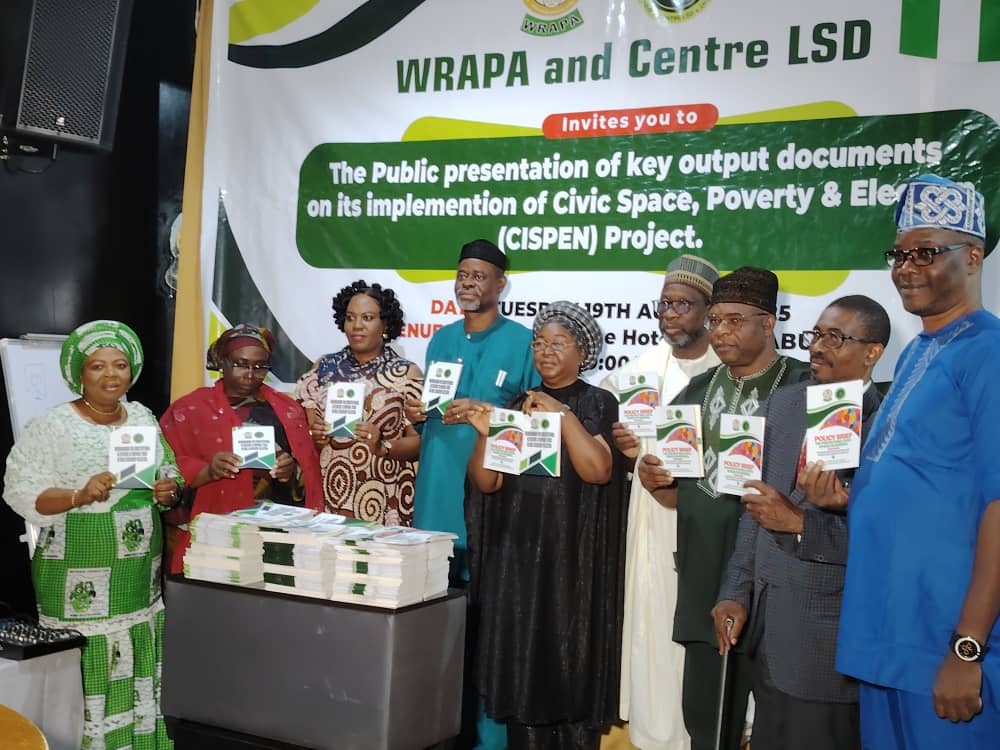
As the tenure of Prof. Mahmood Yakubu, Chairman of the Independent National Electoral Commission (INEC), winds down in a few months, Civil Society Organisations (CSOs) have called on President Bola Tinubu to appoint a neutral and independent figure to head the commission ahead of the 2027 general elections.
The demand, they said, is to guarantee free, fair, and credible polls that will restore citizens’ trust in Nigeria’s democratic process.

The call was made in Abuja on Tuesday by the Women’s Rights Advancement and Protection Alternative (WRAPA), in collaboration with the African Centre for Leadership, Strategy and Development (Centre LSD), during the public presentation of key output documents on the implementation of its civic space, poverty, and election project.
Delivering the keynote address, Chief Executive Officer of the Social Development Action Trust, Dr. Hussaini Abdu, expressed worry over Nigeria’s troubled electoral history, describing it as one marred by manipulation, imposition of leaders, and political violence.

He warned that unless the process of appointing INEC leadership is reformed, Nigeria’s democratic journey will continue to face setbacks.
“If credible elections are the heartbeat of democracy, and civic space is the oxygen that keeps it alive, then INEC, our electoral umpire, is the referee tasked with ensuring the rules of the game are fair. But here lies the problem: how can we expect the game to be fair when the referee is chosen by one of the teams?
“INEC’s independence is only as strong as the process by which its leaders are selected. And today, that process is fundamentally flawed,” he said.
Abdu also decried the long history of electoral malpractice in Nigeria, noting that citizens have become increasingly frustrated by rigged elections and political violence.
“There is also a growing sense of frustration, despair, and even cynicism. Cynicism born from decades of betrayal. Elections that are stolen in broad daylight. Political violence that has turned ballots into battlefields. Leaders who emerge not through the honest verdict of the people, but from backroom deals and rigged processes.
“Since independence, Nigeria’s democratic journey has been turbulent, characterised by promising starts and devastating setbacks. From the violent collapse of the First Republic to decades of military rule, and even in this Fourth Republic, our elections have too often been characterised by fraud, violence, voter suppression, and a painful deficit of credibility,” he stated.
Abdu also challenged citizens to take responsibility for demanding reforms and defending democratic values, stressing that politicians have failed to uphold the principles that sustain democracy.
“Credible elections don’t happen by chance. Civic space doesn’t defend itself. And independent umpires are not handed out as gifts from the powerful. They are won through struggle, persistence, and the courage of citizens who refuse to accept anything less than democracy in its truest form.
“As 2027 approaches, the question before us is simple: Will we rise to the challenge? Or will we stand by and watch history repeat itself? I believe the time for apathy and excuses is over. We need to act as swiftly as possible.
“Let us build a Nigeria where elections reflect the will of the people. A Nigeria where civic space flourishes. A Nigeria where INEC belongs not to any party or Presidency, but to all of us,” he stressed.
Founding Executive Director of Centre LSD, Dr. Otive Igbuzor, outlined key policy outputs put together by the organisations, which include: a policy brief on protecting civic space, a policy brief on improving electoral credibility, and a memorandum for constitutional alteration on INEC leadership appointments.
Earlier, the Secretary-General of WRAPA, Hajiya Saudatu Mahdi, linked the health of Nigeria’s elections to the shrinking of civic space.
Represented by Mrs. Yemisi Nathaniel, the WRAPA head said, “Let us recommit ourselves to building a Nigeria where elections are credible, civic voices are protected, and poverty no longer excludes citizens from full democratic participation. The 2027 elections are not far off; the time to act is now.”






Music star John Anderson dies at 71
Country music singer John Anderson, known for hits including Swingin’, Straight Tequila Night and Seminole Wind, has died at the...


‘Suspend frequent travels in pursuit of money and attend to me’, heavily pregnant Jarvis to Peller
“Money isn’t everything. You are chasing money more than the baby that is coming and my own mental health. Your...


BB Bucks, kisses, fake eviction: How Temi Nkem won BBNaija Season II
From BB Bucks drama and a memorable custard episode to a controversial kiss with Tram, a fake eviction and a...

XTransfer Returns to Hong Kong FinTech Week and Singapore FinTech Festival for Third Consecutive Year

Israeli Election: Netanyahu leads, but no clear winner

The Cascade of Sleep Deprivation: Bupa’s Health or Hype Explores the Real-World Impact of Curtailing Sleep

Feeding Malaysia: Sabak Bernam’s Growing Role in National Food Security

Troops recover 2 AK47 refles after foiling armed attack in Benue

22-year Nigerian model moves beyond Lagos streets into global scene

PC-NCG calls for immediate cessation of unauthorized activities in the name of proposed Nigerian Coast Guard

Security: Combined security agents crush kidnappers in Kogi East, recovers dangerous weapons
BB Bucks, kisses, fake eviction: How Temi Nkem won BBNaija Season II

BREAKING: NAF reveals identity of pilot, names of 25 dead soldiers on crashed aircraft

BREAKING: Suspected ‘Abu Odoma boys’ set Maikano Diesel Generator donated by Muri ablaze overnight at Idah LG

Research funding: Union demands 5% tax from 14 MDAs

2023: Senator Marafa, Ex-governor Yari defect to PDP
