
Media OutReach
AIMCONNECT 2026 Held in Singapore, Bringing Global Automotive Leaders Together to Explore the Future of AI, Trust and Connected Mobility

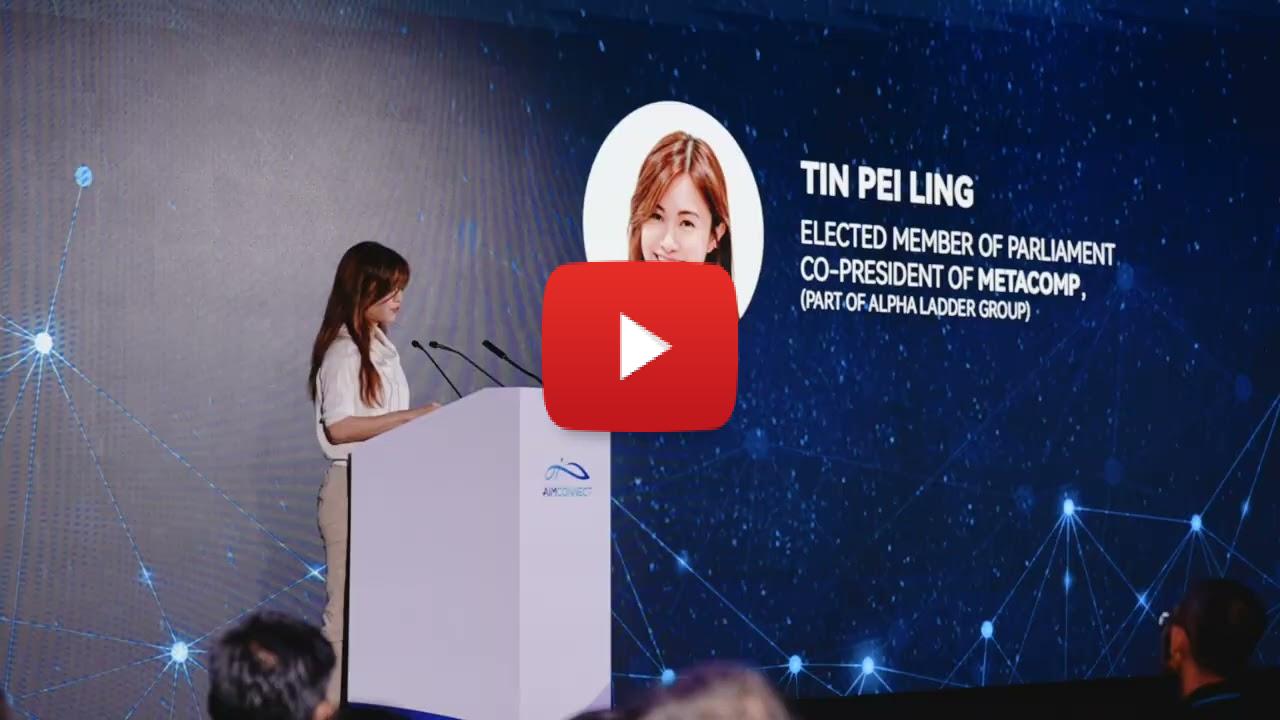


The event was opened by Tin Pei Ling, Member of Parliament, and Dato’ Tony Khor Chong Boon, President of the Federation of Motor and Credit Companies Associations of Malaysia (FMCCAM). Through keynote presentations, panel discussions and live technology demonstrations, participants examined how AI-driven solutions can improve customer experiences while ensuring transparency, security and responsible decision-making.
AIMCONNECT 2026 Highlights the Shift Towards Connected Mobility


During the keynote address, “The Next Mobility Economy: Intelligence, Connection, Trust,” X Star Technology CEO Shawn Yang highlighted the growing gap between consumers’ digital engagement and completed automotive transactions.
Shawn Yang noted that consumers increasingly begin their vehicle purchase journey online, with research showing strong demand for AI-supported decision-making. According to figures shared during the keynote, 90% of car buyers conduct online research before visiting dealerships, 63% expect to use AI during their next vehicle purchase and 67% believe AI will influence their financing decisions.
However, the automotive journey remains fragmented. Customers often move between dealerships, financing providers and multiple systems, creating unnecessary friction during purchasing and ownership processes.
“Customers are not lost in one stage; they are lost to the friction between them,” Yang said. Yang said. The CEO explained that the next stage of mobility innovation requires closer cooperation between automotive companies, financial institutions and technology providers. Rather than improving isolated parts of the journey, the industry must create connected experiences that allow information, decisions and services to move more efficiently between stakeholders.
During AIMCONNECT 2026, technology demonstrations showcased emerging solutions designed to address these challenges. X Star Technology presented its Xport platform, demonstrating one-click lead-to-loan matching and real-time approval capabilities. Aimotion, MStar, AI Wingman and MK.X also introduced their latest innovations, highlighting the potential of AI-enabled tools across the automotive value chain.
Building Trust as AI Takes a Greater Role in Decision-Making
A key theme throughout AIMCONNECT 2026 was the importance of trust as artificial intelligence becomes increasingly involved in customer-facing processes.
While AI can improve speed and efficiency, industry leaders emphasised that technology must operate within clear boundaries. Decisions involving financing, customer eligibility and financial commitments require transparency, human oversight and accountability.
Yang introduced X Star Technology’s proprietary Harness framework, which combines AI operating boundaries, human supervision and traceable data management. The framework is designed to ensure that AI systems operate within authorised parameters while allowing complex cases to be escalated for human review.
“In auto finance, a single flawed decision risks customer harm and regulatory non-compliance. For AI to operate across the customer journey with true autonomy, trust cannot be an afterthought; it must be engineered into the architecture from day one,” Yang said.
The discussions also highlighted the importance of balancing personalisation with privacy. While consumers increasingly expect services tailored to their needs, excessive automation or unnecessary intervention may reduce trust. Effective AI solutions must therefore combine intelligence with appropriate restraint.
Strengthening Connections Across the Auto Finance Ecosystem
Another major discussion at AIMCONNECT 2026 focused on how stronger collaboration between automotive companies, financial institutions and technology providers can create a more efficient and trusted financing experience.
During the panel discussion “Building a Connected Auto Finance Ecosystem,” moderated by MStar CEO Zhang Peng, industry representatives explored the role of data connectivity, cybersecurity and responsible technology adoption in shaping the future of automotive finance.
Speakers from Deloitte, Deutsche Bank, The CEO Circle and JWT Bespoke examined how financial institutions and mobility businesses can use technology to improve decision-making while maintaining customer confidence.
“Better data infrastructure and connectivity can help the industry make more informed financing decisions, but technology must go hand in hand with trust,” Zhang said.
The discussion emphasised that connectivity is not simply about collecting more data. A truly integrated ecosystem requires organisations to establish clear principles for how information is shared, protected and used. Customers must also understand what information they provide and how it contributes to a better service experience.
Matthew Duncan, Director and CEO of JWT Bespoke, highlighted the importance of balancing innovation with consumer protection, drawing from Australia’s experience in automotive and financial regulation.
“Regulation works best when it protects customers and still gives the industry room to improve how people buy and finance their cars,” Duncan said.
Exploring the Future of Vehicle Ownership
Beyond financing and transactions, AIMCONNECT 2026 also examined a broader question facing the mobility industry: how will consumers define vehicle ownership in the future?
The rise of leasing, subscription services, car-sharing and ride-hailing has expanded consumer choices, creating new possibilities beyond traditional ownership models.
During the panel “The Future of Owning a Car,” moderated by Shawn Yang, industry leaders discussed how changing consumer expectations may influence future mobility behaviour.
An audience poll showed a closely divided perspective. While 54% of participants believed flexible mobility solutions could become the preferred choice within the next decade, 46% expected vehicle ownership to remain the dominant preference.
The result reflected the complexity of future mobility trends. Rather than replacing ownership completely, emerging mobility models may provide consumers with more options depending on their lifestyle, financial situation and travel needs.
James Ng, Managing Director of BYD Singapore and President of BYD Philippines, shared insights into BYD’s technology development journey.
“BYD’s first phase was electrification, delivering performance. The second phase is intelligence, using AI to enhance the customer experience. The third phase will focus on integration,” Ng said.
Xiao Ting, CEO of MK.X, noted that increasingly capable AI assistants could change how consumers approach mobility decisions.
“The decision may increasingly be less about owning a car and more about finding the right mobility solution for each journey,” noted the CEO.
Ng also highlighted the broader applications of BYD’s technology beyond vehicles, including Battery Energy Storage Systems (BESS) and renewable energy solutions that contribute to a wider technology ecosystem.
These developments suggest that the future mobility landscape will involve not only automakers, but also dealers, financial institutions and technology platforms adapting their services to meet changing consumer expectations.
AI Is Expanding the Vehicle Experience Beyond the Point of Sale
The role of artificial intelligence throughout the vehicle ownership lifecycle was another key focus at AIMCONNECT 2026.
During the panel “How Is AI Reshaping Mobility?” moderated by X Star Chief Technology Officer Michael Jia, industry experts discussed how AI can support consumers beyond vehicle selection and purchase.
Panel participants included Carson Zhang of Aimotion, Connor Liu of Google Cloud, Dr Harold Teng of MK.X Technology and Bryan Tan of Carro.
When delegates were asked where AI would create the greatest impact, personalised ownership services ranked ahead of vehicle selection, automotive financing and in-car intelligence. The results suggested that industry participants see significant opportunities in improving the ownership experience after purchase.
Bryan Tan, Chief Scientist at Carro Group and CEO of Carro Indonesia, explained that vehicle value assessment is becoming increasingly influenced by new data sources. For electric vehicles, factors such as battery condition and charging history are becoming important considerations alongside traditional indicators such as mileage.
Tan also noted that markets such as Singapore have unique considerations, including the impact of the Certificate of Entitlement (COE) system on vehicle value.
These examples demonstrate how advances in automotive technology are influencing areas beyond driving performance, extending into finance, resale value and long-term ownership decisions.
However, industry leaders agreed that AI adoption must remain focused on practical benefits.
“The focus must remain on delivering practical benefits, enhancing safety and making mobility more intuitive for consumers,” Dr Teng said.
Collaboration Will Define the Next Stage of Mobility Innovation
Across the discussions at AIMCONNECT 2026, one common message emerged: the future of mobility will be shaped by collaboration.
Automotive manufacturers and dealers must better understand customer needs and reduce unnecessary friction throughout the ownership journey. Financial institutions must improve efficiency while maintaining responsible lending practices. Technology providers must develop solutions that meet operational, regulatory and customer expectations.
For policymakers and industry stakeholders, the challenge will be encouraging innovation while maintaining public confidence.
“No single company can transform the entire mobility journey on its own,” Xiao Ting said.
Zhang highlighted that the success of future mobility solutions should be measured not only by speed and efficiency, but also by how effectively the industry works together to serve customers.
“Progress should be measured not only by how quickly a loan can be approved, but by how well the industry works together to serve the customer,” Zhang said.
AIMCONNECT 2026 demonstrated that artificial intelligence will play an increasingly important role in mobility, but technology alone will not define the future. The next phase of automotive transformation will depend on building systems that are intelligent, transparent and connected — supported by stronger partnerships across the mobility ecosystem.
Hashtag: #XStar
The issuer is solely responsible for the content of this announcement.
About AIMCONNECT 2026
AIMCONNECT 2026 brings together automotive leaders, dealers, original equipment manufacturers (OEMs), financial institutions, technology innovators and industry decision-makers to explore the future of automotive commerce and mobility.
Through industry dialogue, thought leadership sessions and live technology demonstrations, AIMCONNECT provides a platform for stakeholders to exchange insights and collaborate on the next generation of connected mobility solutions.





BB Bucks, kisses, fake eviction: How Temi Nkem won BBNaija Season II
From BB Bucks drama and a memorable custard episode to a controversial kiss with Tram, a fake eviction and a...


22-year Nigerian model moves beyond Lagos streets into global scene
A 22-year Nigerian model Rachel Ojuromi has taken her fashion career from the streets of Lagos to the global scene....


Geh Geh lashes Burna Boy over ₦9bn Bugatti, demands youth empowerment
Social commentator Geh Geh has criticised Afrobeats star Burna Boy over his newly acquired customised Bugatti Chiron VXX, reportedly valued...

2027: Ex-Reps aspirants seek role in Tinubu’s campaign

Pro-Biafran agitator Simon Ekpa to spend 4 years in Finland prison

AIMCONNECT 2026 Held in Singapore, Bringing Global Automotive Leaders Together to Explore the Future of AI, Trust and Connected Mobility
Railtown AI Opens Conductr Platform to Third-Party Technology Integrations, Launches Technology Integration Partner Program
AXA Global Healthcare Mind Health Report reveals global differences in how cost and stigma affect access to professional mental health care

Security: Combined security agents crush kidnappers in Kogi East, recovers dangerous weapons

Kogi East Senator Isah Jibrin commences construction of ICT centre in Ankpa
22-year Nigerian model moves beyond Lagos streets into global scene

BREAKING: NAF reveals identity of pilot, names of 25 dead soldiers on crashed aircraft

PC-NCG calls for immediate cessation of unauthorized activities in the name of proposed Nigerian Coast Guard

BREAKING: Suspected ‘Abu Odoma boys’ set Maikano Diesel Generator donated by Muri ablaze overnight at Idah LG

Research funding: Union demands 5% tax from 14 MDAs

2023: Senator Marafa, Ex-governor Yari defect to PDP
