
Article
The Northern Fulmar Chick: A tiny seabird armed with a remarkable defense

By Sam Agogo
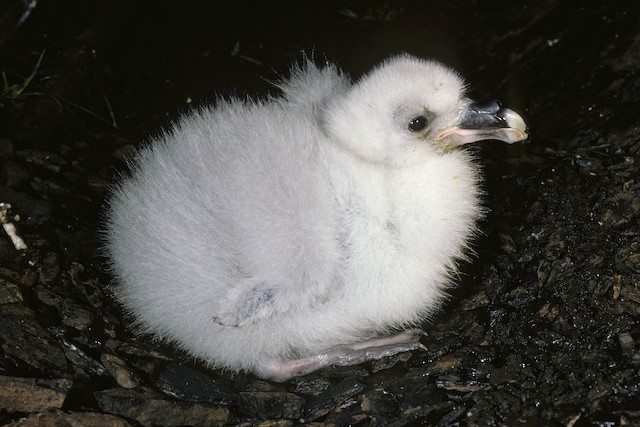
Perched on a narrow cliff high above the cold waters of the North Atlantic, a small, fluffy chick waits alone. It is too young to fly and barely capable of standing upright. At first glance, it appears helpless. Yet when danger approaches, this young seabird reveals an extraordinary survival tactic. It forcefully sprays a stream of thick, foul-smelling oil directly at its attacker.

This unlikely defender is the northern fulmar chick, the offspring of Fulmarus glacialis. Despite its innocent appearance, it possesses one of the most unusual defense mechanisms in the bird world. Its story is not only about survival but also about the state of the oceans upon which it depends.
Northern fulmars belong to a family of seabirds known as tubenoses, which includes albatrosses, petrels, and shearwaters. Although they resemble gulls, they are not closely related. Their distinctive tube-shaped nostrils sit atop a hooked bill, while their stiff wings allow them to glide effortlessly over vast distances of open ocean. The name “fulmar” is believed to come from Old Norse, meaning “foul gull,” a reference to the oily substance they use for protection.


Found nesting on rugged cliffs across the North Atlantic, Arctic regions, and parts of the North Pacific, fulmars have adapted remarkably well to life at sea. Their colonies can be seen in locations as diverse as Scotland, Iceland, Alaska, and Newfoundland.
The life of a fulmar chick begins with a single egg. Unlike many birds that lay several eggs in a season, fulmars invest all their energy into raising just one chick each year. Both parents take turns incubating the egg for about fifty days, ensuring it remains safe until hatching.
When the chick emerges, it weighs only around 65 grams and is covered in soft white down. As it grows, the down thickens into a gray coat that helps protect it from harsh weather. During its first weeks, both parents guard and brood it closely. Later, however, the chick must spend long periods alone as the adults travel hundreds of miles across the ocean searching for food.
One of the most fascinating aspects of fulmar biology is how they feed their young. Instead of carrying fish back to the nest, adults consume fish, squid, crustaceans, and other marine prey, converting part of the food into a highly nutritious stomach oil. Upon returning to the nest, they regurgitate this rich liquid into the chick’s mouth.
This stomach oil serves two crucial purposes. It provides a concentrated source of energy that allows the chick to grow rapidly, and it doubles as a powerful defense mechanism. If threatened by gulls, skuas, or other predators, the chick can spray the sticky oil with surprising accuracy. The substance can coat feathers, making flight difficult and discouraging further attacks.
Within a few weeks, a young fulmar often becomes heavier than its parents. The bird stores fat reserves in preparation for the next stage of its life. Around fifty days after hatching, the parents gradually reduce their visits and eventually stop feeding it altogether. Forced to rely on its own strength, the chick loses weight, exercises its wings, and finally launches itself from the cliff edge. No parent accompanies it. The young bird must find its own way to the open sea and learn to survive independently.
These first months are the most dangerous period of a fulmar’s life. Their success depends greatly on the availability of food in the surrounding ocean. Scientists regard fulmars as important indicators of marine health because changes in fish populations often show up first in the survival and growth of their chicks.
In recent decades, plastic pollution has become a growing threat. Fulmars frequently mistake floating plastic debris for food and swallow it. Because they cannot easily remove these materials from their bodies, plastics accumulate in their stomachs and can even be passed from adults to chicks. Researchers now use fulmars to monitor pollution levels in marine ecosystems, making the species an important messenger about the condition of the world’s oceans.
The relationship between fulmars and humans stretches back centuries. On remote islands such as St Kilda, communities relied on the birds for food and oil. In places where resources were scarce, fulmars played a vital role in helping people survive.
Despite their resilience, fulmars face challenges from pollution, changes in fishing practices, and the effects of climate change. Their slow breeding rate means that population recovery can take many years. With only one chick raised each season, every successful fledgling represents an important contribution to the future of the species.
The northern fulmar chick is far more than an unusual seabird armed with an oily defense. Its life is a remarkable story of adaptation, endurance, and survival. From a lonely cliff-top nest to the vast open ocean, its journey reflects both the resilience of nature and the growing challenges facing marine ecosystems. Ultimately, the fate of this fluffy seabird serves as a reminder that the health of the oceans is closely tied to the future of the creatures that depend on them.
For Comments, Reflections and Further Conversation
Email: samuelagogo4one@yahoo.com
Phone: +2348055847364






BB Bucks, kisses, fake eviction: How Temi Nkem won BBNaija Season II
From BB Bucks drama and a memorable custard episode to a controversial kiss with Tram, a fake eviction and a...


22-year Nigerian model moves beyond Lagos streets into global scene
A 22-year Nigerian model Rachel Ojuromi has taken her fashion career from the streets of Lagos to the global scene....


Geh Geh lashes Burna Boy over ₦9bn Bugatti, demands youth empowerment
Social commentator Geh Geh has criticised Afrobeats star Burna Boy over his newly acquired customised Bugatti Chiron VXX, reportedly valued...

VinFast announces special incentives for new electric motorcycle showrooms in Indonesia and the Philippines, accelerating distribution network expansion

The Northern Fulmar Chick: A tiny seabird armed with a remarkable defense

Political titans fall as INEC unveils final candidates list

2027: Wike mobilises ‘cross-party’ coalition to back Tinubu

Chamet Brings Real-Time AI Translation in 50+ Languages and Multimodal Safety AI to Cross-Border Video Chat

Security: Combined security agents crush kidnappers in Kogi East, recovers dangerous weapons

Kogi East Senator Isah Jibrin commences construction of ICT centre in Ankpa

BREAKING: NAF reveals identity of pilot, names of 25 dead soldiers on crashed aircraft
22-year Nigerian model moves beyond Lagos streets into global scene

PC-NCG calls for immediate cessation of unauthorized activities in the name of proposed Nigerian Coast Guard

BREAKING: Suspected ‘Abu Odoma boys’ set Maikano Diesel Generator donated by Muri ablaze overnight at Idah LG

Research funding: Union demands 5% tax from 14 MDAs

2023: Senator Marafa, Ex-governor Yari defect to PDP
