
News
“The Ruins Are Not Our Final Chapter”: Ene Obi Calls for Rebuilding Nigeria and Africa

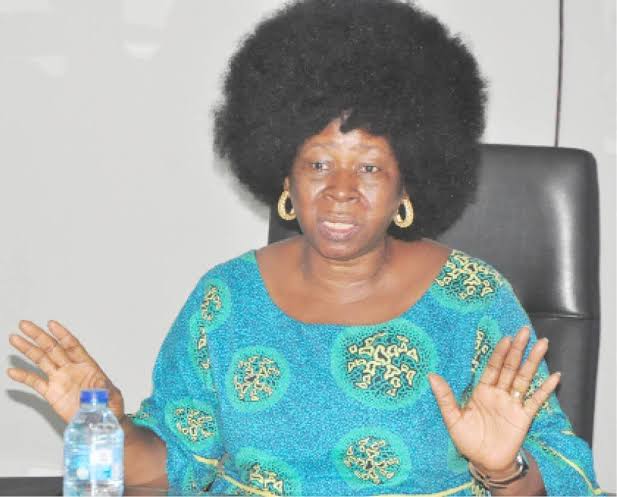
The Executive Director Ene Obi Centre for Development (ECD), a non-governmental, non-profit and non-partisan organisation
has urged Nigeria and the rest of Africa to move from diagnosing their problems to building lasting institutions, productive economies and continental unity.
She spoke as a guest speaker at the monthly Samaritans Seminar, held virtually with participants joining from across the diaspora, organised by Linkway Outreach Africa in collaboration with Linkway Diplomats Inc., USA. The theme was “Rebuilding the Ruins of Continental Africa,” with a focus on Nigeria.

Obi argued that Africa’s “ruins” are not the continent’s identity but the product of systems: inherited extraction, fragmented markets, weak institutions and infrastructure gaps. She said Africa is not a ruined continent but one whose promise has been repeatedly constrained. She traced the damage to slavery and colonial extraction, but insisted that history explains only part of it. Present-day choices, she said, decide whether it continues. Political independence, she noted, did not automatically bring economic sovereignty, accountable institutions or equal opportunity.
On Nigeria, she described a giant at a crossroads. Citing World Bank figures, she noted a population of 237.5 million, 4.0 percent GDP growth in 2025, electricity access of 62.5 percent, internet use of 41 percent and life expectancy of 55 years. She cautioned that headline growth does not necessarily mean households are better off, since inflation and population growth shape daily life.

Her blueprint rested on human capability first: health, foundational learning, skills, women’s participation and dignified work. She also called for reliable power, transport corridors, broadband and digital infrastructure, and for a shift from exporting raw commodities to building value chains in agro-processing, manufacturing and creative industries. Cocoa and cassava were her examples. Governance, she said, is infrastructure too, because “credible institutions lower the cost of being a citizen.”
Obi stressed Pan-African cooperation, noting that only 14.6 percent of Africa’s exports in 2024 went to other African countries. She urged Nigeria to support AfCFTA implementation, deepen ECOWAS ties and invest in regional production. On security, she said human rights are part of legitimate and sustainable security, and that military operations must be paired with justice, services and community trust.
She closed with three “rebuilding compacts” on capability, production and integration, backed by a five-year implementation sequence and measurable targets. Government must serve with integrity, business must create jobs and value, and citizens must hold power accountable. She cited Kwame Nkrumah’s call that “Africa must be free,” and said the work now is freedom from dependency, fragmentation and preventable institutional failure.
Participants used the occasion to pray for the success of Nigeria’s 2027 general elections.



Music star John Anderson dies at 71
Country music singer John Anderson, known for hits including Swingin’, Straight Tequila Night and Seminole Wind, has died at the...


‘Suspend frequent travels in pursuit of money and attend to me’, heavily pregnant Jarvis to Peller
“Money isn’t everything. You are chasing money more than the baby that is coming and my own mental health. Your...


BB Bucks, kisses, fake eviction: How Temi Nkem won BBNaija Season II
From BB Bucks drama and a memorable custard episode to a controversial kiss with Tram, a fake eviction and a...

“The Ruins Are Not Our Final Chapter”: Ene Obi Calls for Rebuilding Nigeria and Africa

How terrorists threaten my life for initiating dialogue for peace

XTransfer Returns to Hong Kong FinTech Week and Singapore FinTech Festival for Third Consecutive Year

Israeli Election: Netanyahu leads, but no clear winner

The Cascade of Sleep Deprivation: Bupa’s Health or Hype Explores the Real-World Impact of Curtailing Sleep

22-year Nigerian model moves beyond Lagos streets into global scene

PC-NCG calls for immediate cessation of unauthorized activities in the name of proposed Nigerian Coast Guard

Security: Combined security agents crush kidnappers in Kogi East, recovers dangerous weapons
BB Bucks, kisses, fake eviction: How Temi Nkem won BBNaija Season II

BREAKING: NAF reveals identity of pilot, names of 25 dead soldiers on crashed aircraft

BREAKING: Suspected ‘Abu Odoma boys’ set Maikano Diesel Generator donated by Muri ablaze overnight at Idah LG

Research funding: Union demands 5% tax from 14 MDAs

2023: Senator Marafa, Ex-governor Yari defect to PDP
