
Politics
BVAS only as effective as network providers allow — INEC

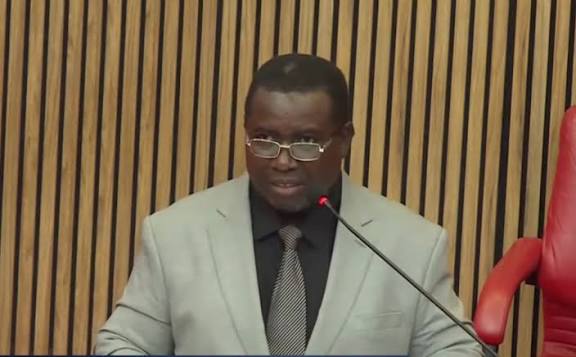
The Chairman of the Independent National Electoral Commission, Prof. Joash Amupitan, SAN,, has said the efficiency of the Bimodal Voter Accreditation System depends heavily on the strength of Nigeria’s telecommunications network.
Amupitan stated this on Wednesday in Abuja at the Nigeria Civil Society Situation Room’s Stakeholders’ Forum on Elections, where he delivered a special address on securing the nation’s democracy.

He said while BVAS had transformed voter accreditation and curtailed manipulation, its performance in some polling units was still affected by poor network coverage, especially in remote locations.
“A tool like the BVAS is only as good as the network it runs on,” he said, adding that the Commission was in continuous engagement with the Nigerian Communications Commission and network operators to find lasting solutions. He noted that INEC was also exploring alternative technologies and building system redundancy to reduce the impact of connectivity challenges.

The INEC chairman stressed that credible elections required collaboration among political parties, civil society organisations, the media, security agencies and the Commission. According to him, the 2022 Electoral Act and the deployment of technology had improved transparency, particularly through the INEC Result Viewing Portal, which he said had become “the new baseline for trust.”
Amupitan, however, warned that technology alone could not solve all electoral challenges, especially voter apathy. Citing the 2023 general elections, he described the 27 per cent voter turnout as a threat to democratic legitimacy. He highlighted the success recorded in Anambra, where PVC collection rose from 63.9 per cent to 98.8 per cent after targeted mobilisation.
He announced that the Continuous Voter Registration exercise had recorded 2,685,725 completed registrations nationwide, with Osun, Kano, Sokoto and Imo States leading. He urged civil society groups and the media to sustain awareness campaigns as the first quarter of the exercise ended on Tuesday.
Amupitan also confirmed that the Federal Capital Territory Area Council election would hold on February 21, 2026, as the tenure of the current chairmen and councillors ends next year.
On vote-buying, he said the Commission had intensified collaboration with security agencies under the Inter-Agency Consultative Committee on Election Security to curb inducement at polling centres.
“Leadership is not about the next election; it’s about the next generation,” he said, calling for stronger consensus to build an electoral system that is transparent, accountable and beyond reproach.







Music star John Anderson dies at 71
Country music singer John Anderson, known for hits including Swingin’, Straight Tequila Night and Seminole Wind, has died at the...


‘Suspend frequent travels in pursuit of money and attend to me’, heavily pregnant Jarvis to Peller
“Money isn’t everything. You are chasing money more than the baby that is coming and my own mental health. Your...


BB Bucks, kisses, fake eviction: How Temi Nkem won BBNaija Season II
From BB Bucks drama and a memorable custard episode to a controversial kiss with Tram, a fake eviction and a...

“The Ruins Are Not Our Final Chapter”: Ene Obi Calls for Rebuilding Nigeria and Africa

How terrorists threaten my life for initiating dialogue for peace

XTransfer Returns to Hong Kong FinTech Week and Singapore FinTech Festival for Third Consecutive Year

Israeli Election: Netanyahu leads, but no clear winner

The Cascade of Sleep Deprivation: Bupa’s Health or Hype Explores the Real-World Impact of Curtailing Sleep

22-year Nigerian model moves beyond Lagos streets into global scene

PC-NCG calls for immediate cessation of unauthorized activities in the name of proposed Nigerian Coast Guard

Security: Combined security agents crush kidnappers in Kogi East, recovers dangerous weapons
BB Bucks, kisses, fake eviction: How Temi Nkem won BBNaija Season II

BREAKING: NAF reveals identity of pilot, names of 25 dead soldiers on crashed aircraft

BREAKING: Suspected ‘Abu Odoma boys’ set Maikano Diesel Generator donated by Muri ablaze overnight at Idah LG

Research funding: Union demands 5% tax from 14 MDAs

2023: Senator Marafa, Ex-governor Yari defect to PDP
